Canada · #1 tree The maple leaf on the flag of Canada; the maple is the official national tree (since 1996)
Sugar maple
Acer saccharum · locally: sugar maple / érable à sucre
The tree whose sap becomes maple syrup, and whose fiery autumn leaves have become a symbol of all Canada.
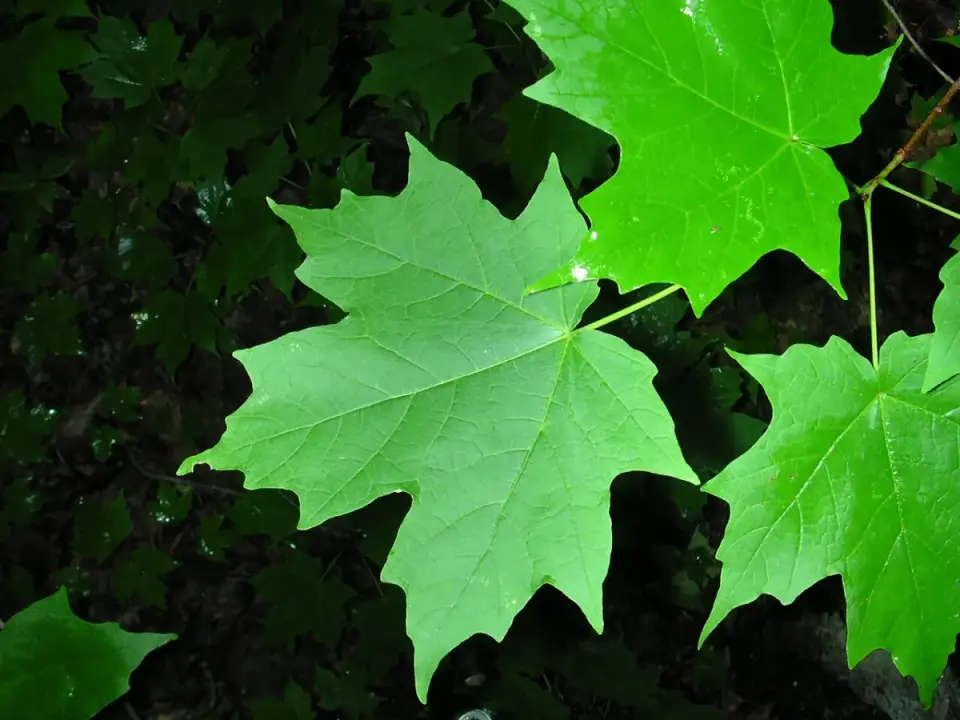
A stately broadleaf tree growing to 30–40 m, with palmate, five-lobed leaves that turn yellow, orange and scarlet in autumn. It grows in the fertile broadleaf and mixed forests of eastern North America. In early spring, when days thaw and nights freeze, sweet sap is collected from tapped trunks – about 40 litres of sap must be boiled down to make a litre of maple syrup. The hard, pale wood is valued for parquet, furniture and baseball bats.
Significance in the country
Canada produces more than 70% of the world’s maple syrup, most of it in Quebec, and a stylised maple leaf has appeared on the national flag since 1965. The autumn “maple colours” are one of eastern Canada’s biggest tourist attractions.
Where it grows
The broadleaf and mixed forests of south-eastern Canada – from southern Ontario through the St Lawrence valley in Quebec to the Maritime provinces; most maple “sugar shacks” are in Quebec.
More: Wikipedia (en) Wikipedia (pl)