15 plants worth knowing
Canada
Canada is covered above all by taiga – a belt of boreal forest with spruces, pines, larches and birches that gives way in the north to treeless tundra. The Pacific coast has temperate rainforests with gigantic cedars, prairies stretch across Alberta, Saskatchewan and Manitoba, and in the east there are mixed forests with maples that take on spectacular colours in autumn.
Hover over a plant to see on the map where it grows.
where it grows
-
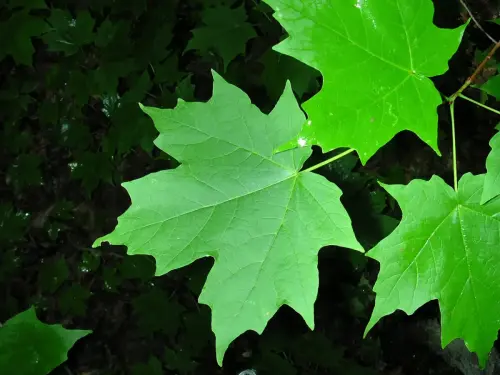 1
Sugar maple
Acer saccharum
The tree whose sap becomes maple syrup, and whose fiery autumn leaves have become a symbol of all Canada.
-
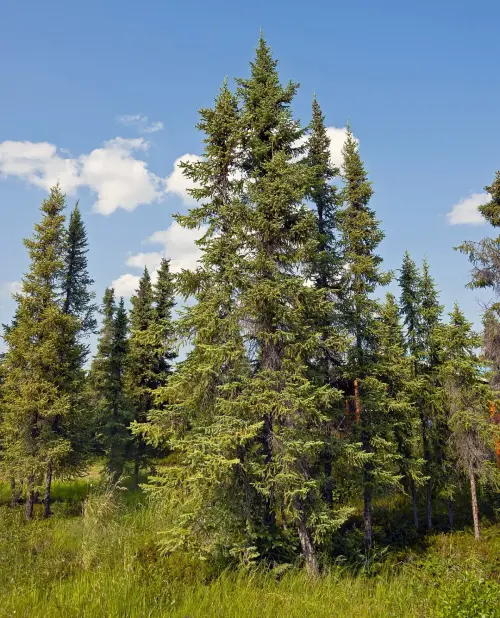 2
Black spruce
Picea mariana
The slender spruce of peat bogs and permafrost – one of the most abundant trees of the Canadian taiga.
-
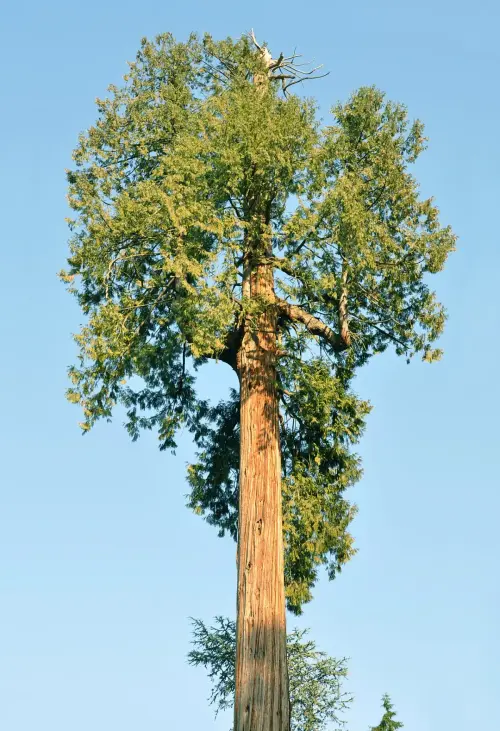 3
Western red cedar
Thuja plicata
The “tree of life” of the West Coast’s Indigenous peoples – its trunks were carved into famous totem poles and ocean-going canoes.
-
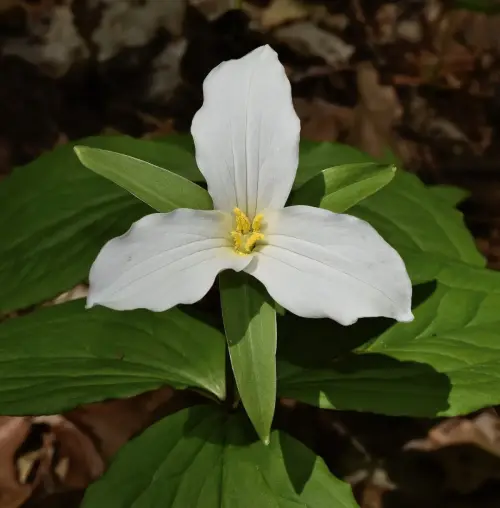 4
White trillium
Trillium grandiflorum
A spring flower with three snow-white petals that turns the floor of Ontario’s woods into a white carpet in May.
-
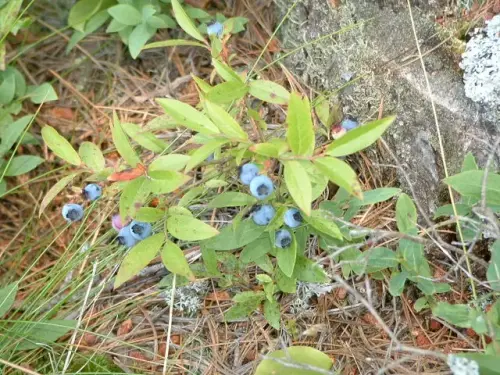 5
Lowbush blueberry
Vaccinium angustifolium
A low, wild blueberry of eastern Canada’s barrens – and Canada is the world’s largest producer.
-
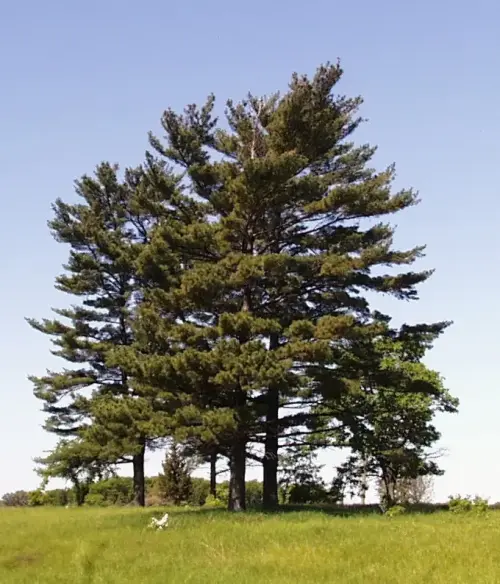 6
Eastern white pine
Pinus strobus
The tallest tree in eastern Canada – its straight trunks were once made into masts for the ships of the Royal Navy.
-
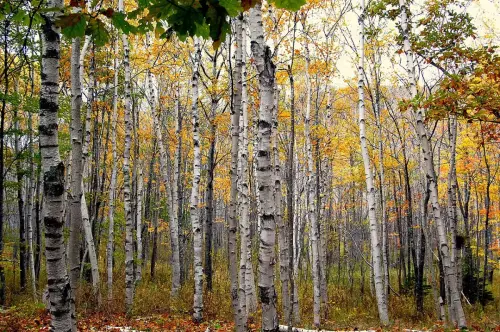 7
Paper birch
Betula papyrifera
A birch with snow-white, peeling bark, from which Canada’s Indigenous peoples built lightweight canoes.
-
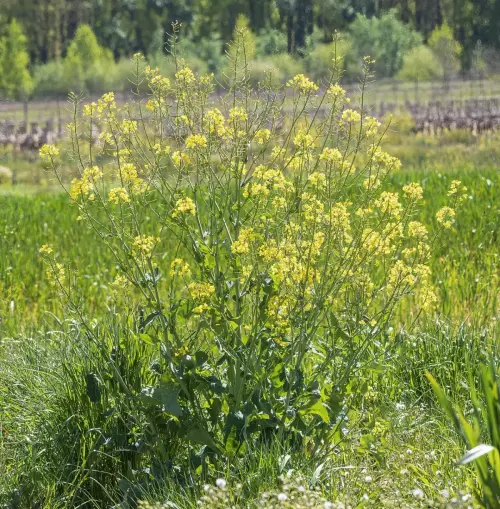 8
Rapeseed
Brassica napus
A Canadian “invention” – canola varieties of rapeseed were bred on the prairies in the 1970s, and today their yellow fields are a Canadian trademark.
-
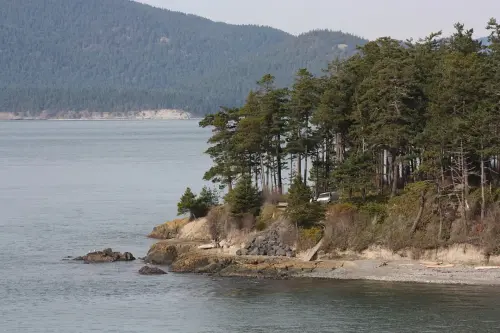 9
Douglas fir
Pseudotsuga menziesii
A mighty conifer of British Columbia’s forests and one of the world’s most important sawlog trees.
-
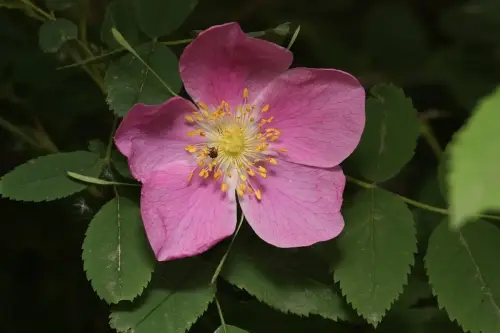 10
Prickly rose
Rosa acicularis
The wild rose of the north, with fragrant pink flowers – the symbol of Alberta, known as “Wild Rose Country”.
-
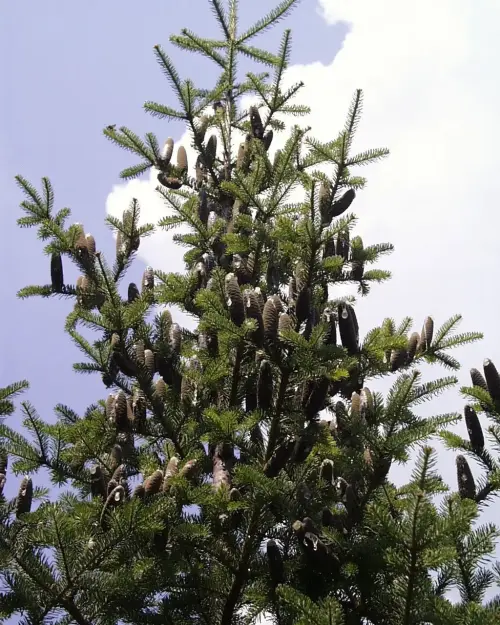 11
Balsam fir
Abies balsamea
The fragrant fir of eastern Canada’s forests – the country’s most popular Christmas tree and the source of the famous Canada balsam.
-
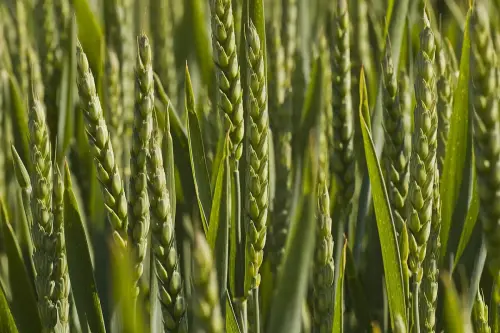 12
Common wheat
Triticum aestivum
Golden wheatfields stretching to the horizon are the image of the Canadian prairies – the country is one of the biggest exporters of this grain.
-
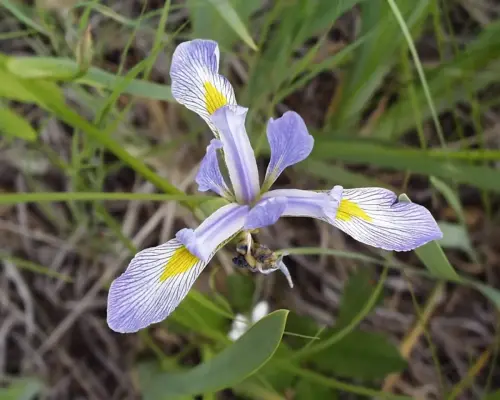 13
Blue flag
Iris versicolor
A violet-blue wetland iris that in 1999 replaced the lily as Quebec’s floral emblem.
-
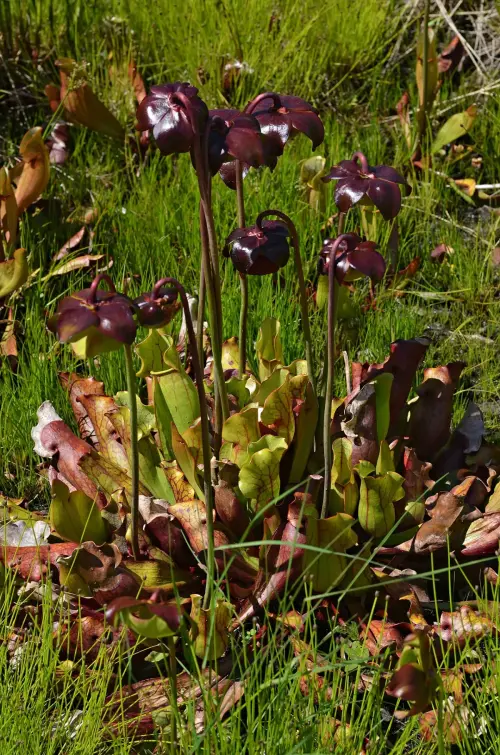 14
Purple pitcher plant
Sarracenia purpurea
A carnivorous bog plant whose pitcher-shaped leaves drown insects in rainwater – the symbol of Newfoundland.
-
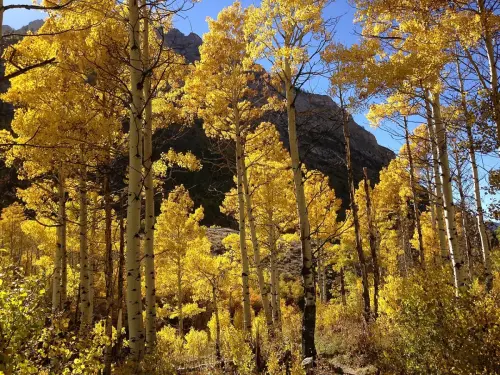 15
Quaking aspen
Populus tremuloides
The most widespread tree in North America – in autumn its trembling leaves turn the forests gold from Yukon to the Atlantic.
Canada on other Ominuvo maps
- World in NumbersPopulation: 41.7 million (2025)Source: World Bank – WDI: UN World Population Prospects (CC BY 4.0)
- Languages of the worldEnglish, French · official languagesSource: Unicode CLDR (Unicode License v3)
- Prices around the worldCanadian dollar (CAD)Source: ISO 4217
- Time zones mapUTC−8 … UTC−3:30 · 6 time zonesSource: IANA tz database (public domain)
- Plugs and sockets of the worldType A, B · 120 V · 60 Hz
- National dishes of the world3 national dishes
- Castles map17 castles and palacesSource: Wikidata (CC0 1.0)
- Volcano & earthquake map24 volcanoesSource: Smithsonian GVP (Smithsonian Terms of Use)
- Ghost map25 ghost stories and haunted places
- UFO sightings map8 UFO sightings and unexplained cases
- VPN provider mapServers of 43 VPN providersSource: VPN Map (Ominuvo) (CC BY 4.0)