Canada · #8 crop
Rapeseed
Brassica napus · locally: canola
A Canadian “invention” – canola varieties of rapeseed were bred on the prairies in the 1970s, and today their yellow fields are a Canadian trademark.
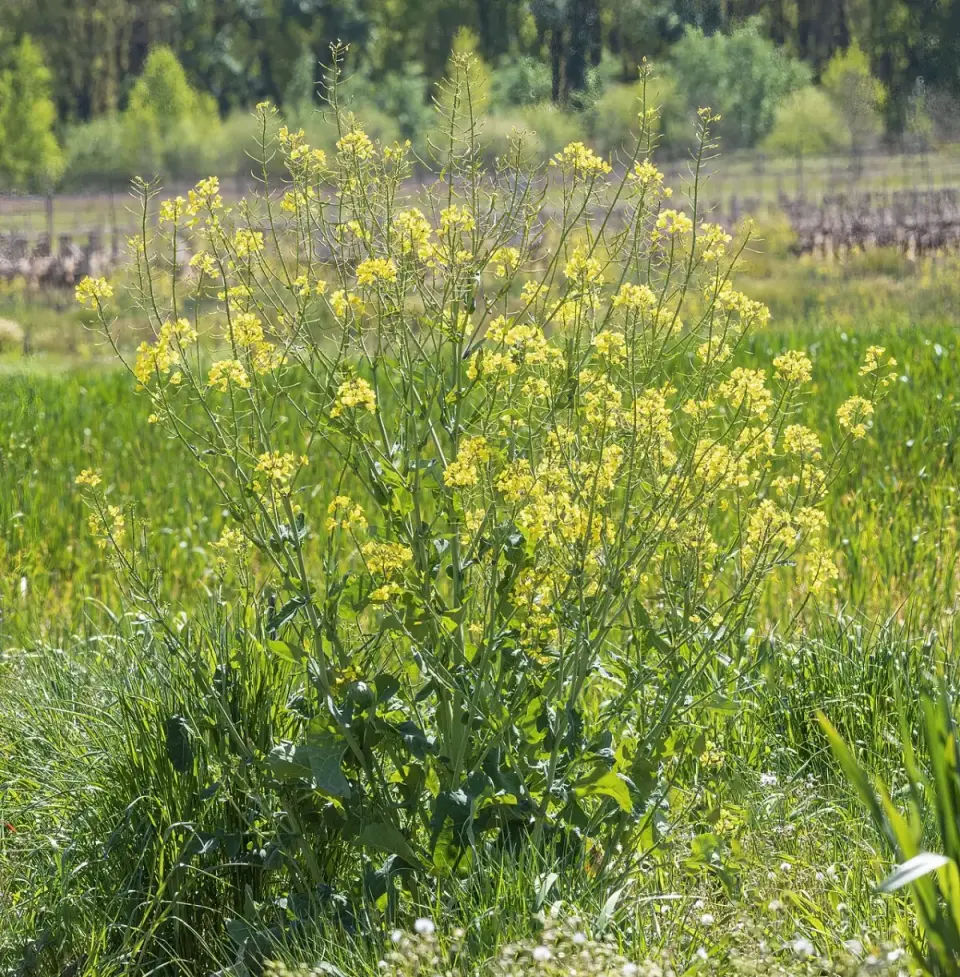
Rapeseed is a plant of the cabbage family growing to 1–1.5 m, with bluish-green leaves and numerous bright yellow flowers in clusters. Oil is pressed from the pods’ small, dark seeds, and the remaining meal is used as high-protein animal feed. Canola is a group of varieties with very low levels of erucic acid and glucosinolates, bred by Canadian scientists to produce a healthy edible oil. It tolerates a cool climate and a short growing season, so it does very well on the northern plains.
Significance in the country
The name “canola” refers to Canada (from “Canadian oil, low acid”), and the varieties were bred by, among others, Baldur Stefansson of the University of Manitoba and Keith Downey of the Canadian agriculture department. Canada is now the world’s largest producer and exporter of canola, and it is one of the most valuable crops in the country’s agriculture.
Where it grows
Above all the prairies – Saskatchewan, Alberta and Manitoba, where in summer whole horizons turn yellow with flowering fields; smaller areas in the Peace River region of British Columbia and in Ontario.
More: Wikipedia (en) Wikipedia (pl)