On the map in 2 countries palm
Sago palm
Metroxylon sagu
Family: Arecaceae
On our map this plant appears in 2 countries and ranks highest in: Brunei, Papua New Guinea.
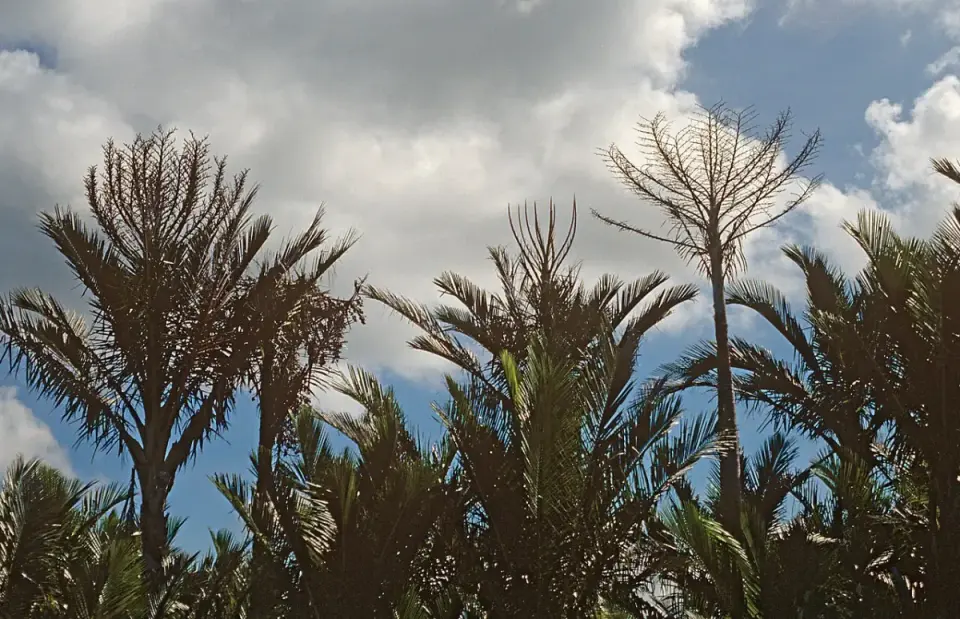
The sago palm grows to about 25 m and forms extensive clumps in freshwater swamps and on seasonally flooded plains. It flowers only once in its life, after 10–15 years, and then dies, so the trunk is felled just before flowering, when the pith is richest in starch. The shredded pith is washed with water, and the starch that settles out – sago – is used to bake flatbreads and cook a gruel. The leaves provide thatching material, and the beetle grubs that feed in felled trunks are a prized delicacy.
Description from: Papua New Guinea.
More: Wikipedia (en) Wikipedia (pl) Plants of the World Online (Kew)