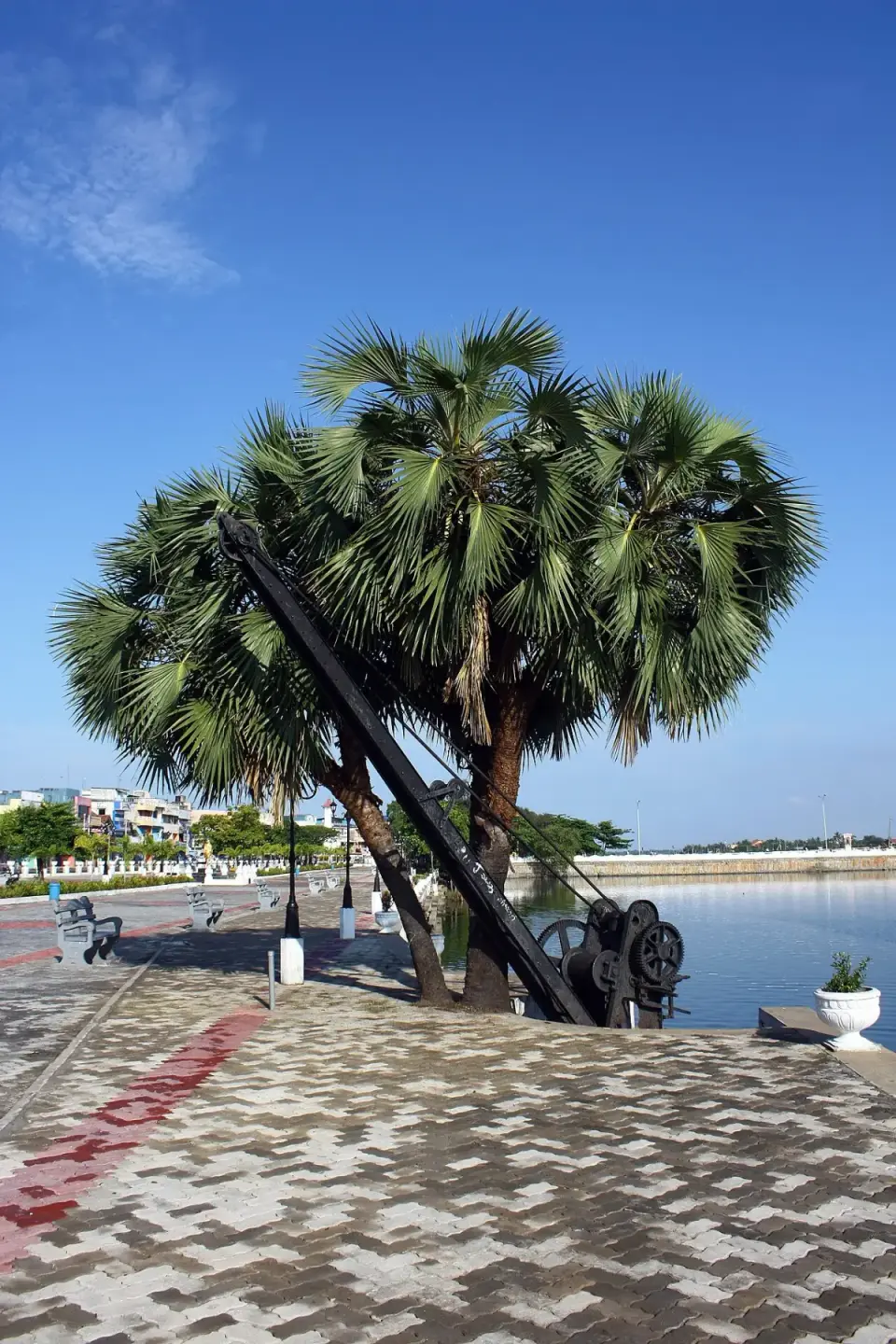
Doum palm (Hyphaene thebaica)
Photo: AntanO, CC BY-SA 3.0, Wikimedia Commons

On the map in 3 countries palm

Doum palm

Hyphaene thebaica

Family: Arecaceae

On our map this plant appears in 3 countries and ranks highest in: Eritrea, Niger, Egypt.

A fan palm with a feature rare among palms: its trunk forks repeatedly into several branches, each ending in a plume of leaves. It grows to 15–17 m along seasonal rivers and in oases from Egypt to East Africa. The brown, fibrous fruits have a sweetish, gingerbread-like taste, and the hard endosperm of the seeds is sometimes called vegetable ivory. The leaves are the basic material for weaving mats, baskets, roofs and cords.

Description from: Eritrea.

More: Wikipedia (en) Plants of the World Online (Kew)

Significance in each country

  1. Eritrea no. 4 of 5 native

    Groves of doum palms in the western lowlands are an important source of livelihood: weaving their leaves is a traditional women’s craft, and the mats and baskets are sold in the markets of Agordat, Barentu and Keren.

  2. Niger no. 4 of 8 native

    In Niger doum palms form extensive groves in the valleys of the Tahoua, Maradi, Zinder and Diffa regions, and weaving mats from their leaves provides many families with an income in the dry season.

  3. Egypt no. 5 of 10 native

    In Egypt the doum palm grows mainly in Upper Egypt and has been known since the time of the pharaohs – its fruits were placed in tombs as food for the dead.