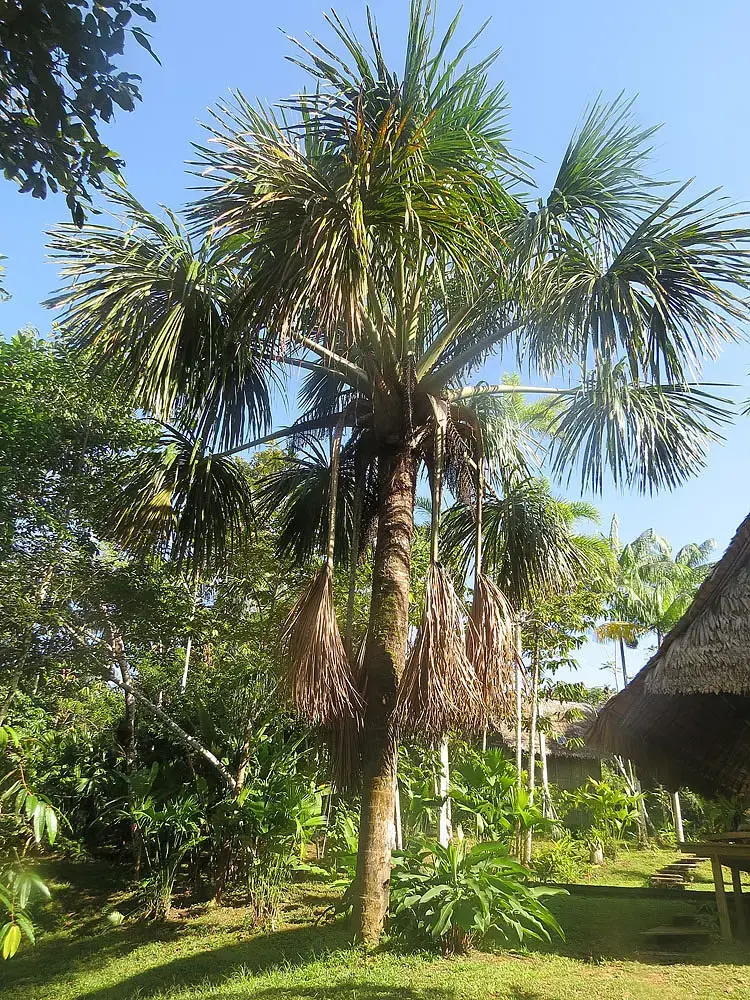
Moriche palm (Mauritia flexuosa)
Photo: Dick Culbert from Gibsons, B.C., Canada, CC BY 2.0, Wikimedia Commons

On the map in 3 countries palm

Moriche palm

Mauritia flexuosa

Family: Arecaceae

On our map this plant appears in 3 countries and ranks highest in: Venezuela, Trinidad & Tobago, Peru.

The moriche is an imposing palm up to 30–35 m tall, with huge, fan-shaped leaves. It grows in wetlands, forming extensive groves called morichales along streams on the savannas and in the swamps of the Orinoco Delta. Its scaly, reddish-brown fruits are rich in vitamin A and oil. The leaves yield fibre for hammocks, baskets and cord, and starch is extracted from the pith of the trunk. Morichales are important refuges for birds, including macaws.

Description from: Venezuela.

More: Wikipedia (en) Wikipedia (pl) Plants of the World Online (Kew)

Significance in each country

  1. Venezuela no. 4 of 10 native

    For the Warao people of the Orinoco Delta the moriche is the basis of survival and central to their culture, and the lines of palms along the rivers are a hallmark of the Llanos landscape.

  2. Trinidad & Tobago no. 5 of 5 native

    The wild groves of this typically Amazonian palm are a reminder of Trinidad’s former connection to the mainland; blue-and-yellow macaws, reintroduced to the Nariva Swamp, nest in its trunks.

  3. Peru no. 14 of 15 native

    In the Peruvian Amazon, aguaje is one of the most important fruits: it is sold at Belén market in Iquitos, and the flesh is made into a drink called aguajina, ice cream and jams.