Peru · #10 aquatic plant
Totora
Schoenoplectus californicus · locally: totora
The Uros people build floating islands on Lake Titicaca from totora stems, and the fishermen of Huanchaco make caballitos de totora boats.
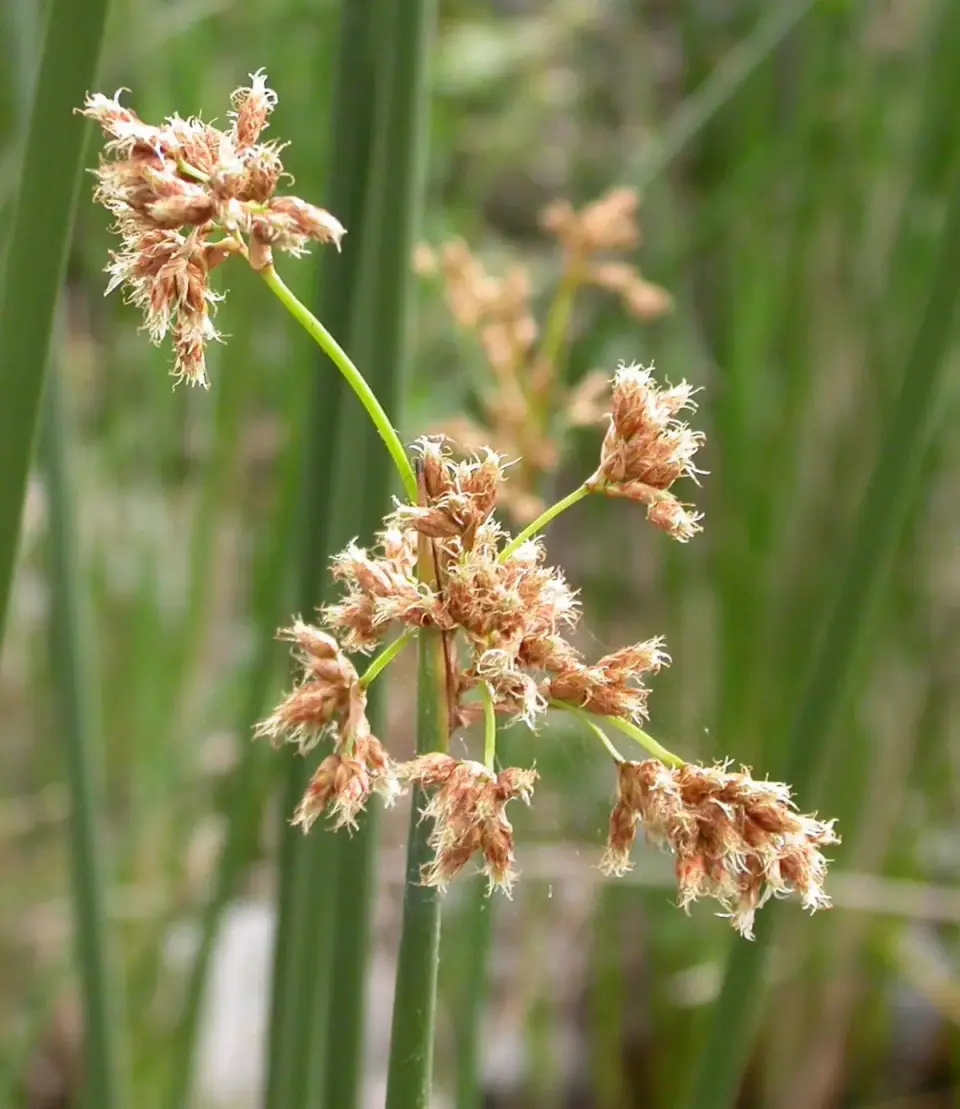
Totora is a large perennial of the sedge family whose green, leafless stems rise 1.5–4 m from creeping rhizomes. It grows in the shallow waters of lakes, floodplains and coastal marshes, forming extensive reedbeds. The inside of the stems is filled with spongy, air-filled tissue, which makes them light and superbly buoyant. The species occurs throughout the Americas – from California to Chile – and a distinct subspecies, tatora, grows in the Andes. The young white bases of the shoots are edible, and the stems are used as fodder and as material for mats and roofs.
Significance in the country
The Uros people of Lake Titicaca live on artificial islands made of layers of totora, from which they also build their houses and boats, constantly adding new layers. On the north coast, fishermen from Huanchaco still put out to sea on reed “little horses” (caballitos de totora), which were already depicted on Moche pottery.
Where it grows
Extensive reedbeds cover the Peruvian part of Lake Titicaca in Puno; on the coast totora is grown in flooded hollows at Huanchaco (La Libertad) and in Lambayeque, and it also grows in the Pantanos de Villa wetlands in Lima.
More: Wikipedia (en)