Peru · #7 crop
Ají amarillo
Capsicum baccatum · locally: ají amarillo
This fruity orange-yellow chilli is the foundation of Peruvian cooking – there is no ají de gallina or causa limeña without it.
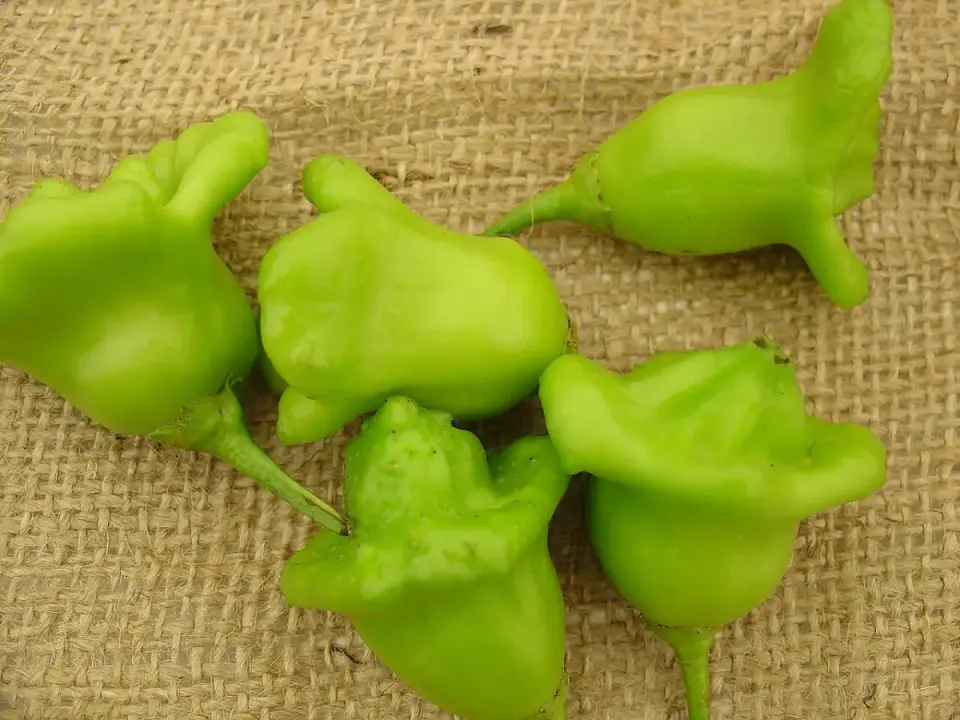
Capsicum baccatum is a perennial shrub of the nightshade family, growing 1–1.5 m tall, and one of the five domesticated species of chilli pepper. It is easy to recognise by its creamy white flowers with yellowish or greenish spots on the corolla. The most famous Peruvian variety, ají amarillo, has elongated fruits about 10–12 cm long, which turn orange-yellow as they ripen. They are moderately hot (about 30,000–50,000 Scoville units) and have a distinctly fruity flavour; dried, they are called ají mirasol.
Significance in the country
Ají amarillo is regarded as the most important seasoning in Peruvian cuisine – its paste goes into dishes such as ají de gallina, papa a la huancaína, causa limeña and many kinds of ceviche. Capsicum baccatum was grown on the Peruvian coast long before the Inca state arose.
Where it grows
Mainly in the warm, irrigated valleys of the coast – from Piura and Lambayeque to Lima, Ica and Tacna; smaller plantings lie in the lower valleys of the Andes.
More: Wikipedia (en) Wikipedia (pl)