Peru · #6 crop
Quinoa
Chenopodium quinoa · locally: quinua (kinwa)
Peru grows more of the Incas’ sacred “mother of all grains” than any other country – its colourful fields line the shores of Titicaca.
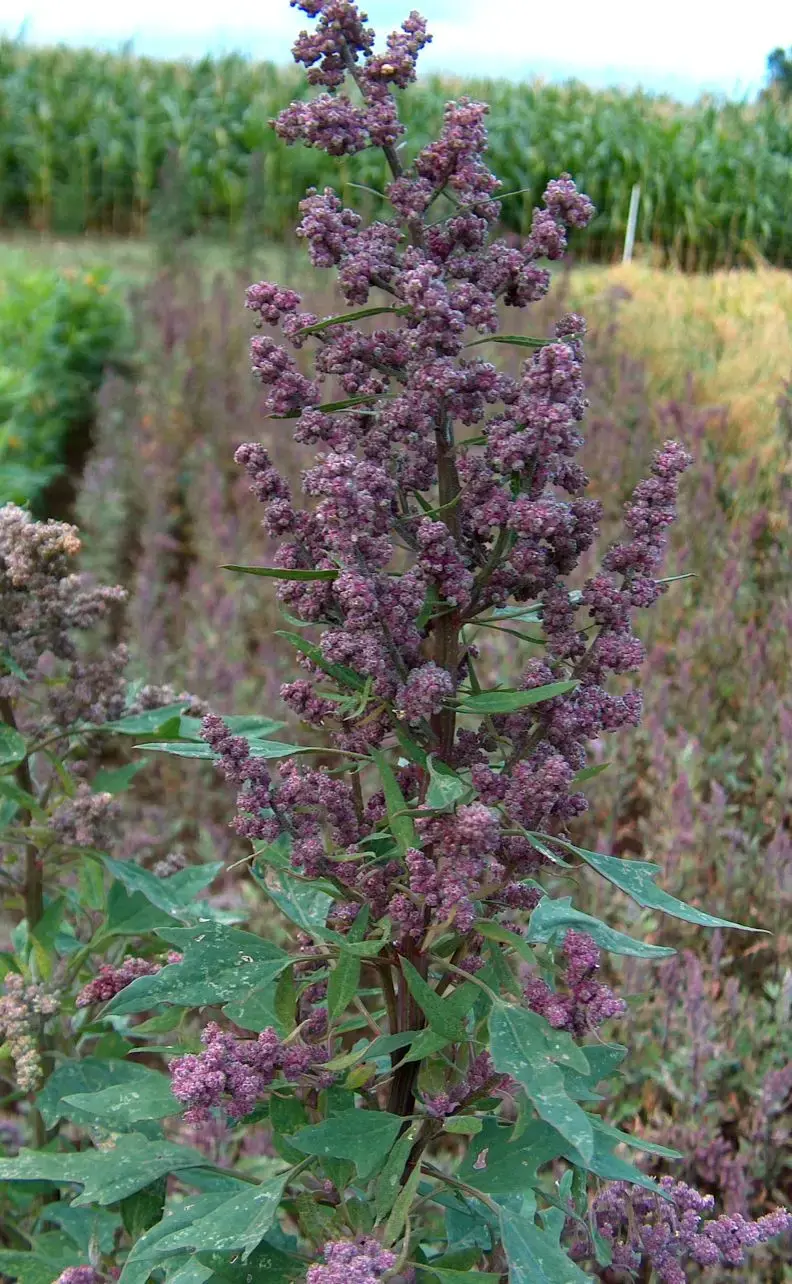
Quinoa is an annual of the amaranth family, growing 1–2 m tall, with broad, goosefoot-shaped leaves and showy panicles that turn white, yellow, red or purple as they ripen. Its tiny seeds, known as a pseudocereal, contain complete protein with all the essential amino acids and are gluten-free. The seed coat contains bitter saponins, which are removed by rinsing and rubbing. The plant tolerates frost, drought and salty soils, so it succeeds even above 4,000 m.
Significance in the country
Quinoa was domesticated several thousand years ago in the Lake Titicaca area and, together with the potato, was a staple of the Inca diet. Since the global craze for “superfoods”, Peru has become its largest producer and exporter, and in Peruvian cooking it goes into soups, salads, desserts and drinks.
Where it grows
On the Altiplano around Lake Titicaca in Puno, where most of the harvest comes from, and also in the Andean valleys of Ayacucho, Apurímac, Cuzco and Junín; on the coast it is grown on the irrigated fields of Arequipa.
More: Wikipedia (en) Wikipedia (pl)