Mali · #1 tree
African baobab
Adansonia digitata · locally: sira (bambara)
The baobab is the emblematic tree of Malian villages – its powdered leaves thicken the sauce served with tô, the everyday millet porridge.
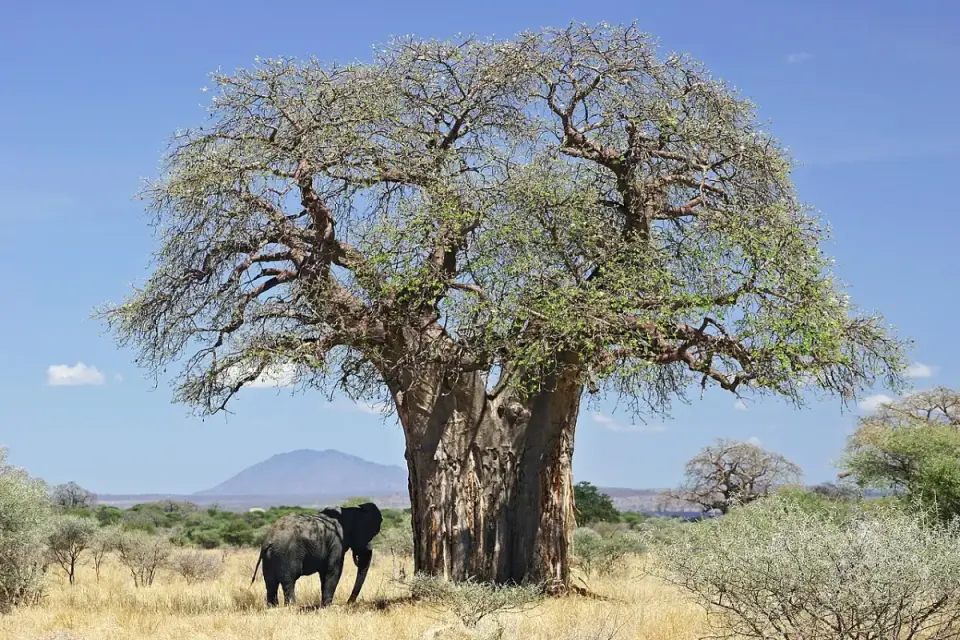
A tree with a huge, bottle-shaped trunk and a spreading crown that is leafless for most of the year and looks like roots turned upside down. In the rainy season it puts out palmate leaves and large, hanging white flowers, pollinated at night by bats. The fruits, in a hard, velvety shell, contain a tangy, chalk-white pulp used to make a refreshing drink. The bark yields fibre for ropes and mats, and the trees often live for more than a thousand years.
Significance in the country
In Mali baobabs grow beside almost every village, and harvesting their leaves and fruit is an important source of food and income for women. The shade of a spreading baobab is also a traditional place for village meetings.
Where it grows
Throughout the southern and central parts of the country – from Kayes and Sikasso to Mopti; in the north, scattered trees grow in the Niger Valley near Timbuktu and Gao.
More: Wikipedia (en) Wikipedia (pl)