Cameroon · #5 tree
African baobab
Adansonia digitata · locally: baobab
In Cameroon’s dry north, baobabs mark out villages and pastures – the leaves go into sauces and the fruit into drinks.
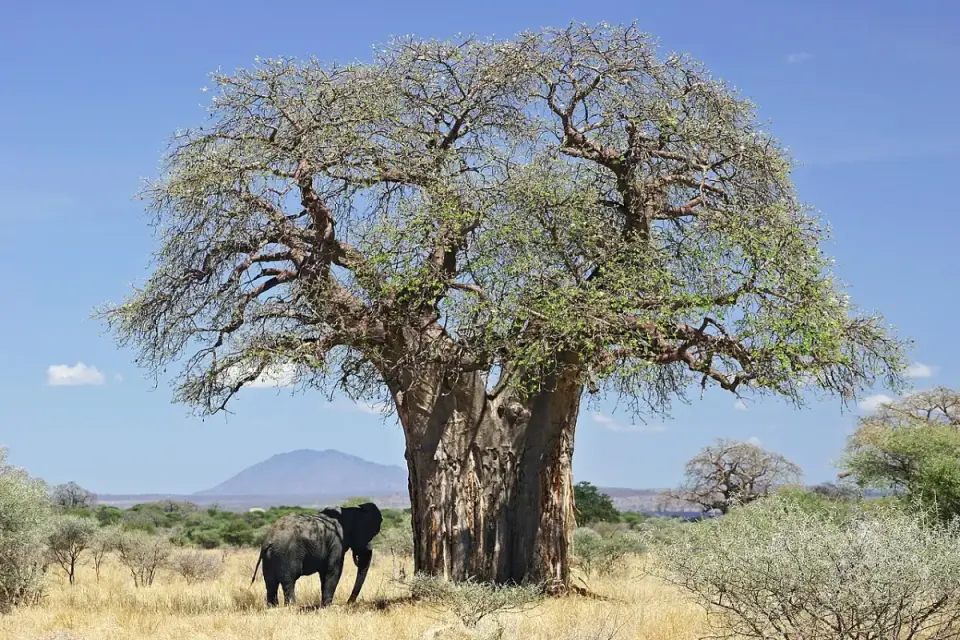
A distinctive savanna tree with a barrel-shaped trunk that can exceed 10 m in girth and store thousands of litres of water. It stands leafless for most of the year, so it looks as if it were growing upside down, with its roots in the air. Its large white flowers open at night and are pollinated by bats, and the hard fruits yield a tangy pulp rich in vitamin C. Individual trees live for more than a thousand years.
Significance in the country
The baobab is the emblem of Cameroon’s Sahelian north: it provides shade at markets, and its powdered leaves are the basis of thick sauces eaten with sorghum and millet porridge.
Where it grows
Savannas and steppes of the Far North and North regions – including Waza National Park, the plains around Maroua and Garoua and the foothills of the Mandara Mountains.
More: Wikipedia (en) Wikipedia (pl)