Iran · #8 crop
Pomegranate
Punica granatum · locally: anâr (انار)
On Yalda, the longest night of the year, Iranians eat pomegranates and watermelons – the red seeds symbolise dawn and new life.
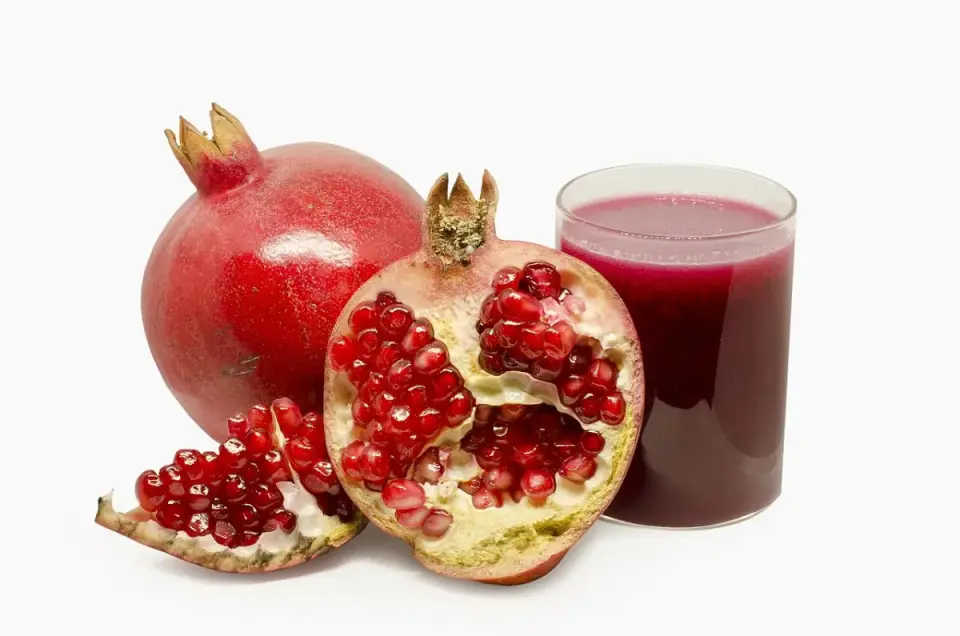
A deciduous shrub or small tree growing to 3–6 m, with thin, often thorny twigs and glossy, narrowly elliptical leaves. In summer it bears showy, scarlet, funnel-shaped flowers with a fleshy calyx. The fruit is a globular, leathery berry topped with a crown of sepals and filled with hundreds of seeds, each wrapped in juicy, red, sweet-and-sour flesh. The pomegranate is resistant to drought and heat and its fruits keep well, so it has been grown throughout the region since antiquity.
Significance in the country
Iran, where the pomegranate grows wild in the northern mountains, is regarded as one of the fruit’s cradles and is among its largest producers. Thick pomegranate molasses (rob-e anar) is the basis of fesenjan, a stew with walnuts, and the pomegranate – a symbol of fertility and abundance – graces tables during the Yalda festival.
Where it grows
Grown across almost the whole country; famous varieties come from Saveh (Markazi), Ferdows (South Khorasan), Neyriz (Fars) and Yazd, and wild pomegranates grow in the forests by the Caspian Sea.
More: Wikipedia (en) Wikipedia (pl)