10 plants worth knowing
Iran
Iran is a vast plateau ringed by mountains: in the north, by the Caspian Sea, grow the humid Hyrcanian forests – a relic from before the ice ages – while the Zagros range in the west is clothed in oak woodland and meadows full of bulbous flowers. The interior is taken up by semi-deserts and the salt deserts of Dasht-e Kavir and Dasht-e Lut. Persia gave the world the art of the garden, as well as saffron, pistachios and many ornamental plants.
Hover over a plant to see on the map where it grows.
where it grows
-
 1
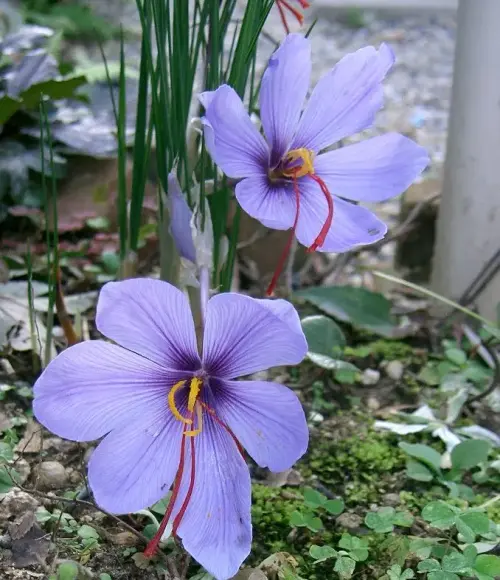
Saffron crocus
Crocus sativus
Iran supplies about 90% of the world’s saffron – the most expensive spice on earth, picked by hand, three stigmas per flower.
-
 2
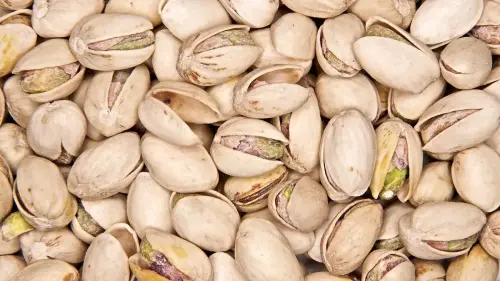
Pistachio
Pistacia vera
Iranian pistachios from Rafsanjan are “green gold” – one of the country’s most important non-oil exports.
-
 3
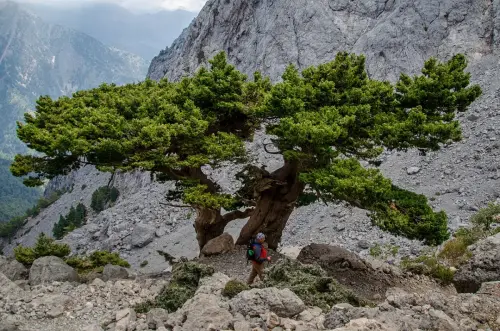
Mediterranean cypress
Cupressus sempervirens
The Cypress of Abarkuh is about 4,000 years old – one of the oldest living trees in the world and a national natural monument of Iran.
-
 4
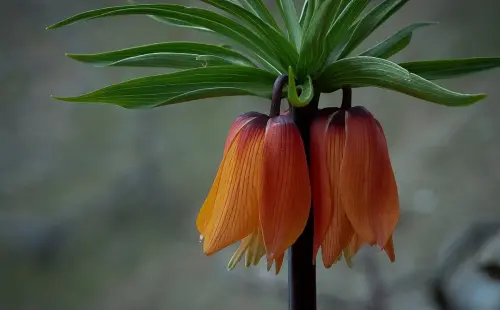
Crown imperial
Fritillaria imperialis
Persians call it the “upside-down tulip” – in spring its orange crowns blaze on the slopes of the Zagros Mountains.
-
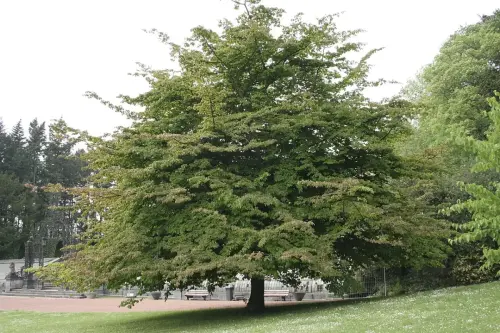 5
Persian ironwood
Parrotia persica
In autumn this ironwood of the Hyrcanian forests turns red and gold, lighting up the ancient forests by the Caspian Sea.
-
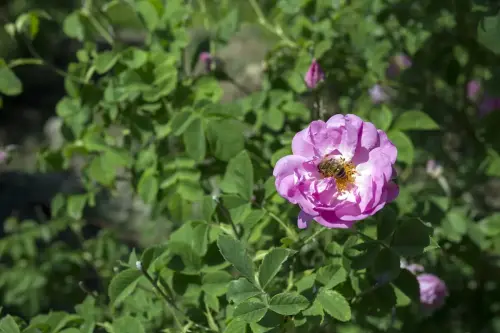 6
Damask rose
Rosa × damascena
In May, damask rose petals are distilled into rosewater in Kashan and Ghamsar – the golabgiri festival draws crowds.
-
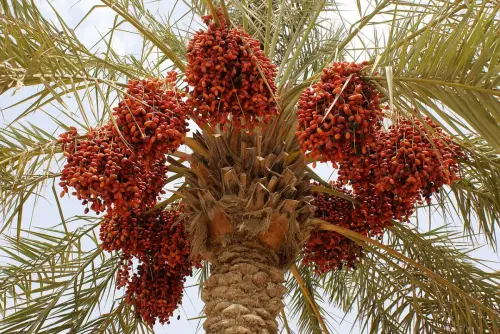 7
Date palm
Phoenix dactylifera
Soft, dark mazafati dates from Bam melt in the mouth – Iran is one of the world’s largest date producers.
-
 8
Pomegranate
Punica granatum
On Yalda, the longest night of the year, Iranians eat pomegranates and watermelons – the red seeds symbolise dawn and new life.
-
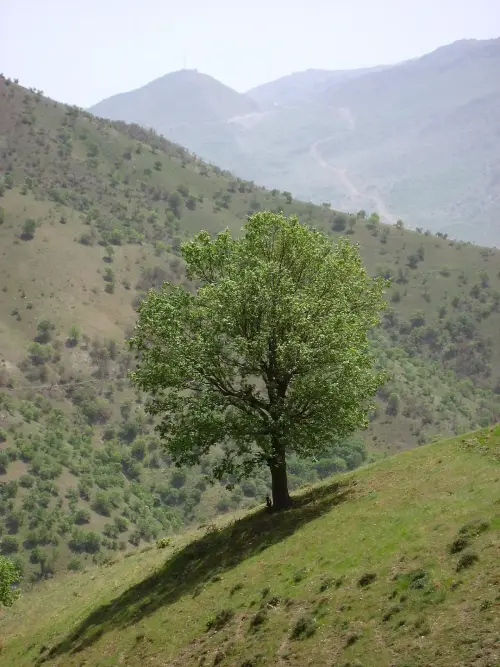 9
Persian oak
Quercus brantii
The Persian oak forms the vast forests of the Zagros Mountains – Iran’s largest forest area, stretching along the country’s western border.
-
 10
Oriental plane
Platanus orientalis
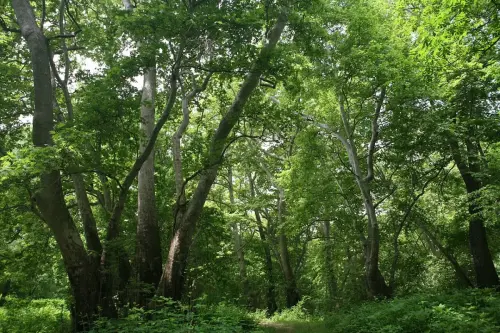
Shah Abbas lined Isfahan’s Chaharbagh avenue with plane trees, and ancient chenars still shade the courtyards of mosques and bazaars.
Iran on other Ominuvo maps
- World in NumbersPopulation: 92.4 million (2025)Source: World Bank – WDI: UN World Population Prospects (CC BY 4.0)
- Languages of the worldPersian · official languageSource: Unicode CLDR (Unicode License v3)
- Prices around the worldIranian rial (IRR)Source: ISO 4217
- Time zones mapUTC+3:30Source: IANA tz database (public domain)
- Plugs and sockets of the worldType C, F · 230 V · 50 Hz
- National dishes of the world4 national dishes
- Castles map35 castles and palacesSource: Wikidata (CC0 1.0)
- Volcano & earthquake map1 volcanoSource: Smithsonian GVP (Smithsonian Terms of Use)
- UFO sightings map1 UFO or unexplained case
- VPN provider mapServers of 1 VPN providerSource: VPN Map (Ominuvo) (CC BY 4.0)