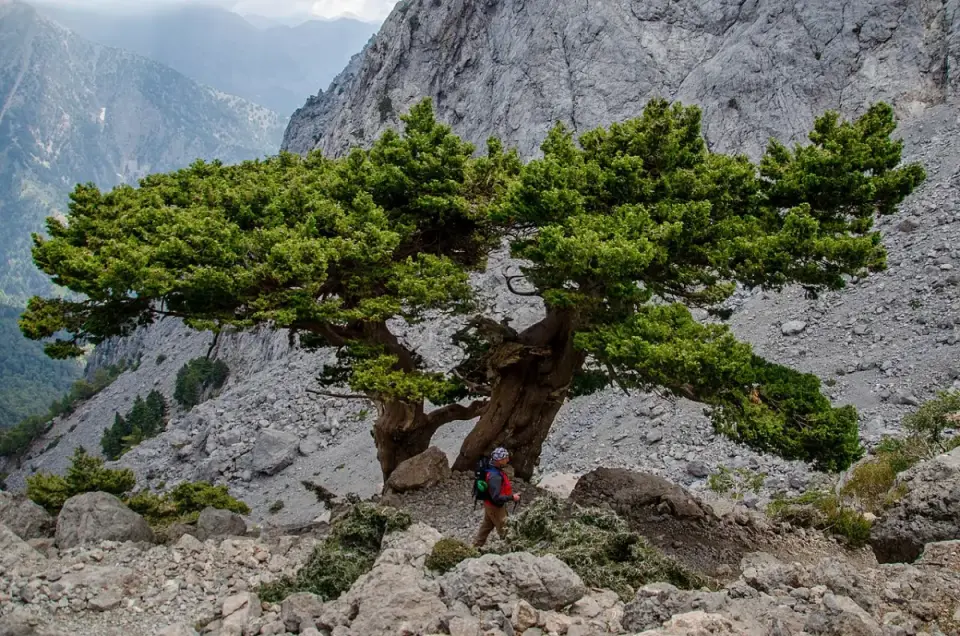
Iran · #3 tree Symbol of eternity in Persian art (the boteh motif)
Mediterranean cypress
Cupressus sempervirens · locally: sarv (سرو)
The Cypress of Abarkuh is about 4,000 years old – one of the oldest living trees in the world and a national natural monument of Iran.
The Mediterranean cypress is a conifer with a slender, columnar crown (in cultivation) or a more spreading one (in the wild form), growing to 30 m. It has tiny, scale-like leaves and globular cones. It is very long-lived and drought-resistant, and its wood is fragrant and durable. Since antiquity it has been planted in gardens and by temples and cemeteries around the Mediterranean and in the Middle East.
Significance in the country
In Persian culture the slender cypress symbolises eternity, freedom and an upright bearing, and its stylised shape gave rise to the boteh (paisley) motif on carpets and textiles. Cypress avenues are an integral part of the Persian gardens on the UNESCO list, such as Eram Garden in Shiraz and Fin Garden in Kashan.
Where it grows
Planted in gardens and at shrines throughout central Iran – famous specimens grow in Abarkuh (Yazd), Shiraz, Isfahan and Kashan; it grows wild in the mountains of the north, including in Gilan and Golestan.
More: Wikipedia (en) Wikipedia (pl)