Armenia · #2 crop Traditional symbol of Armenia – of fertility, abundance and life
Pomegranate
Punica granatum · locally: նուռ (nur)
The red pomegranate is the most common motif in Armenian art – from medieval reliefs to Parajanov’s film “The Color of Pomegranates”.
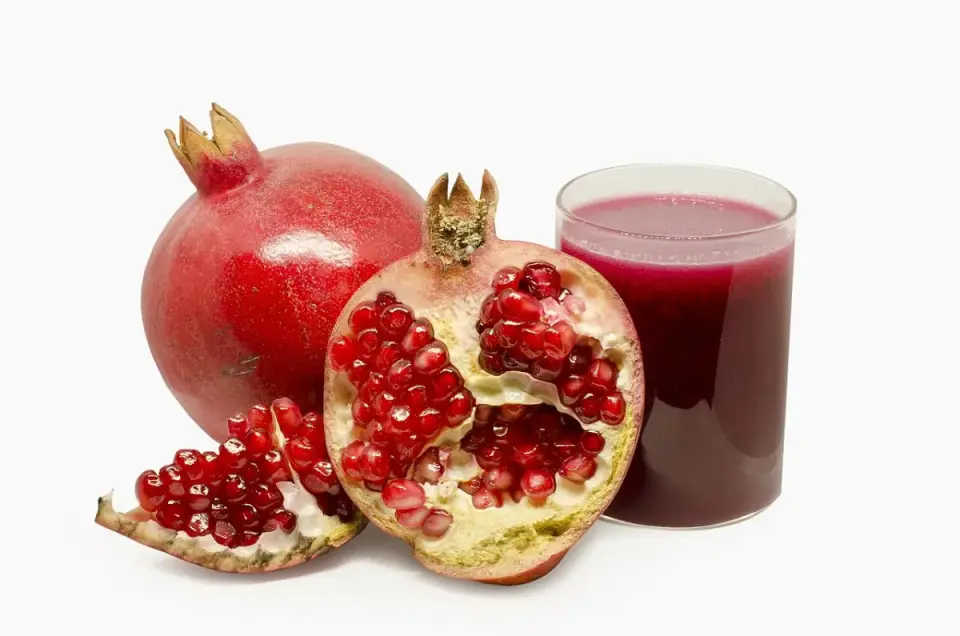
A shrub or small tree reaching 5–8 m, with slender, often thorny twigs and glossy, lance-shaped leaves. In summer it bears bright red, funnel-shaped flowers. The fruit has a leathery rind topped with a crown of sepals, and inside are hundreds of seeds wrapped in juicy, ruby-red arils. The species is native to the region from Iran to northern India and has been cultivated in the Middle East for thousands of years. The juice is rich in polyphenols, and the rind was once used to obtain dye and tannins.
Significance in the country
In Armenian culture the pomegranate symbolises fertility, abundance and the continuity of the nation – according to tradition the fruit holds 365 seeds, one for each day of the year. It appears in ornament, ceramics and jewellery, and the title of Sergei Parajanov’s film about the poet Sayat-Nova has become its cultural calling card.
Where it grows
Grown in the warmest corners of the country – above all around Meghri on the Araks in Syunik province, and also in the Ararat Valley and the low-lying parts of Tavush.
More: Wikipedia (en) Wikipedia (pl)