Botswana · #4 perennial
Devil’s claw
Harpagophytum procumbens · locally: sengaparile
The spiny fruits of devil’s claw lodge in animals’ hooves, while its Kalahari tubers end up in pharmacies all over the world.
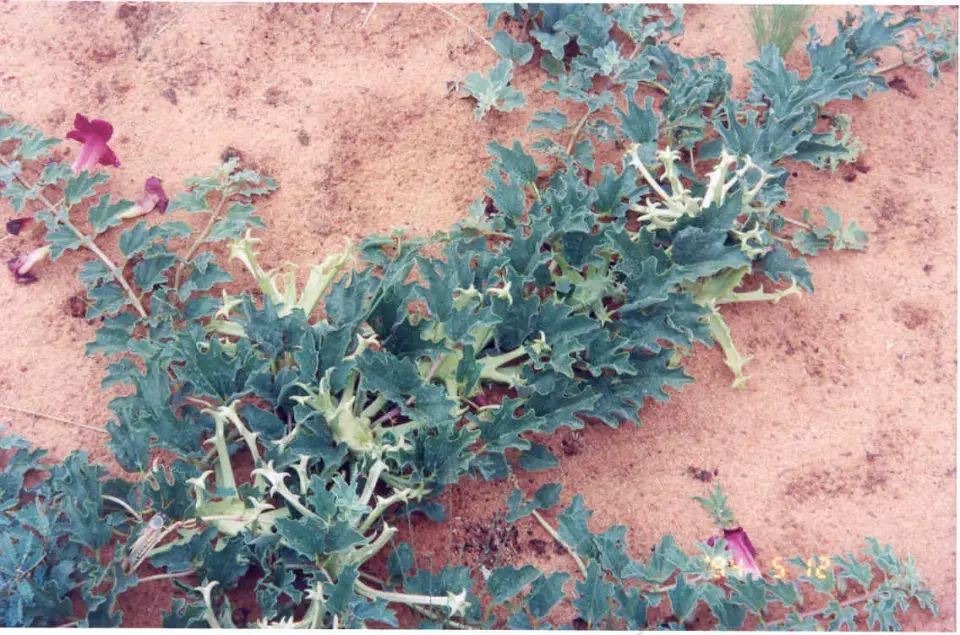
Harpagophytum procumbens is a perennial with stems that trail across the sand and pinkish-purple, trumpet-shaped flowers. Underground it forms a main root and numerous tuberous storage roots that help it survive long droughts. The woody fruits have long, curved arms tipped with hooks that catch on animals’ fur and hooves – hence the name “devil’s claw”. The dried tubers contain harpagoside and are traditionally used against pain and inflammation, and today also in anti-rheumatic remedies.
Significance in the country
Botswana, together with Namibia, is the world’s main source of devil’s claw. Harvesting the tubers in the Kalahari provides income for San communities and other desert dwellers, and the country has introduced permits and rules for sustainable harvesting.
Where it grows
The Kalahari sands of western and central Botswana – above all Ghanzi and Kgalagadi districts and the western parts of Kweneng and Central District.
More: Wikipedia (en)