Botswana · #2 aquatic plant
Papyrus
Cyperus papyrus
Walls of papyrus several metres high line the channels of the Okavango Delta, explored by traditional mokoro dugout canoes.
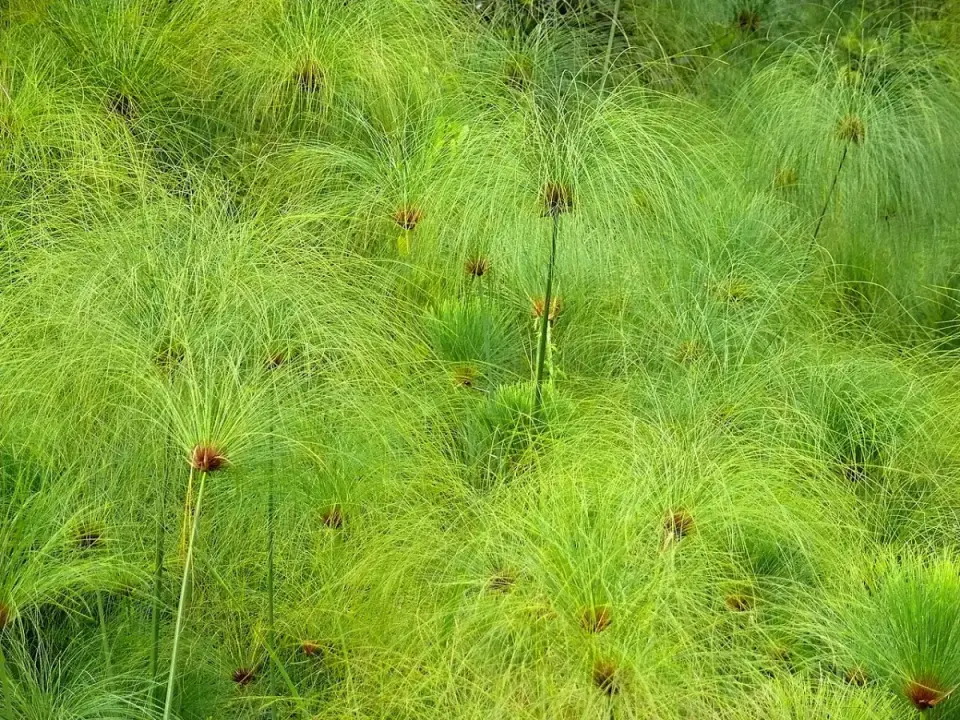
Papyrus is a stately aquatic perennial of the sedge family, growing 3–5 m tall, with leafless stems that are triangular in cross-section and topped by a globe-shaped plume of slender rays. It grows in shallow, permanently flowing fresh water, forming dense floating mats and solid walls along channels. It produces huge amounts of biomass quickly, filters water and traps sediment. In ancient Egypt its pith was made into papyrus, and in Africa it is still used for thatching, mat-making and building boats.
Significance in the country
Papyrus is the chief architect of the Okavango Delta, inscribed on the UNESCO World Heritage List in 2014: its mats steer the flow of water, opening and closing channels. The view of papyrus-lined channels from a mokoro is a symbol of tourism in Botswana.
Where it grows
The permanent swamps of the Okavango Delta and its narrow “Panhandle”, plus the wetlands of the Kwando and Linyanti rivers in the north of North-West District.
More: Wikipedia (en) Wikipedia (pl)