10 plants worth knowing
Angola
Angola stretches from the humid forests of Cabinda and the north, across a vast central plateau covered in open miombo woodland, to the dry mopane savannas of the south and the Namib Desert on the coast of Namibe Province, cooled by the Benguela Current. High-lying headwaters on the plateau feed the Congo, Zambezi and Okavango rivers, and the contrast between the humid north and the dry south gives Angola one of the most varied floras in Africa.
Hover over a plant to see on the map where it grows.
where it grows
-
 1
native
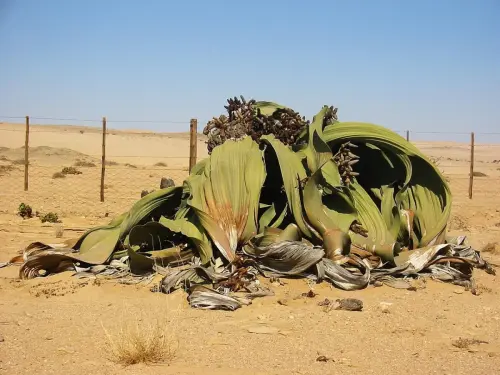
Welwitschia
Welwitschia mirabilis
A living fossil of the Namib Desert – a plant with just two leaves that can live for over a thousand years. It was discovered in Angola.
-
 2
native
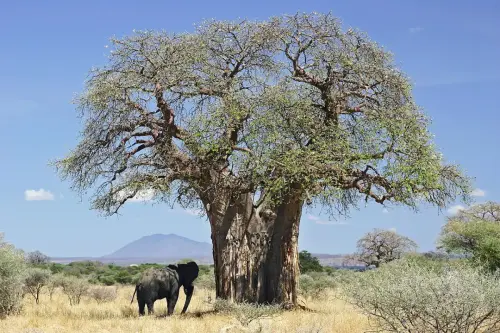
African baobab
Adansonia digitata
Angolans consider the imbondeiro their own tree – baobabs surround Luanda and feature in songs, poems and paintings.
-
 3
native
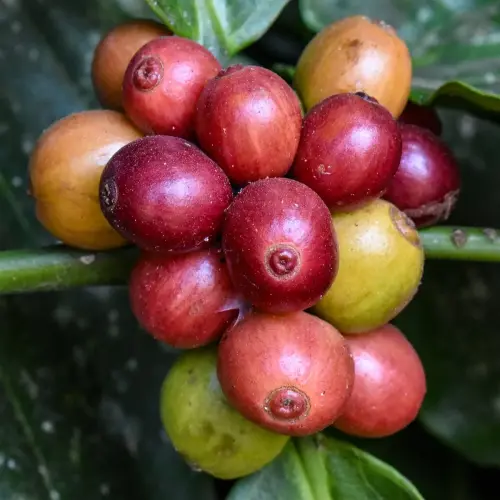
Robusta coffee
Coffea canephora
In the 1970s Angola was the world’s fourth-largest coffee producer – a coffee sprig still adorns the national emblem.
-
 4
native
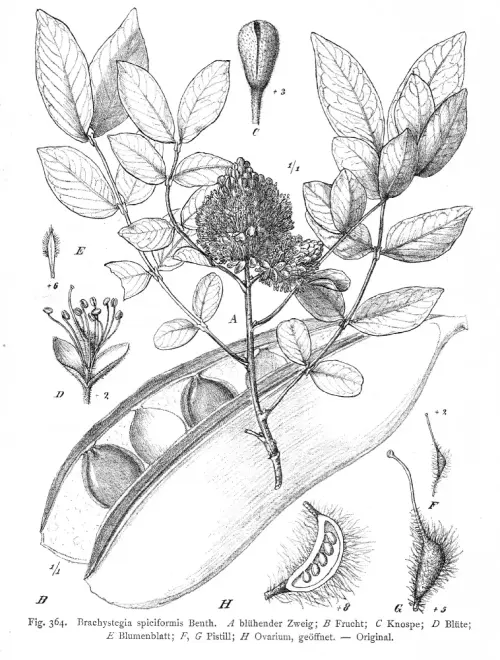
Msasa
Brachystegia spiciformis
The main tree of the miombo woodlands, which every year before the rainy season puts out new leaves in shades of red and copper.
-
 5
native
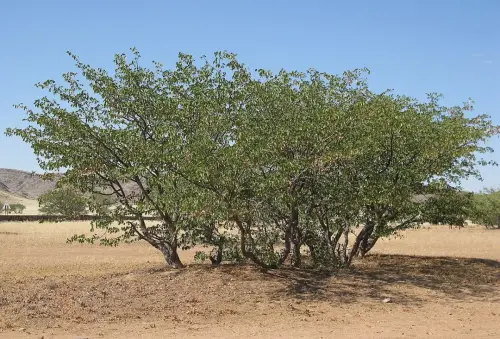
Mopane
Colophospermum mopane
A tree with butterfly-wing leaves that forms the dry woodlands of southern Angola and feeds the famous mopane worms.
-
 6
cultivated
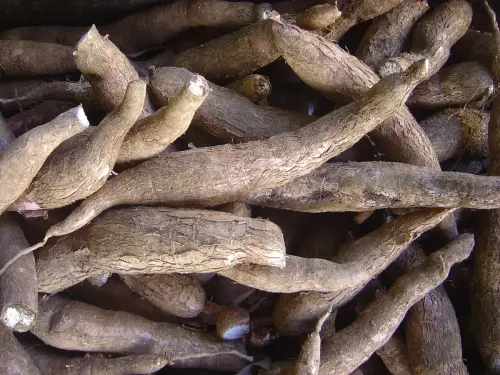
Cassava
Manihot esculenta
Cassava flour is cooked into funje – a thick porridge that accompanies almost every meal in Angola.
-
 7
native
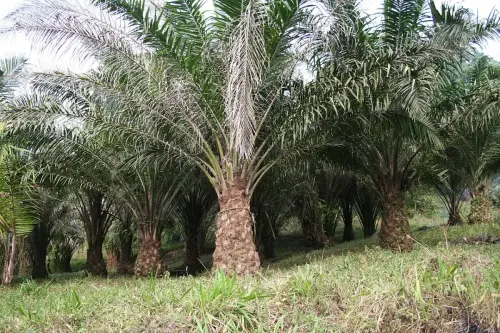
African oil palm
Elaeis guineensis
Oil from the fruit of this palm gives its orange colour to muamba de galinha – a dish regarded as Angola’s national dish.
-
 8
introduced or naturalised
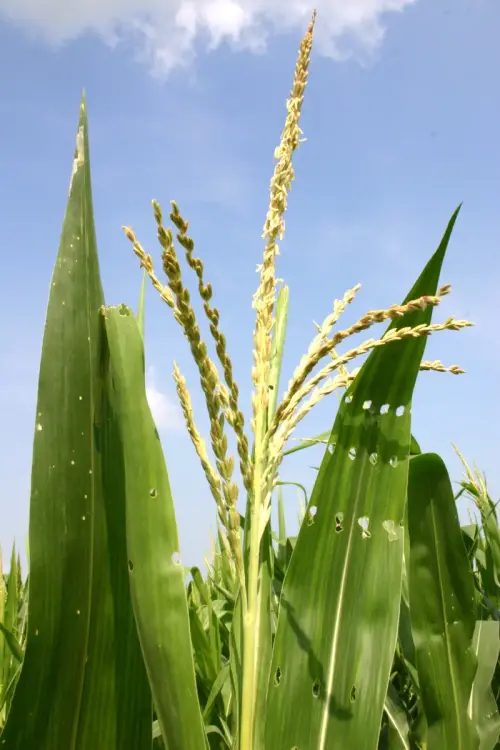
Maize
Zea mays
Maize is the main cereal of Angola’s central plateau – its flour makes funje de milho, and its leaves appear on the national emblem.
-
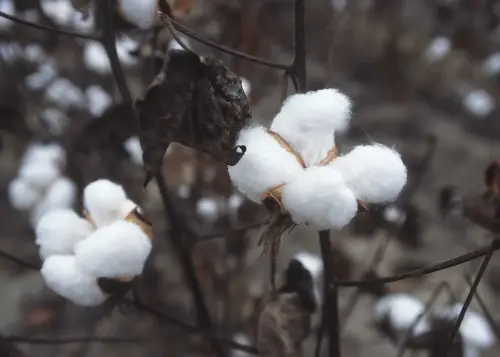 9
cultivated
Upland cotton
Gossypium hirsutum
Forced cotton growing sparked the 1961 uprising in Baixa de Cassanje – the start of Angola’s struggle for independence.
-
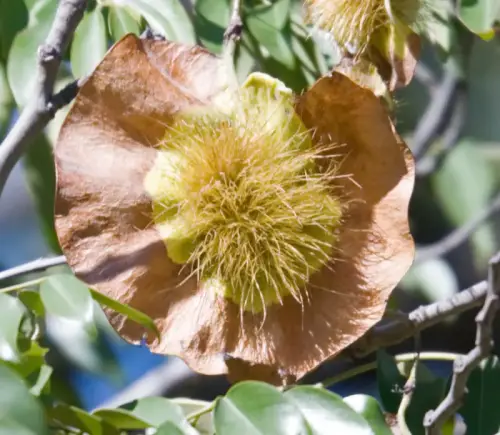 10
native
Mukwa
Pterocarpus angolensis
Mukwa, whose Latin name refers to Angola, “bleeds” red sap when cut, and its wood is among the most valuable in Africa.
Angola on other Ominuvo maps
- World in NumbersPopulation: 39 million (2025)Source: World Bank – WDI: UN World Population Prospects (CC BY 4.0)
- Languages of the worldPortuguese · official languageSource: Unicode CLDR (Unicode License v3)
- Prices around the worldAngolan kwanza (AOA)Source: ISO 4217
- Time zones mapUTC+1Source: IANA tz database (public domain)
- Plugs and sockets of the worldType C · 220 V · 50 Hz
- National dishes of the world3 national dishes
- Castles map3 castles and palacesSource: Wikidata (CC0 1.0)
- VPN provider mapServers of 4 VPN providersSource: VPN Map (Ominuvo) (CC BY 4.0)