Angola · #3 crop Coffee leaves on the national emblem of Angola
Robusta coffee
Coffea canephora · locally: café
In the 1970s Angola was the world’s fourth-largest coffee producer – a coffee sprig still adorns the national emblem.
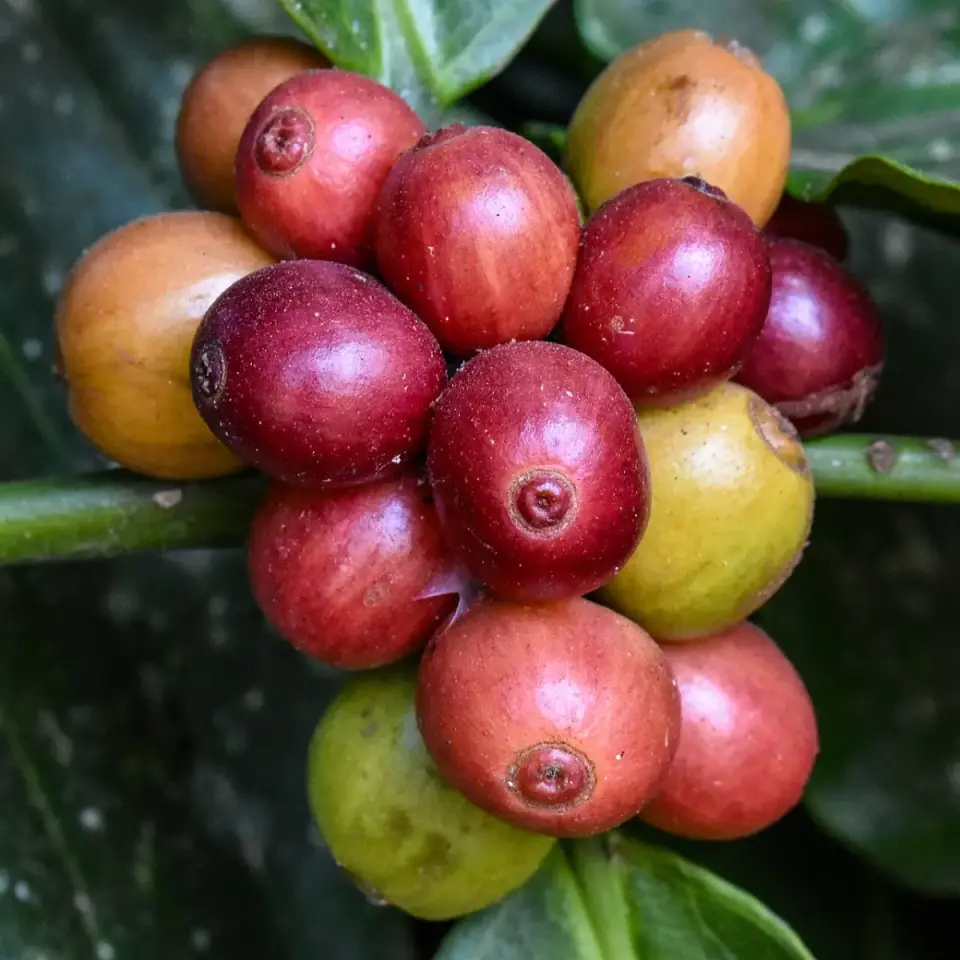
A shrub or small tree growing to 10 m, native to the forests of West and Central Africa. Compared with Arabica coffee it is more resistant to disease and heat and yields more heavily, and its beans contain almost twice as much caffeine. It produces a stronger, more bitter coffee used in espresso blends and instant coffee. The fruits ripen to a dark red and are picked by hand.
Significance in the country
Robusta plantations in Uíge, Cuanza Norte and on the slopes of Amboim made colonial Angola a coffee powerhouse; the civil war almost destroyed them, but coffee remains on the national emblem alongside maize and cotton, and the state is trying to revive its cultivation.
Where it grows
The humid hills of north-western Angola: Uíge and Cuanza Norte provinces, the Dembos area in Bengo and the Amboim and Seles escarpment in Cuanza Sul.
More: Wikipedia (en) Wikipedia (pl)