On the map in 2 countries tree
Siberian pine
Pinus sibirica
Family: Pinaceae
On our map this plant appears in 2 countries and ranks highest in: Russia, Mongolia.
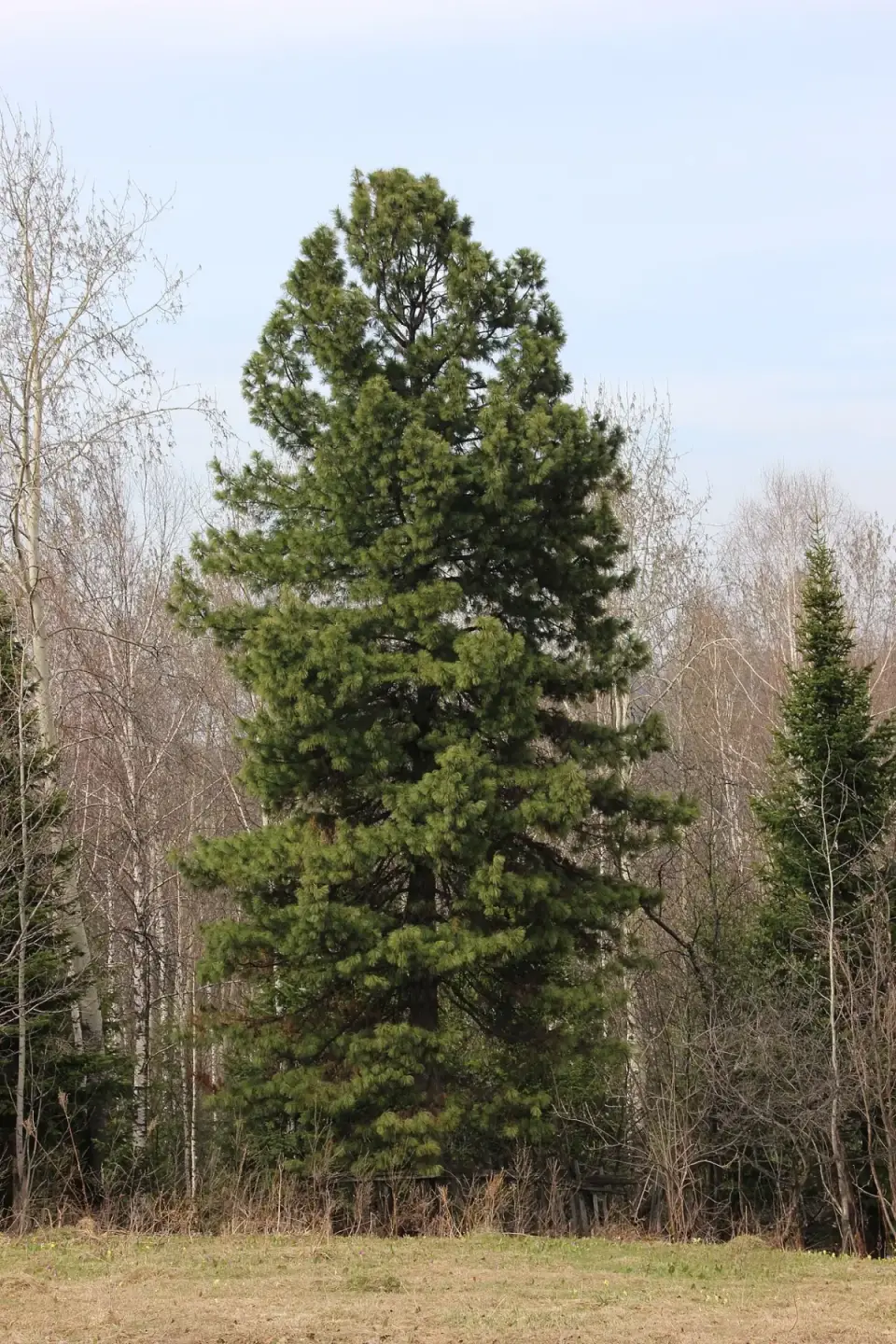
A stately conifer reaching 35–40 m tall, with needles in bundles of five. Its large cones take two years to ripen and contain edible, fat-rich seeds known as cedar nuts. They are dispersed mainly by the nutcracker, which caches them in the ground – forgotten seeds sprout into new trees. It grows in mountain and lowland taiga, often mixed with fir, spruce and larch. Despite its common name, it is not a true cedar.
Description from: Russia.
More: Wikipedia (en) Wikipedia (pl) Plants of the World Online (Kew)