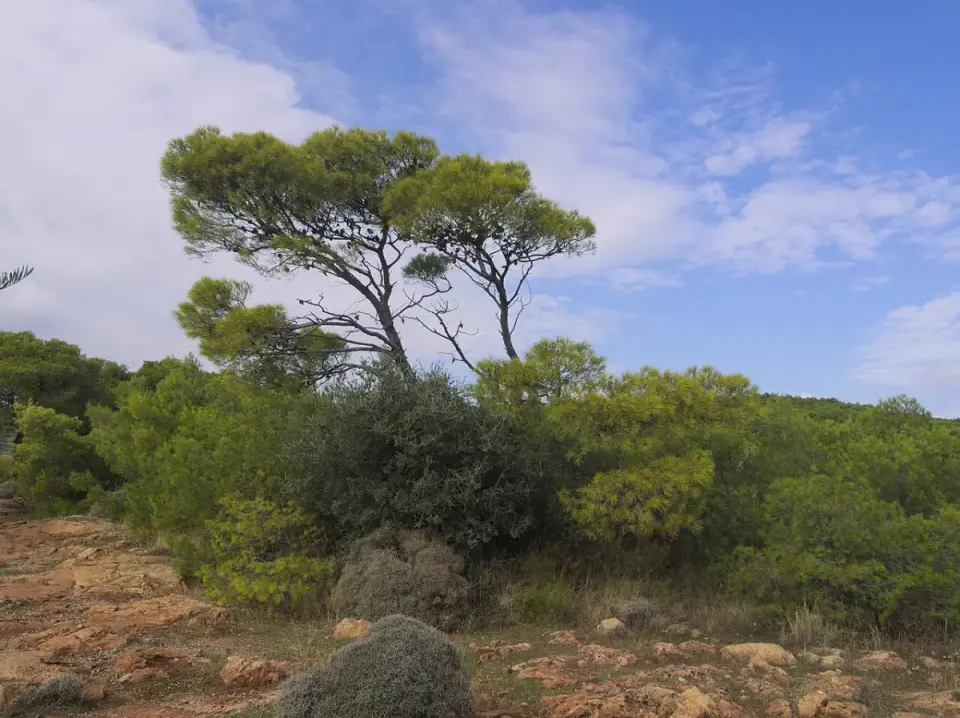
Aleppo pine (Pinus halepensis)
Photo: C messier, CC BY-SA 4.0, Wikimedia Commons

On the map in 5 countries tree

Aleppo pine

Pinus halepensis

Family: Pinaceae

On our map this plant appears in 5 countries and ranks highest in: Monaco, Tunisia, Syria, Algeria, Greece.

The Aleppo pine is a conifer with pale grey bark, an irregular, open crown and thin, bright green needles in pairs. Its cones can stay closed on the branches for years and open only when exposed to high temperatures, such as a fire, allowing the forest to regenerate quickly. It is the most drought-tolerant pine of the Mediterranean basin, growing on stony limestone soils from the coast to the low mountains. The Greeks flavour retsina wine with its resin.

Description from: Monaco.

More: Wikipedia (en) Wikipedia (pl) Plants of the World Online (Kew)

Significance in each country

  1. Monaco no. 4 of 5 native

    In densely built-up Monaco, Aleppo pines are among the few native trees still growing on the rocks and steep slopes.

  2. Tunisia no. 4 of 8 native

    The Aleppo pine makes up most of Tunisia’s forests and covers the mountains of the Tunisian Dorsal, including Jebel Chambi, the country’s highest peak. Its seeds are the basis of zgougou, a traditional dessert prepared for Mawlid.

  3. Syria no. 5 of 8 native

    The species name halepensis comes from Aleppo (Halab), from where specimens reached European botanists. In Syria this pine is planted on a large scale to reforest hills and around towns, because it tolerates dry summers well.

  4. Algeria no. 7 of 10 native

    Aleppo pine forests cover a larger area than any other forest type in Algeria, clothing the Tell and Saharan Atlas mountains.

  5. Greece no. 9 of 10 native

    Retsina, wine flavoured with Aleppo pine resin, harks back to the ancient custom of sealing amphorae with resin and is a recognised traditional name for a Greek wine.