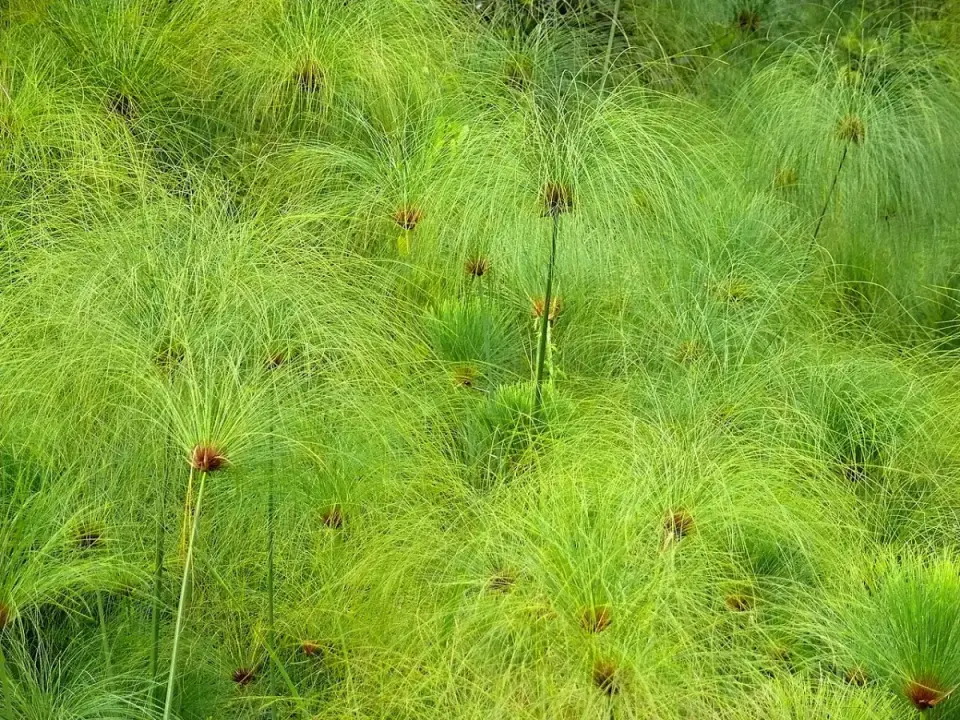
Papyrus (Cyperus papyrus)
Photo: Bernard DUPONT from FRANCE, CC BY-SA 2.0, Wikimedia Commons

On the map in 4 countries aquatic plant symbol: Egypt

Papyrus

Cyperus papyrus

Family: Cyperaceae

On our map this plant appears in 4 countries and ranks highest in: Egypt, Botswana, South Sudan, Uganda.

A stately marsh perennial of the sedge family whose triangular, leafless stems reach 3–5 m and end in globe-shaped plumes of thin stalks. It grows in the shallows of rivers and lakes and in the swamps of tropical Africa, forming dense reedbeds. The ancient Egyptians laid thin strips of the stem pith crosswise, pressed and dried them to make sheets of papyrus; they also used the stems to make boats, mats, sandals and ropes. The word “paper” comes from the name papyrus.

Description from: Egypt.

More: Wikipedia (en) Wikipedia (pl) Plants of the World Online (Kew)

Significance in each country

  1. Egypt no. 1 of 10 native

    Symbol of Lower Egypt

    A clump of papyrus was the emblem of Lower Egypt, and temple columns often imitated its stems.

  2. Botswana no. 2 of 8 native

    Papyrus is the chief architect of the Okavango Delta, inscribed on the UNESCO World Heritage List in 2014: its mats steer the flow of water, opening and closing channels.

  3. South Sudan no. 2 of 5 native

    The Sudd, where papyrus is one of the dominant plants, covers more than 30,000 km² in the rainy season and is protected as a Ramsar wetland of international importance.

  4. Uganda no. 4 of 5 native

    Papyrus swamps cover a substantial part of Uganda, filtering the water that flows into Lake Victoria; at Mabamba near Entebbe, birdwatchers from all over the world scan the papyrus for the shoebill – one of Uganda’s top wildlife…