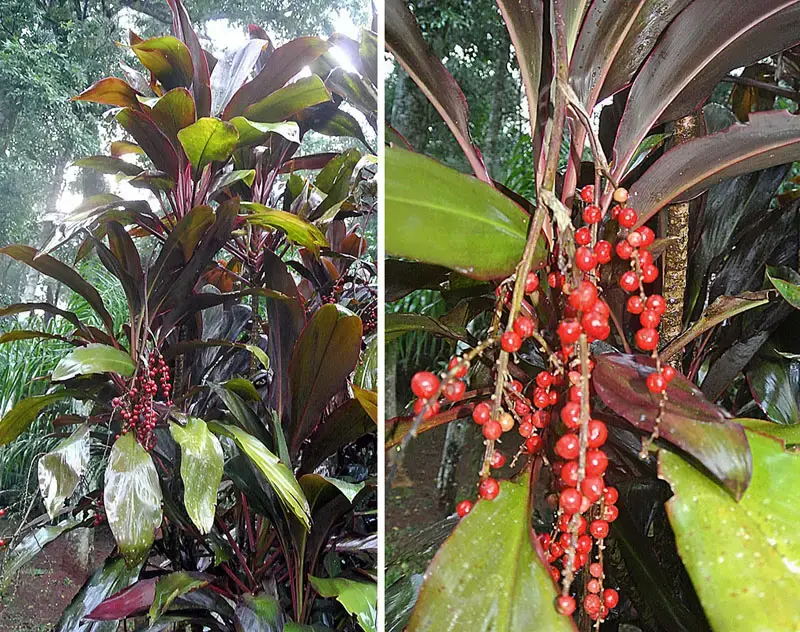
Vanuatu · #4 shrub Kastom plant, a symbol of Vanuatu tradition alongside namele
Ti plant
Cordyline fruticosa · locally: nangaria
The red and green leaves of the nangaria mark garden boundaries, adorn dancers and guard sacred sites in kastom tradition.
The ti plant is a shrub growing 2–4 m tall, with straight, sparsely branched stems topped by a plume of lance-shaped leaves up to 60 cm long. The leaves may be green, purple, red or variegated, and the small lilac flowers are gathered in panicles. The plant is easily propagated from pieces of stem pushed into the ground, so it spread with people throughout Oceania. Its sweet roots were once baked, and the leaves are used to wrap food and in folk medicine.
Significance in the country
In Vanuatu different varieties of nangaria carry specific meanings: they are planted on plot boundaries and by sacred sites, and dancers wear the leaves tucked into their belts during ceremonies. Together with namele it gave its name to the Nagriamel political movement, which was important on the road to independence.
Where it grows
Throughout the country – planted around villages, gardens, nakamals and ceremonial grounds, and also going wild on forest edges.
More: Wikipedia (en) Wikipedia (pl)