Vanuatu · #1 tree Namele leaves on the flag and coat of arms of Vanuatu
Namele
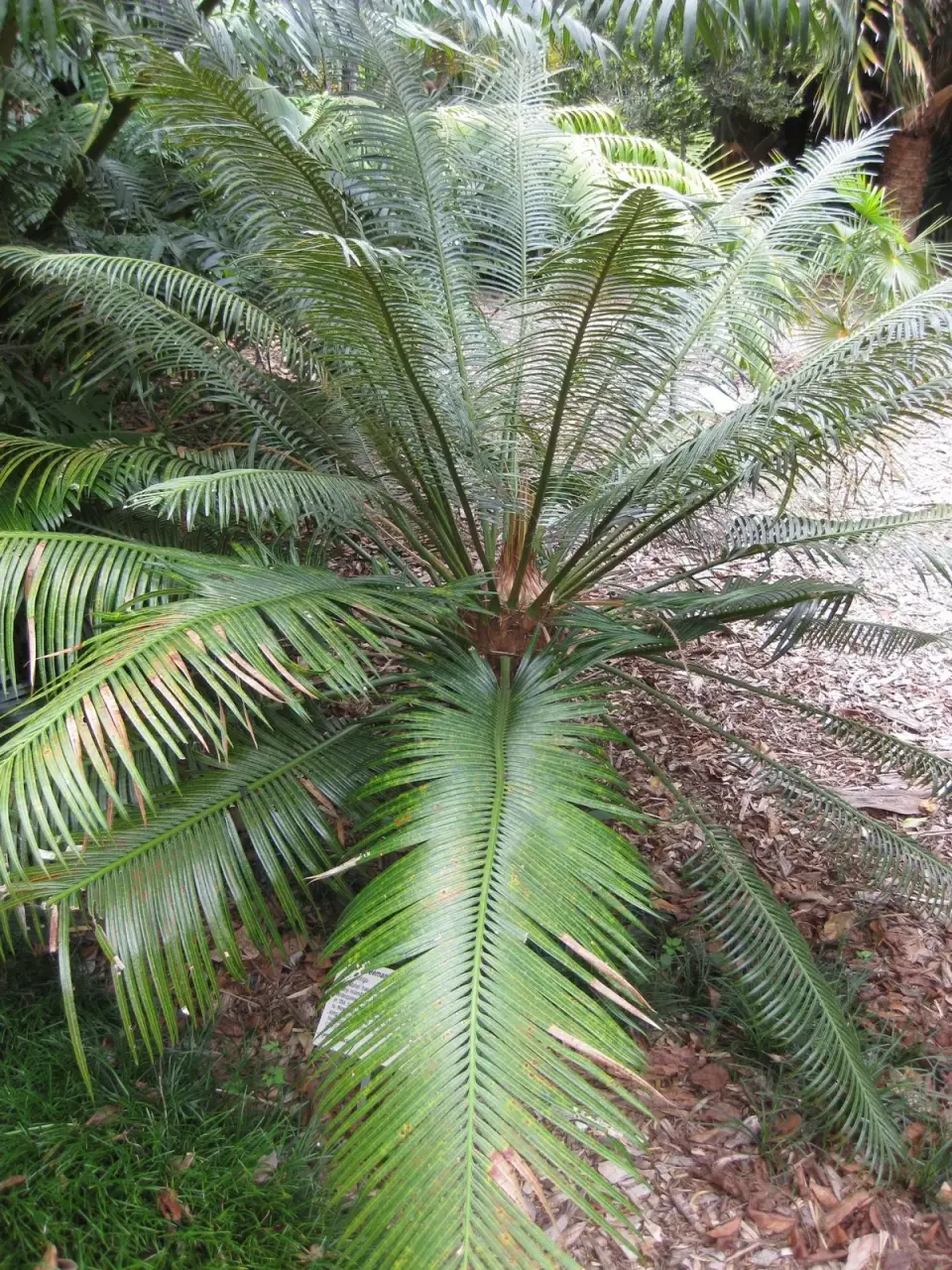
Cycas seemannii · locally: namele
Two crossed namele cycad leaves on Vanuatu’s flag symbolise peace – in kastom tradition a namele leaf also declares an inviolable taboo.
The namele is a cycad – a gymnosperm from a very ancient evolutionary lineage that dates back to before the dinosaurs. Although it looks like a palm, it is not related to palms: it has a thick trunk topped by a rosette of stiff, pinnate leaves up to 2 m long. Plants are either male or female, and the females produce large seeds containing toxins that must be leached out for a long time before eating. It grows very slowly, in coastal forest and scrub; it is also found in Fiji, Tonga and New Caledonia.
Significance in the country
In kastom culture a namele leaf stuck in the ground by a path, garden or reef signals a ban – a taboo that must not be broken. On Vanuatu’s flag two crossed namele leaves, encircled by a boar’s tusk, symbolise peace, and their 39 leaflets stood for the 39 members of the first parliament.
Where it grows
Wild mainly on Efate and nearby islands, and planted as a ritual plant beside villages and nakamal meeting places throughout the country.
More: Wikipedia (en)