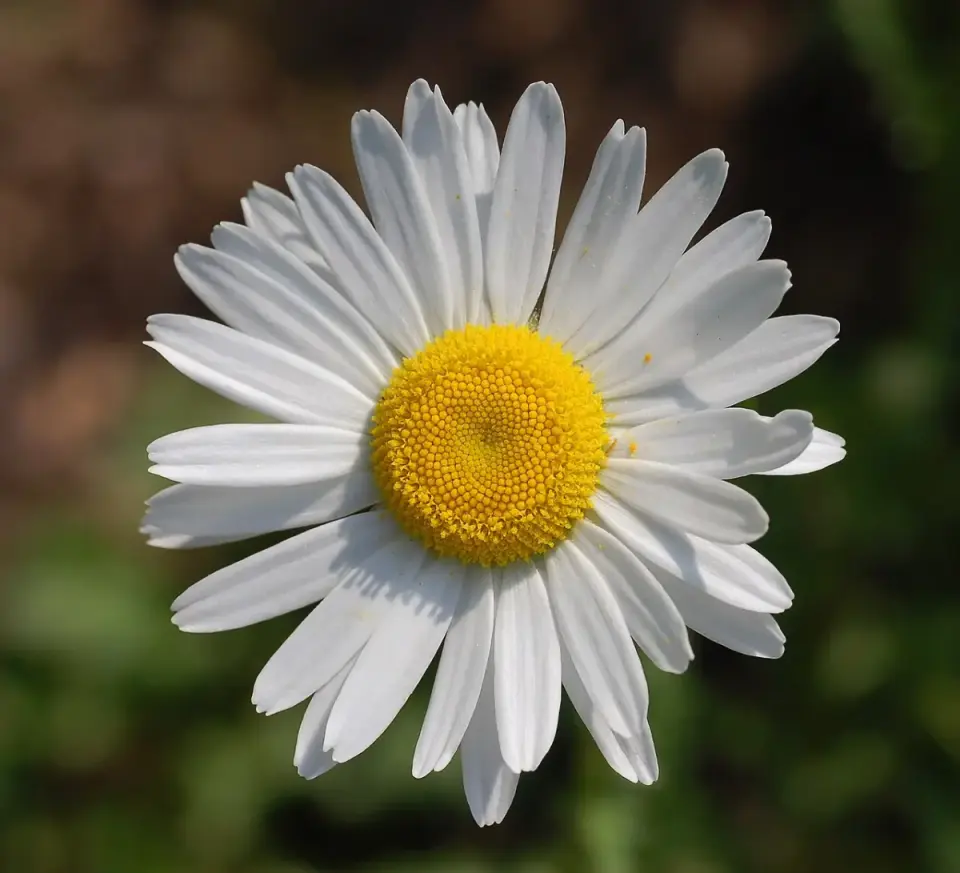
Denmark · #2 flower National flower of Denmark (marguerite)
Oxeye daisy
Leucanthemum vulgare · locally: hvid okseøje (marguerit)
The Danes chose the marguerite as their national flower – a nod to Queen Margrethe II, known in the family as “Daisy”.
The oxeye daisy, commonly called the marguerite, is a perennial growing to 60–80 cm, with branched or straight stems and toothed leaves. From May to July it produces large flower heads with white ray florets around a golden-yellow centre. It grows in meadows, field margins, banks and roadsides, preferring sunny spots and not overly fertile soils. It is an important source of food for butterflies, bees and beetles, and was once used in herbal medicine and to repel insects.
Significance in the country
The marguerite became a popular national symbol in Denmark thanks to Queen Margrethe II – her name and the flower’s share a common origin, and in the family she was called “Daisy”. A white marguerite also marks the Marguerit-ruten, a national scenic route thousands of kilometres long.
Where it grows
Throughout the country in meadows, on banks, roadsides and waste ground; it flowers most profusely in June along roads and in meadows that are not mown intensively.
More: Wikipedia (en) Wikipedia (pl)