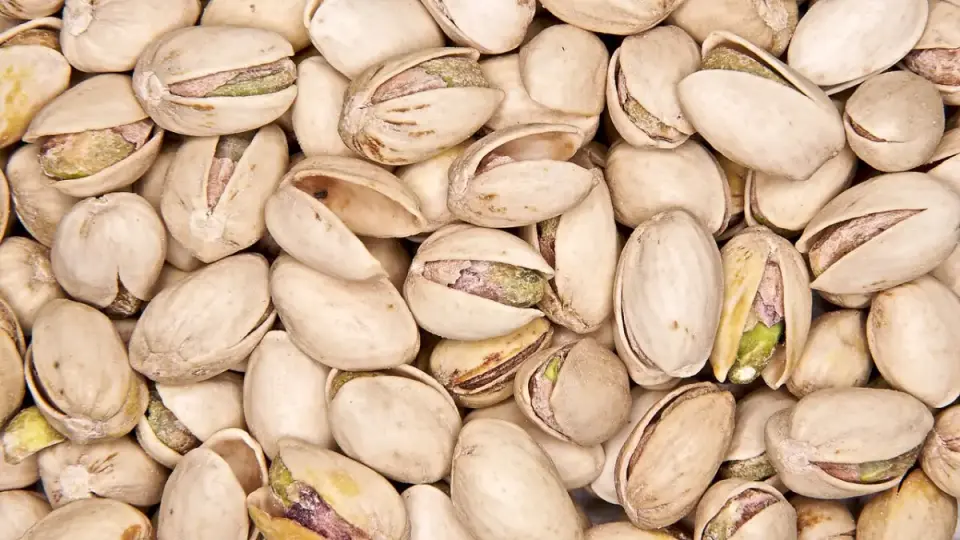
Pistachio (Pistacia vera)
Photo: THOR, CC BY 2.0, Wikimedia Commons

On the map in 6 countries crop

Pistachio

Pistacia vera

Family: Anacardiaceae

On our map this plant appears in 6 countries and ranks highest in: Iran, Syria, Turkmenistan, Tajikistan, Afghanistan, Türkiye.

The pistachio is a spreading tree growing to 10 m, with pinnate, leathery leaves. The trees are male or female, and only female trees bear fruit, pollinated by the wind. When ripe, the shell splits open to reveal the greenish kernel. The pistachio is highly resistant to drought and salty soils, but needs hot summers and cool winters.

Description from: Iran.

More: Wikipedia (en) Wikipedia (pl) Plants of the World Online (Kew)

Significance in each country

  1. Iran no. 2 of 10 native

    For decades Iran has been one of the two largest pistachio producers alongside the USA, and the species originates in an area that includes eastern Iran.

  2. Syria no. 3 of 8 introduced or naturalised

    The Arabic name for the pistachio – fustuq halabi – means “Aleppo pistachio”, and Syrian nuts are considered among the tastiest.

  3. Turkmenistan no. 4 of 8 native

    The Badkhyz reserve protects extensive wild pistachio forests, which are a valuable genetic resource for breeding. In autumn people from nearby villages gather the nuts here, and the trees give the landscape the look of a savanna.

  4. Tajikistan no. 5 of 5 native

    The wild pistachio forests of southern Tajikistan are a relic of Central Asia’s former vegetation and a valuable gene pool for breeding.

  5. Afghanistan no. 8 of 8 native

    Afghanistan has some of the largest natural pistachio forests in the world, and gathering the wild nuts is an important autumn source of income for rural communities in the north.

  6. Türkiye no. 9 of 10 introduced or naturalised

    Turkey is one of the world’s leading pistachio producers, and the small, intensely green nuts from Gaziantep are the basis of baklava, kadayıf and ice cream.