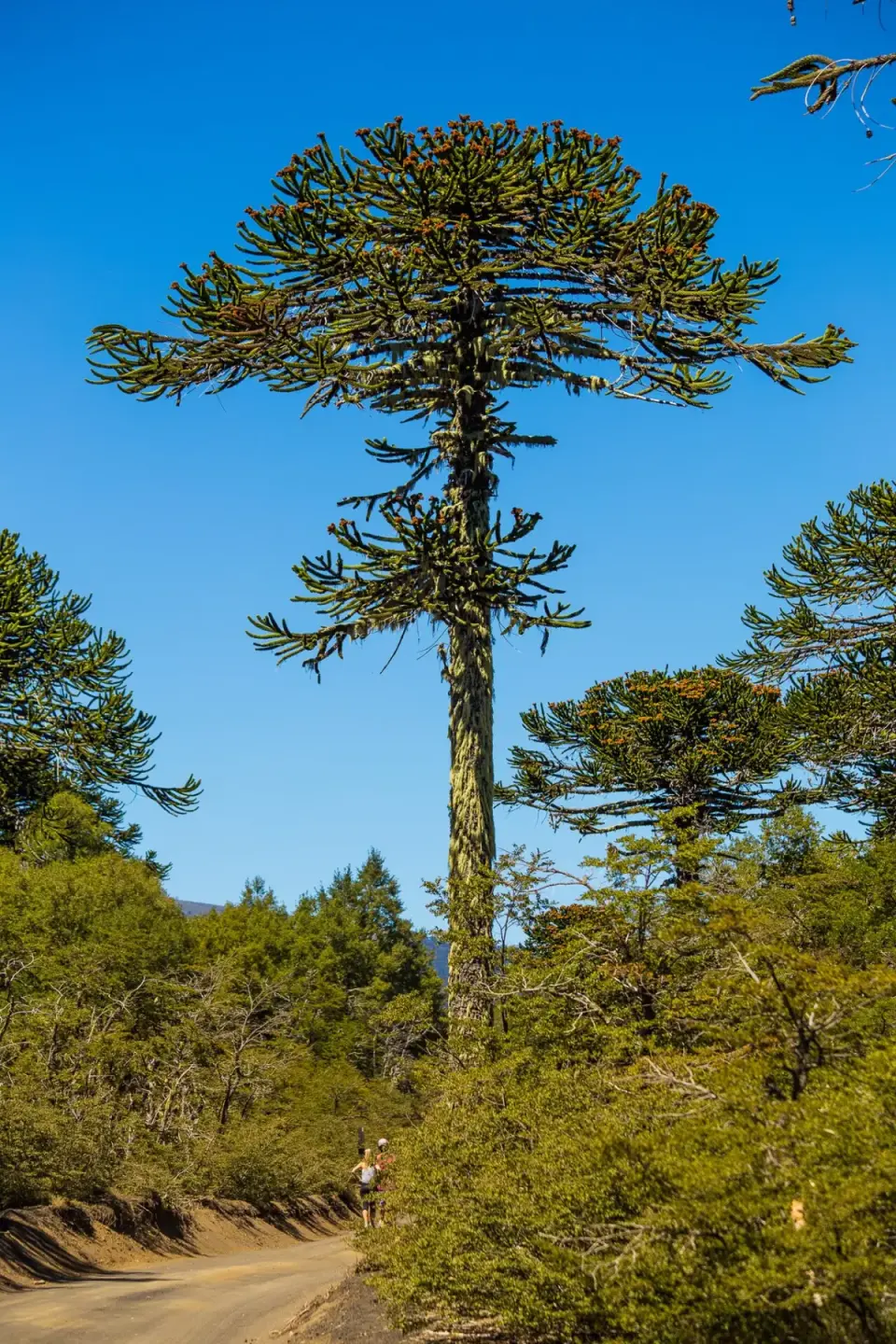
On the map in 2 countries tree symbol: Chile
Monkey puzzle tree
Araucaria araucana
Family: Araucariaceae
On our map this plant appears in 2 countries and ranks highest in: Chile, Argentina.
The monkey puzzle tree is a conifer reaching 40–50 m and living more than a thousand years. Its branches are covered with sharp, triangular, overlapping leaves, and old trees have an umbrella-shaped crown set high on a thick, fire-resistant trunk. It grows on the slopes of volcanoes and in the mountains, often on poor soils formed from volcanic ash. Its female cones, the size of a child’s head, contain hundreds of large, edible seeds – piñones. The ancestors of the araucaria grew in the age of the dinosaurs, which is why these trees are called living fossils.
Description from: Chile.
More: Wikipedia (en) Wikipedia (pl) Plants of the World Online (Kew)