On the map in 2 countries tree
Desert date
Balanites aegyptiaca
Family: Zygophyllaceae
On our map this plant appears in 2 countries and ranks highest in: Chad, Sudan.
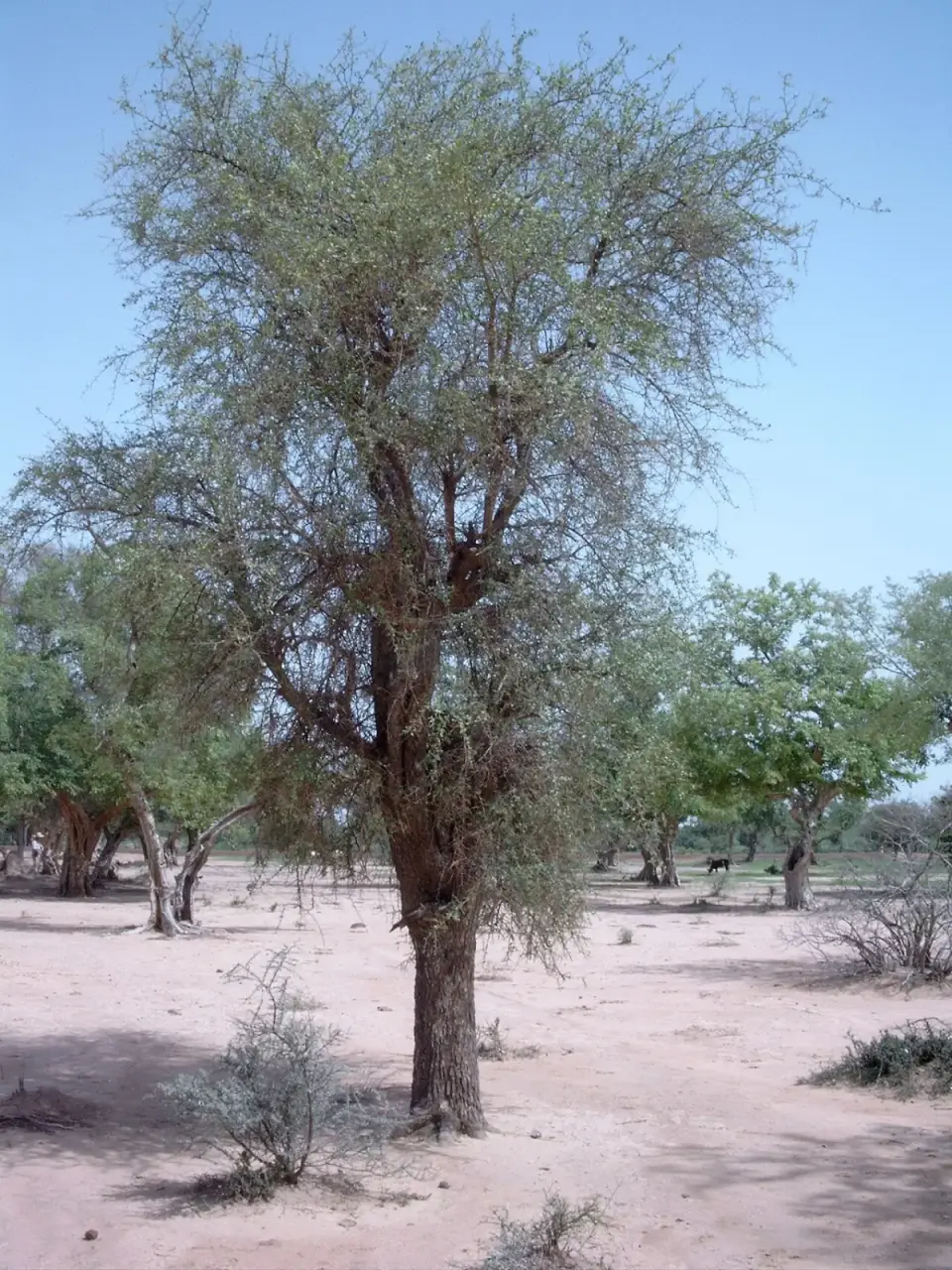
A thorny shrub or tree with long green spines and green young shoots that photosynthesise even after the plant has shed its leaves. Its oblong, yellow-brown fruits have bittersweet, sticky flesh, and the hard stone holds an oily seed. The tree is long-lived, regrows after browsing and is almost immune to drought. The fruit, leaves and seed oil are edible, and the bark and fruit have been used as a washing agent and in folk medicine.
Description from: Chad.
More: Wikipedia (en) Wikipedia (pl) Plants of the World Online (Kew)