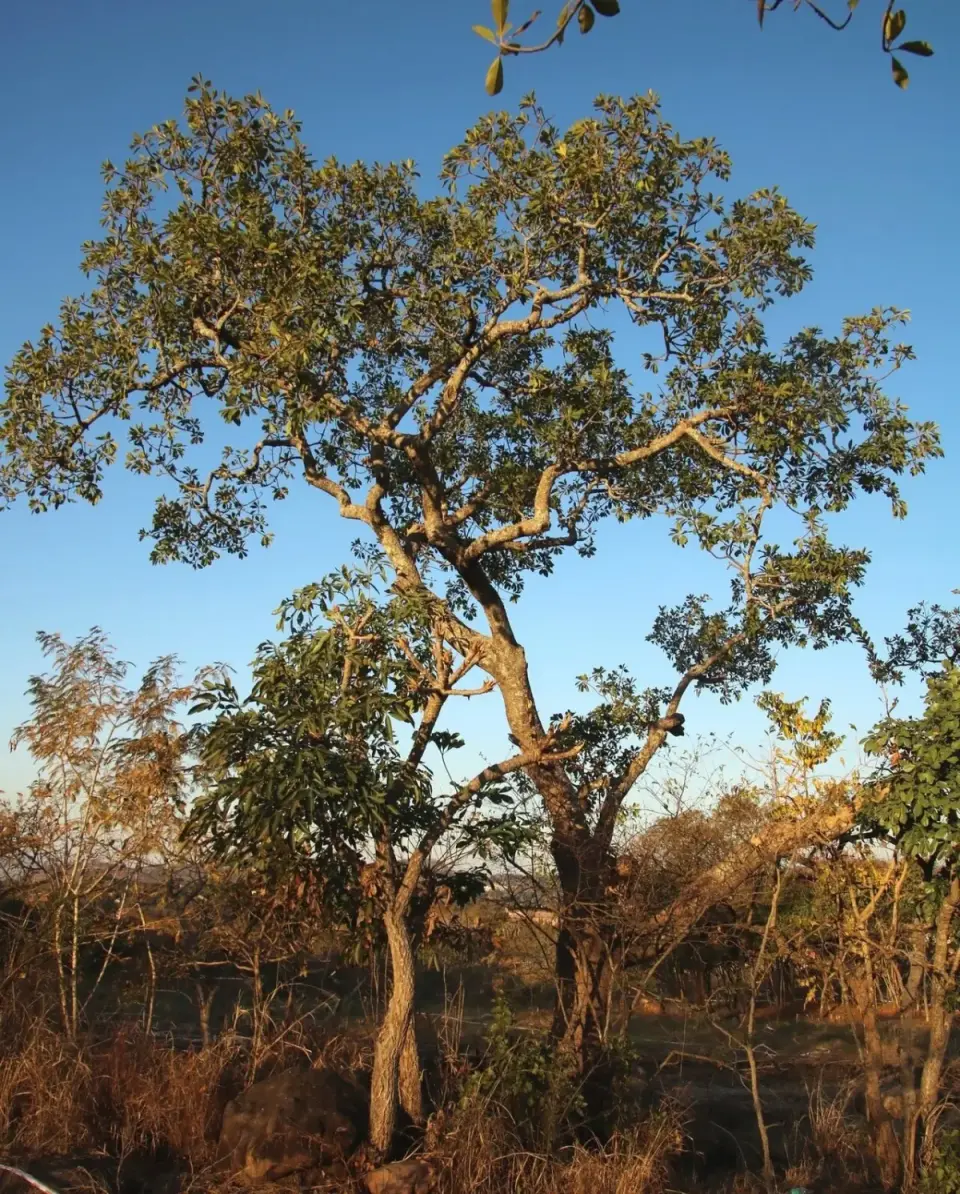
Common wild fig (Ficus thonningii)
Photo: Tony Rebelo, CC BY-SA 4.0, Wikimedia Commons

On the map in 3 countries tree

Common wild fig

Ficus thonningii

Family: Moraceae

On our map this plant appears in 3 countries and ranks highest in: Burundi, Kenya, Rwanda.

Ficus thonningii is a spreading evergreen tree reaching 10–20 m, with a dense crown, smooth grey bark and often hanging aerial roots. When damaged it exudes a white, sticky latex. Its small fruits (figs) feed birds and monkeys. The tree grows easily from cut branches, so for centuries it has been planted as living fences, shade trees and stakes. Bark that had been beaten and soaked was once made into bark cloth (impuzu), from which traditional garments were sewn.

Description from: Burundi.

More: Wikipedia (en) Plants of the World Online (Kew)

Significance in each country

  1. Burundi no. 3 of 5 native

    In Burundian tradition the umuvumu fig was a venerated tree: it was planted around royal courts and graves. To this day it marks the boundaries of fields and farmyards on the hills.

  2. Kenya no. 4 of 10 native

    For the Kikuyu the mugumo is a sacred tree: prayers for rain were offered beneath it, facing Mount Kenya, and cutting it down was forbidden; legends and prophecies associated with the mugumo are still alive in Kenya today.

  3. Rwanda no. 5 of 5 native

    Umuvumu was planted by royal enclosures and at the sites of important events, so old trees still mark the former seats of rulers today; its bark was made into impuzu, the traditional garments Rwandans wore before the era of cotton cloth.