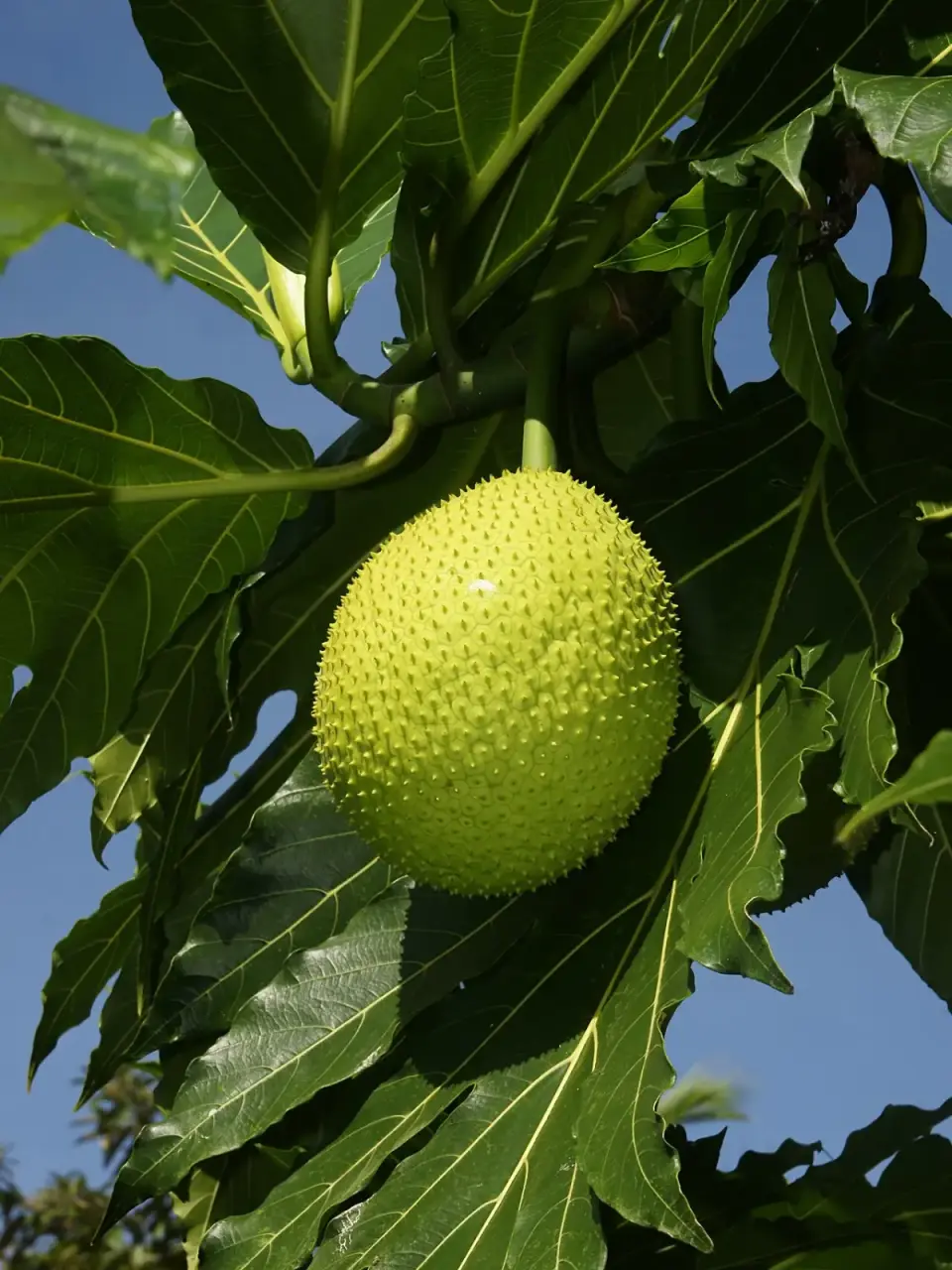
Breadfruit (Artocarpus altilis)
Photo: Hans Hillewaert, CC BY-SA 3.0, Wikimedia Commons

On the map in 6 countries tree

Breadfruit

Artocarpus altilis

Family: Moraceae

On our map this plant appears in 6 countries and ranks highest in: Micronesia, São Tomé & Príncipe, St. Vincent & Grenadines, French Polynesia, Marshall Islands, Maldives.

Breadfruit is a tree growing to about 20 m, with large, deeply lobed leaves and milky sap. Its round fruits, with green, rough skin, have starchy flesh that resembles bread when baked. Varieties differ in when they ripen, so on the high islands fruit is harvested for much of the year. Surplus fruit was traditionally fermented in leaf-lined pits in the ground, producing a long-lasting, sour paste.

Description from: Micronesia.

More: Wikipedia (en) Wikipedia (pl) Plants of the World Online (Kew)

Significance in each country

  1. Micronesia no. 2 of 5 native

    On Pohnpei and in Chuuk breadfruit is the most important food tree – the first fruits of the season are presented as gifts to the chiefs, and the fermented paste was a reserve for times of typhoon and famine.

  2. São Tomé & Príncipe no. 2 of 5 cultivated

    Fruta-pão grows beside almost every house and on the old roças, where it was planted to feed plantation workers; boiled or fried, it accompanies fish and the national dish, calulu.

  3. St. Vincent & Grenadines no. 2 of 5 cultivated

    After his failed voyage and the mutiny on the Bounty, Captain William Bligh brought breadfruit seedlings from Tahiti in 1793 to the botanic garden in Kingstown, from where they spread across the Caribbean; roasted breadfruit with fried…

  4. French Polynesia no. 3 of 5 cultivated

    In 1789 William Bligh collected more than a thousand uru (breadfruit) seedlings on Tahiti to take them to plantations in the West Indies – the voyage ended in the mutiny on the Bounty.

  5. Marshall Islands no. 3 of 5 introduced or naturalised

    Fermented breadfruit paste – bwiro – was the most important food store in the Marshall Islands for long voyages and times of famine.

  6. Maldives no. 4 of 5 cultivated

    In the Maldives bambukeyo is an important source of starch alongside rice – it is eaten boiled in curries, roasted, and as crunchy chips sold in every little shop.