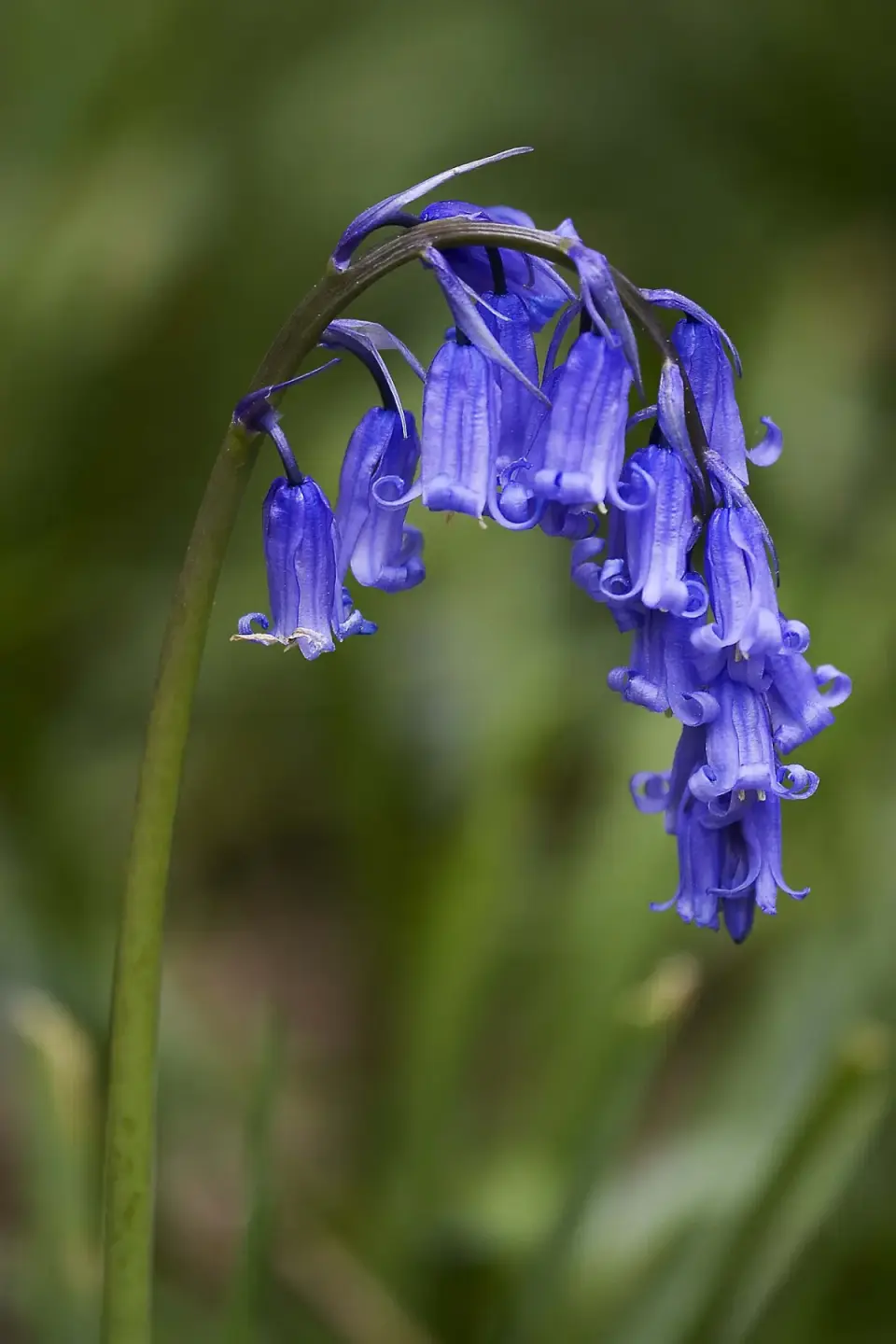
On the map in 2 countries flower symbol: United Kingdom
Common bluebell
Hyacinthoides non-scripta
Family: Asparagaceae
On our map this plant appears in 2 countries and ranks highest in: Belgium, United Kingdom.
The common bluebell is a bulbous perennial with narrow, fleshy leaves and one-sided, nodding sprays of fragrant, blue-violet, bell-shaped flowers. It blooms in April and early May, before beeches and oaks come into leaf and shade the forest floor. It is an Atlantic species, growing naturally only in western Europe, and its dense carpets are a sign of ancient, continuously wooded land. The whole plant is poisonous, and its sticky sap was once used to make bookbinding glue.
Description from: Belgium.