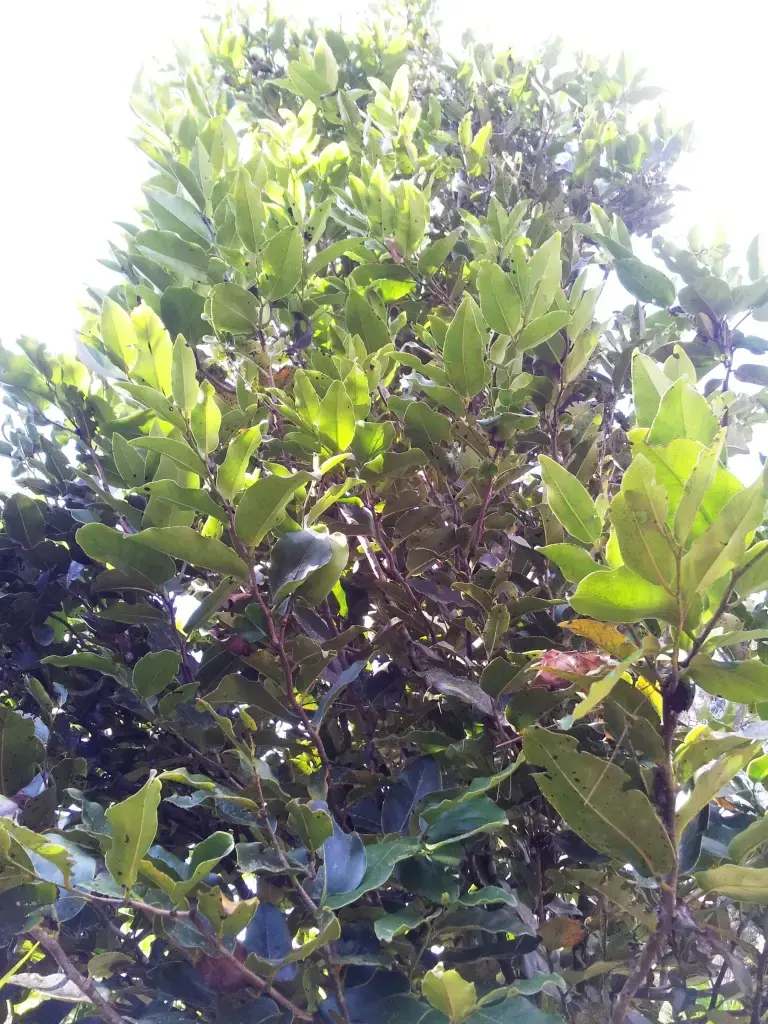
Mauritius · #5 tree
Mauritian ebony
Diospyros tessellaria · locally: bois d'ébène
Black ebony wood drew the first Dutch settlers to Mauritius – and very nearly led to the island’s forests being felled.
Diospyros tessellaria is a tree of the ebony family, once a mighty canopy tree in the island’s dry and humid forests. It has dark bark, leathery leaves, small, white, fragrant flowers and fleshy fruits eaten by birds and fruit bats. Its heartwood is jet black, very heavy and dense, excellent for carving and furniture-making. It grows very slowly, so natural stands take centuries to recover after felling.
Significance in the country
From 1638 the Dutch East India Company exploited the ebony forests of Mauritius, shipping the wood to Europe – ebony was the island’s first export. Today ebony plantings, in reserves and private nature parks among other places, are a symbol of native forest restoration.
Where it grows
Remnants of native forest: Black River Gorges National Park, the gorges and mountains of the south-east (the Ferney valley in Grand Port) and the mountain ranges around Moka.
More: Wikipedia (en)