Lithuania · #4 tree
Scots pine
Pinus sylvestris · locally: paprastoji pušis
The pinewoods of Dzūkija are famous for mushrooms and bilberries, and pines on the Curonian Spit halted the wandering dunes.
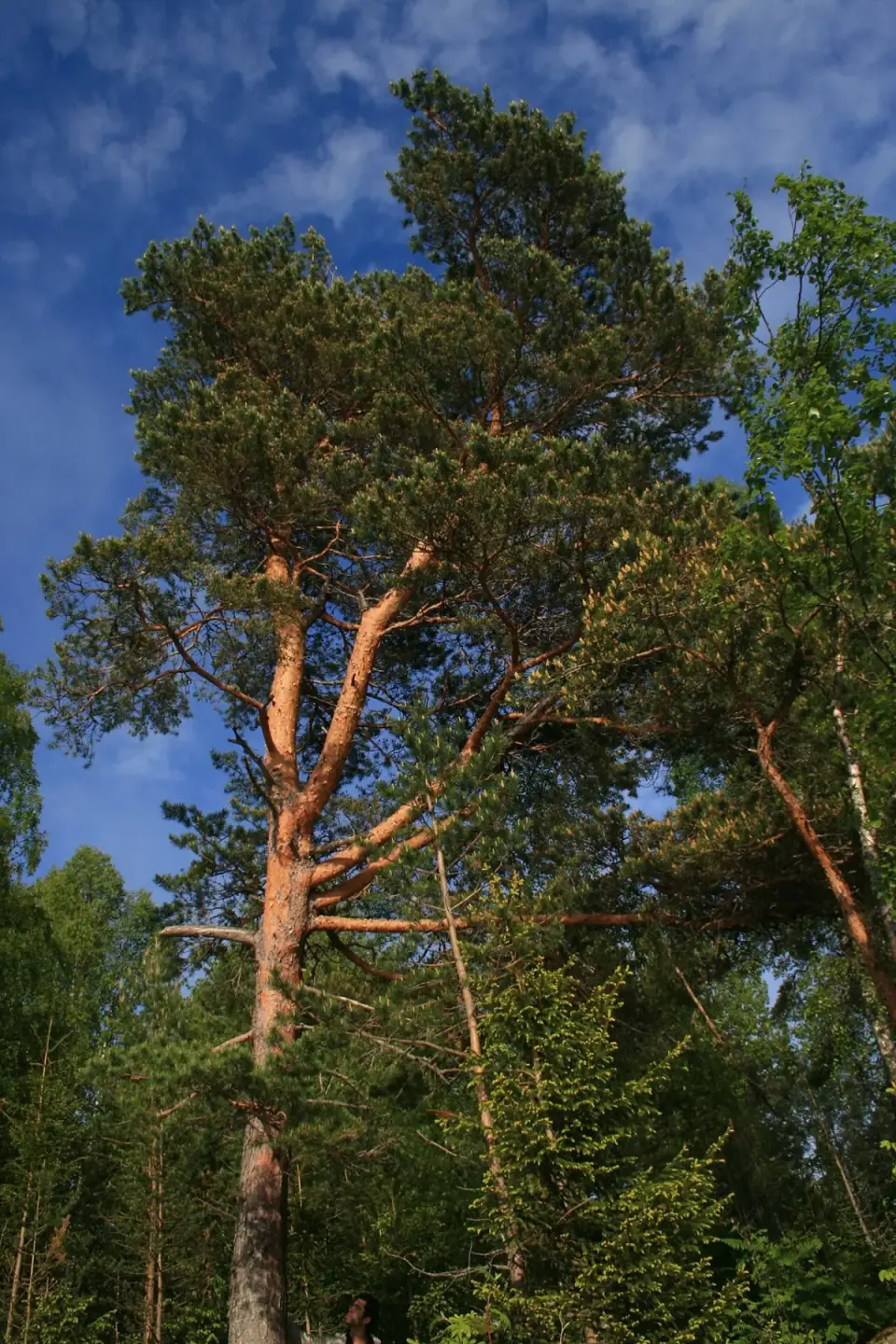
The Scots pine is a conifer with orange-red, flaking bark on the upper trunk and pairs of blue-green needles. It is very undemanding – it grows on dry sands, dunes and peat bogs where other trees cannot cope. Its extensive root system binds loose sand well, which is why it has long been planted on dunes. Pine wood is a basic material for building and furniture, and mushrooms and bilberries grow in abundance in pinewoods.
Significance in the country
The pine is the commonest tree in Lithuania’s forests. On the Curonian Spit, a UNESCO World Heritage Site, pines and dwarf mountain pines were planted in the 19th century to stop the dunes burying fishing villages, and in Dzūkija gathering mushrooms in the pinewoods is an important part of local culture.
Where it grows
Throughout the country; the most extensive pinewoods grow on the sands of Dzūkija in the south (Alytus County, Dzūkija National Park) and on the Curonian Spit and coast (Klaipėda County).
More: Wikipedia (en) Wikipedia (pl)