Lithuania · #3 crop
Flax
Linum usitatissimum · locally: sėjamasis linas
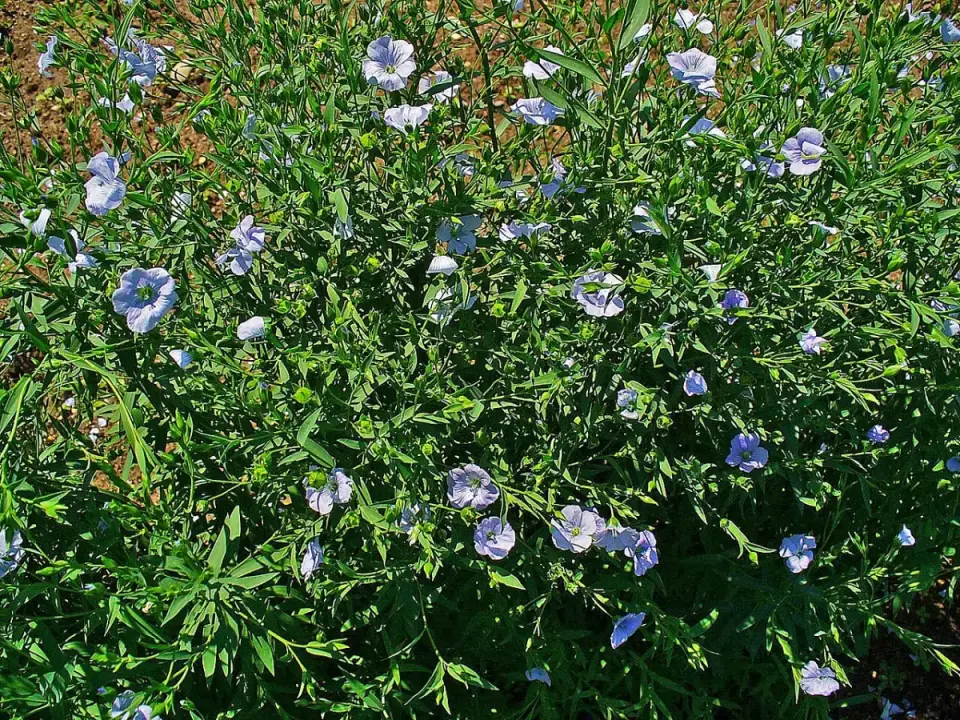
Blue fields of flax and linen cloth are a Lithuanian tradition – for centuries flax was one of the country’s main exports.
Flax is an annual with a slender, straight stem up to a metre tall, narrow leaves and delicate blue flowers that open in the morning and drop after a few hours. Its stems yield long, strong fibres that are woven into linen, and its seeds – linseed – are pressed for an oil rich in omega-3 fatty acids. It has been cultivated for about 10,000 years and is one of the oldest fibre crops in the world. Preparing the fibre meant retting, drying, breaking and combing the stems – work done together by the whole village.
Significance in the country
For centuries flax was the backbone of the Lithuanian rural economy, and the work it involved is celebrated in many folk songs. Lithuanian linen fabrics are well regarded on European markets today, and linen tablecloths and towels are a typical Lithuanian gift.
Where it grows
Formerly grown throughout the country, especially in northern and eastern Lithuania (Panevėžys, Utena and Šiauliai counties); today the crop is smaller but still present.
More: Wikipedia (en) Wikipedia (pl)