5 plants worth knowing
Kuwait
Kuwait is a flat desert plain with one of the hottest climates on Earth – in summer temperatures exceed 50°C, and rainfall amounts to only about 100 mm a year. Even so, after the winter rains the desert briefly turns green, and low shrubs such as arfaj and rimth dominate the sandy plains. Salt marshes and salt flats stretch along the shores of Kuwait Bay and on Bubiyan Island.
Hover over a plant to see on the map where it grows.
where it grows
-
 1
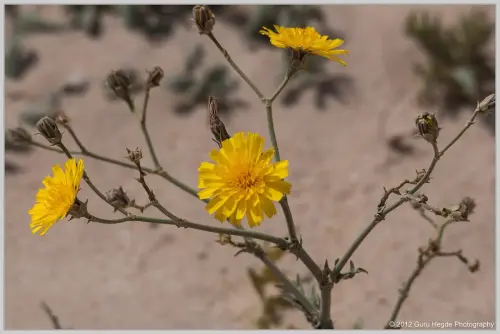
Arfaj
Rhanterium epapposum
Arfaj is Kuwait’s national flower – after rain its yellow flower heads light up the grey desert.
-
 2
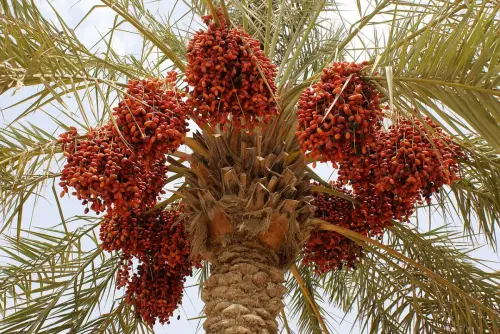
Date palm
Phoenix dactylifera
In a country with no rivers and almost no rain, the date palm is the most important tree – it grows on the farms of Al Abdali and Al Wafra.
-
 3
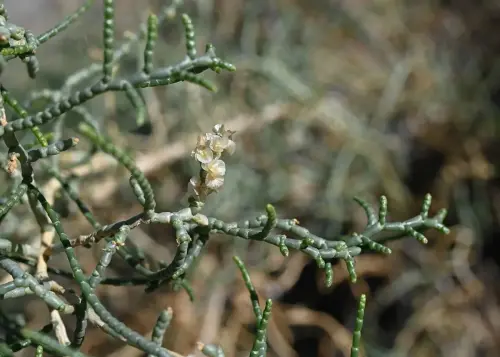
Rimth
Haloxylon salicornicum
The leafless rimth shrub, which looks like a clump of green sticks, is the commonest plant of the Kuwaiti desert.
-
 4
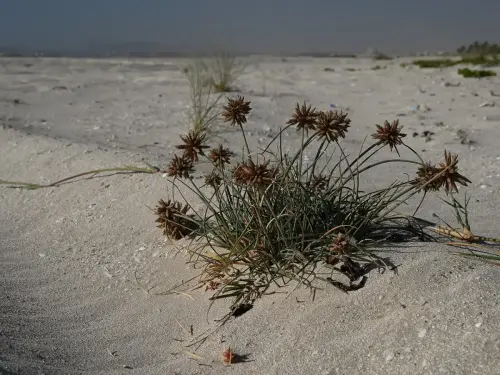
Cyperus conglomeratus
Cyperus conglomeratus
The stiff tussocks of this desert sedge bind shifting sands and keep Kuwait’s roads from being buried.
-
 5
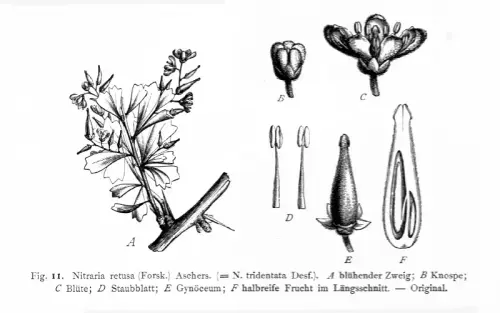
Nitraria retusa
Nitraria retusa
On the salty shores of Kuwait Bay, ghardak shrubs build mounds of sand, and birds feed on their red berries.
Kuwait on other Ominuvo maps
- World in NumbersPopulation: 4.9 million (2025)Source: World Bank – WDI: UN World Population Prospects (CC BY 4.0)
- Languages of the worldArabic · official languageSource: Unicode CLDR (Unicode License v3)
- Prices around the worldKuwaiti dinar (KWD)Source: ISO 4217
- Time zones mapUTC+3Source: IANA tz database (public domain)
- Plugs and sockets of the worldType C, G · 240 V · 50 Hz
- National dishes of the world2 national dishes
- VPN provider mapServers of 3 VPN providersSource: VPN Map (Ominuvo) (CC BY 4.0)