10 plants worth knowing
Japan
Forests cover about two-thirds of Japan, making it one of the most heavily forested developed countries. The archipelago, stretching from north to south, holds the subarctic spruce and fir forests of Hokkaido, the beech and maple forests of Honshu, the evergreen laurel forests of the south and the subtropical forests and mangroves of Okinawa. Plants play a huge role in the culture – from viewing cherry blossom (hanami) and autumn maples (momijigari) to bonsai and ikebana.
Hover over a plant to see on the map where it grows.
where it grows
-
 1
cultivated
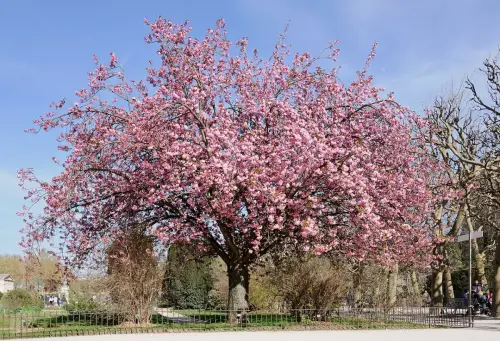
Japanese cherry
Prunus serrulata
All of Japan follows the sakura bloom – every day meteorologists report how the “cherry blossom front” is moving north.
-
 2
cultivated
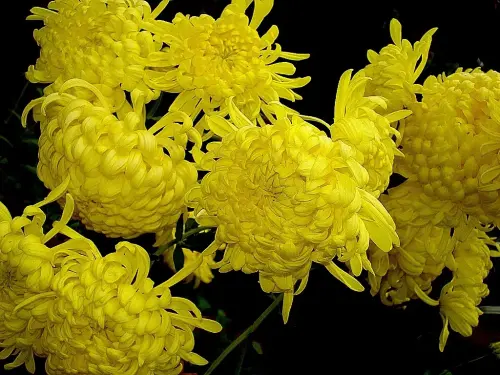
Florist’s chrysanthemum
Chrysanthemum × morifolium
The sixteen-petalled chrysanthemum is the emblem of the Japanese emperor – it appears, among other places, on the cover of the Japanese passport.
-
 3
native
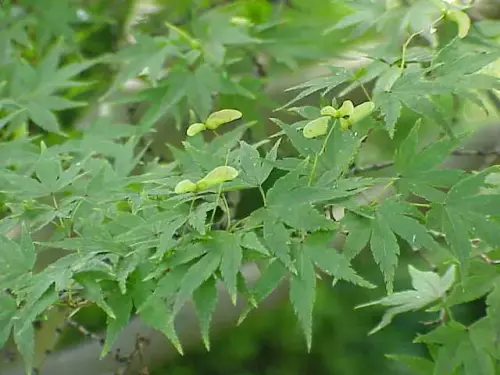
Japanese maple
Acer palmatum
In autumn, Japanese maples turn temples and mountains across Japan into a fiery spectacle of red – the season of momijigari.
-
 4
native
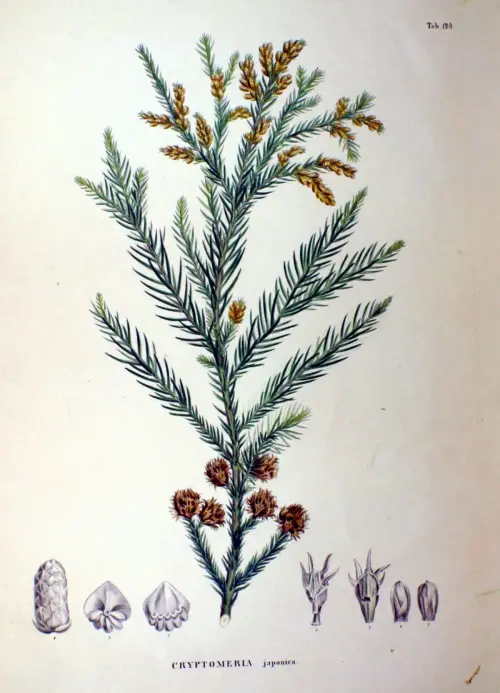
Japanese cedar
Cryptomeria japonica
The Japanese cedar, or sugi, surrounds shrines with venerable avenues, and the oldest trees on Yakushima are thousands of years old.
-
 5
cultivated
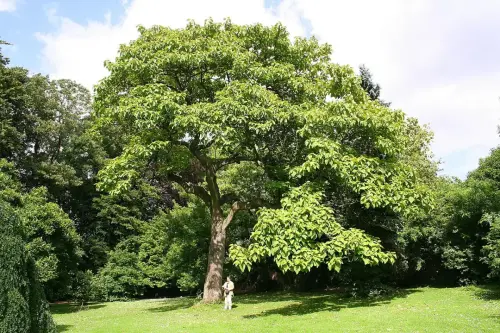
Princess tree
Paulownia tomentosa
Paulownia leaves and flowers form the emblem of the Japanese government – it appears on the 500-yen coin, among other places.
-
 6
cultivated
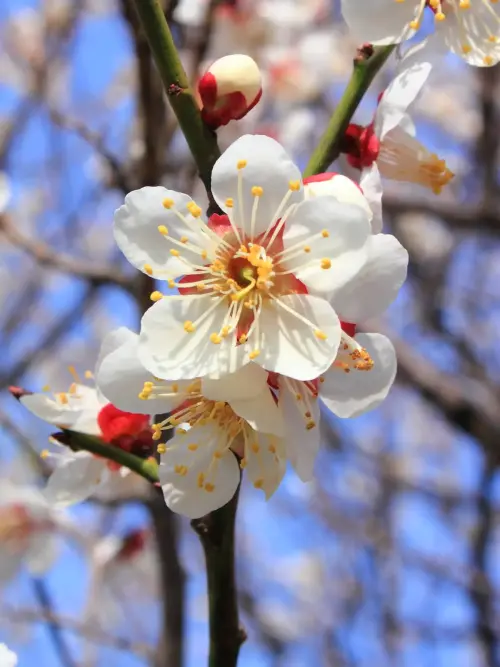
Japanese apricot
Prunus mume
Before the Japanese fell for sakura, they admired flowering ume – and salted umeboshi fruits are still added to rice and onigiri today.
-
 7
nativeendemic
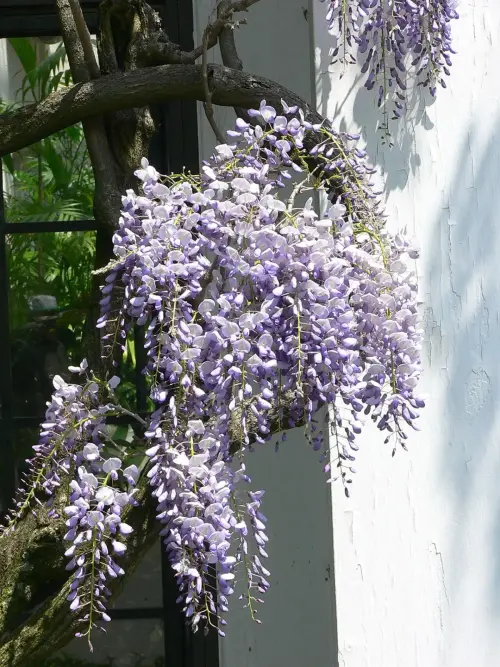
Japanese wisteria
Wisteria floribunda
Purple racemes up to a metre long hang from pergolas of flowering Japanese wisteria – in May they draw flower lovers like pilgrims.
-
 8
nativeendemic
Bigleaf hydrangea
Hydrangea macrophylla
In Japan hydrangeas bloom in the tsuyu rainy season – when the temples of Kamakura turn into blue and pink gardens.
-
 9
cultivated
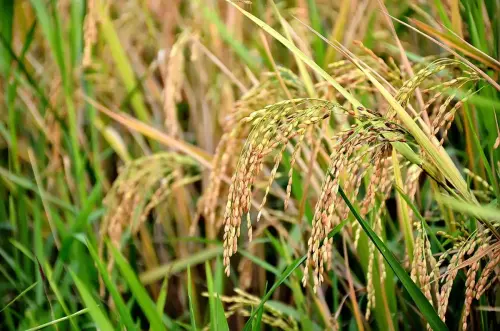
Rice
Oryza sativa
In Japan rice is more than a cereal – it is made into sake and mochi, and the emperor himself plants and harvests rice in a palace paddy every year.
-
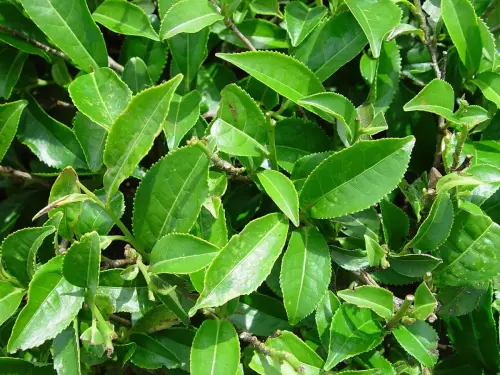 10
cultivated
Tea plant
Camellia sinensis
Japanese tea bushes give sencha and powdered matcha – the latter is the heart of the sadō tea ceremony.
Japan on other Ominuvo maps
- World in NumbersPopulation: 123 million (2025)Source: World Bank – WDI: UN World Population Prospects (CC BY 4.0)
- Languages of the worldJapanese · official languageSource: Unicode CLDR (Unicode License v3)
- Prices around the worldJapanese yen (JPY)Source: ISO 4217
- Time zones mapUTC+9Source: IANA tz database (public domain)
- Plugs and sockets of the worldType A, B · 100 V · 50/60 Hz
- National dishes of the world6 national dishes
- Castles map163 castles and palacesSource: Wikidata (CC0 1.0)
- Volcano & earthquake map116 volcanoesSource: Smithsonian GVP (Smithsonian Terms of Use)
- Ghost map8 ghost stories and haunted places
- UFO sightings map5 UFO sightings and unexplained cases
- VPN provider mapServers of 43 VPN providersSource: VPN Map (Ominuvo) (CC BY 4.0)