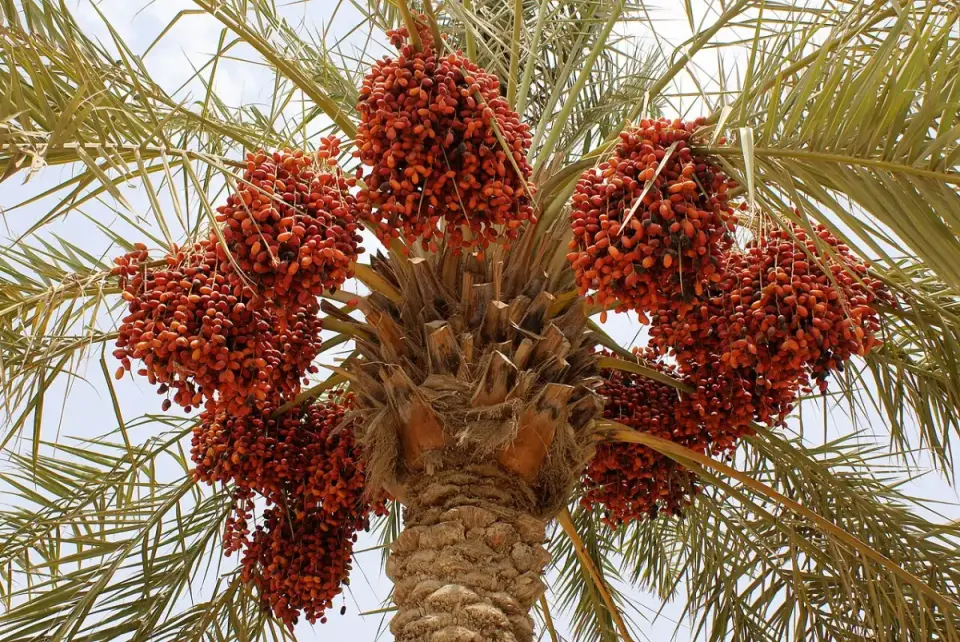
Iraq · #1 palm National tree of Iraq, symbol of Mesopotamia
Date palm
Phoenix dactylifera · locally: nachla (نخلة)
As late as the 1970s Iraq had more than 30 million date palms – more than any other country.
The date palm is a slender palm growing over 20 m tall, with a crown of long, pinnate leaves. On plantations the female flowers are pollinated by hand, by climbing up the trunk. The fruit ripens in heavy bunches in late summer and is very high in calories. The palm needs intense heat and plenty of water at its roots, so it grows along rivers and irrigation canals.
Significance in the country
Date palms were grown in Mesopotamia as early as about 6,000 years ago, and the Sumerians and Babylonians regarded them as the tree of life. Iraq is famous for its hundreds of date varieties, including zahdi and barhi, and the vast groves along the Shatt al-Arab near Basra were once among the largest in the world.
Where it grows
Grows on the irrigated plains of central and southern Iraq – from around Samarra and Baqubah down to Basra, with the largest groves in Basra, Babil, Karbala and Diyala.
More: Wikipedia (en) Wikipedia (pl)