On the map in 3 countries tree
White willow
Salix alba
Family: Salicaceae
On our map this plant appears in 3 countries and ranks highest in: Poland, Ukraine, Netherlands.
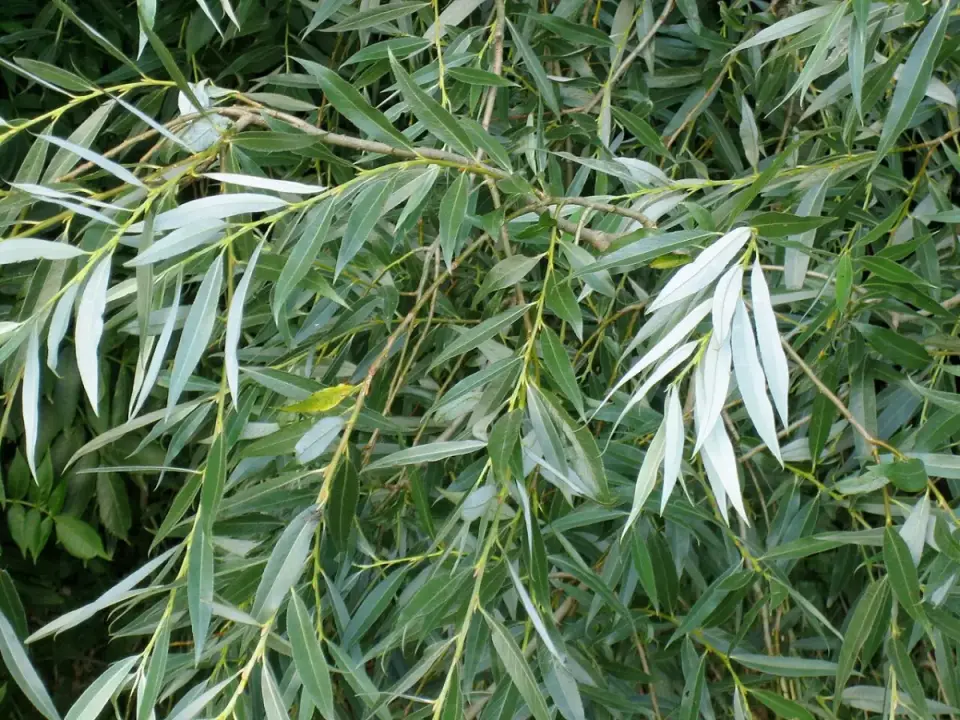
The white willow is a fast-growing tree reaching 25 m in height, with narrow, lance-shaped leaves that are silvery-white and silky-haired underneath. It grows naturally in willow riparian woodland along riverbanks and on periodically flooded terraces. For centuries it was regularly pollarded – its shoots were cut back at a height of about two metres to provide withies for weaving baskets and fences. This produced the characteristic pollard willows with thick, often hollow trunks, in which owls, hoopoes and insects nest.
Description from: Poland.
More: Wikipedia (en) Wikipedia (pl) Plants of the World Online (Kew)