On the map in 2 countries shrub symbol: Namibia
Welwitschia
Welwitschia mirabilis
Family: Welwitschiaceae
On our map this plant appears in 2 countries and ranks highest in: Angola, Namibia.
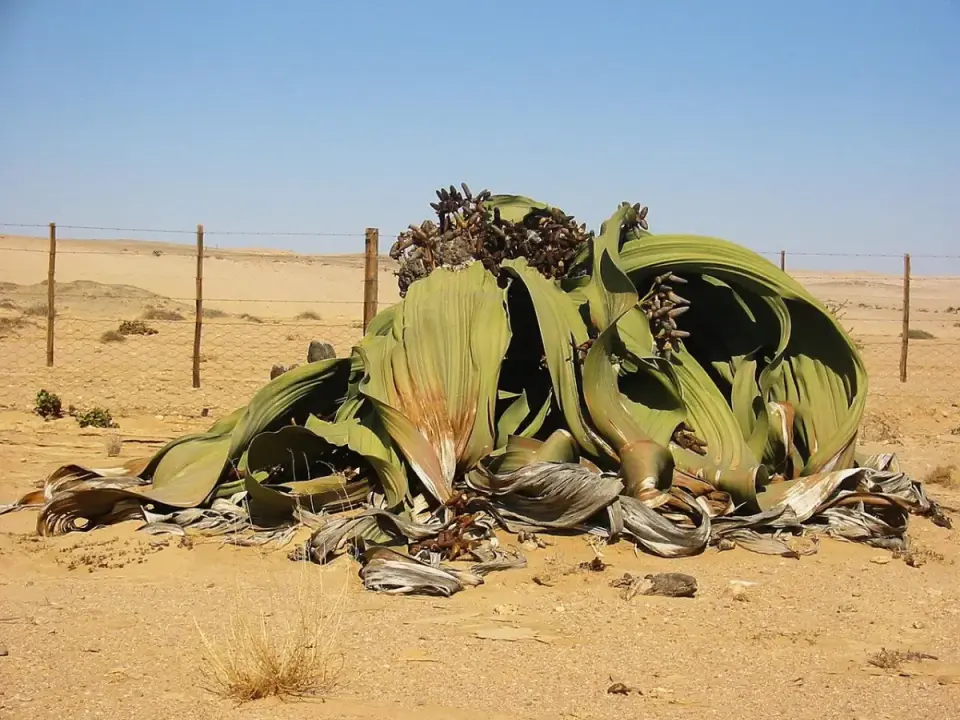
One of the strangest plants in the world, it is the only member of its own family and order of gymnosperms. It has a short, woody stem, a thick taproot and just two strap-like leaves, which keep growing from the base throughout the plant’s life, fraying and splitting at the tips into tangled ribbons. Among other sources, it draws water from fogs rolling in from the Atlantic. The oldest specimens are more than a thousand years old, and the plants are dioecious – male and female cones grow on separate individuals.
Description from: Angola.
More: Wikipedia (en) Wikipedia (pl) Plants of the World Online (Kew)