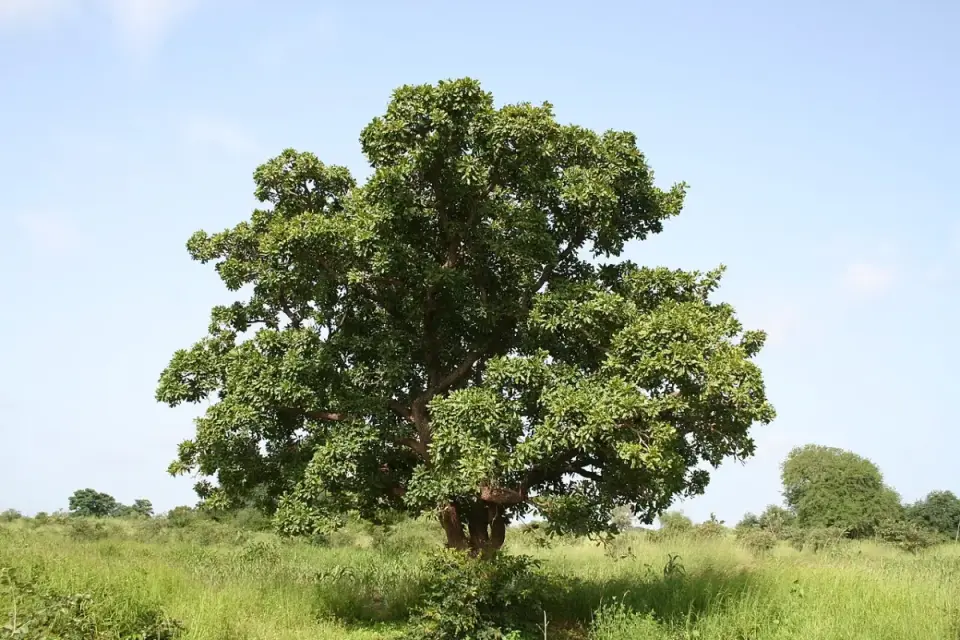
Shea tree (Vitellaria paradoxa)
Photo: Marco Schmidt[1], CC BY-SA 3.0, Wikimedia Commons

On the map in 8 countries tree

Shea tree

Vitellaria paradoxa

Family: Sapotaceae

On our map this plant appears in 8 countries and ranks highest in: Burkina Faso, Ghana, Mali, Togo, Central African Republic, Guinea and others.

The shea tree is a savanna tree growing 10–15 m tall, with thick, deeply fissured bark that protects it from grass fires. Its leathery leaves are clustered at the tips of the twigs, and creamy, fragrant flowers appear in the dry season. The fruit has sweet, edible flesh and a large seed which, once roasted, ground and kneaded with water, yields shea butter. The trees begin fruiting only after some fifteen to twenty years and live for more than two centuries.

Description from: Burkina Faso.

More: Wikipedia (en) Wikipedia (pl) Plants of the World Online (Kew)

Significance in each country

  1. Burkina Faso no. 1 of 5 native

    Burkina Faso is one of the world’s largest exporters of shea nuts and shea butter, and processing them – often in women’s cooperatives – provides an income for hundreds of thousands of women.

  2. Ghana no. 2 of 8 native

    Ghana is one of the leading exporters of shea nuts and shea butter, and gathering and processing them is the main source of income for women in the north of the country.

  3. Mali no. 2 of 8 native

    In southern Mali shea trees form characteristic “parklands” around cultivated fields, and shea is called “women’s gold” because processing it provides income for hundreds of thousands of families.

  4. Togo no. 2 of 5 native

    Shea nuts and butter are among Togo’s important exports, and gathering and processing them is a traditional occupation of women in the northern regions. The trees are spared on cropland, creating characteristic parkland savannas.

  5. Central African Republic no. 3 of 5 native

    On the savannas of the north and centre of the country, shea butter (karité) is the staple cooking fat and a cosmetic, and making and selling it gives women one of their few sources of income of their own.

  6. Guinea no. 3 of 5 native

    In Upper Guinea and on the Fouta Djallon plateau, shea trees are spared when fields are cleared, and making the butter is a traditional source of income for women.

  7. Benin no. 4 of 5 native

    Benin is a significant exporter of shea nuts, and harvesting and processing them provides an income for thousands of women in the northern departments.

  8. Nigeria no. 7 of 10 native

    Nigeria is the world’s largest producer of shea nuts; gathering and processing them is traditionally women’s work in the north and the central belt. The butter is used for cooking, skin and hair care and in folk medicine.