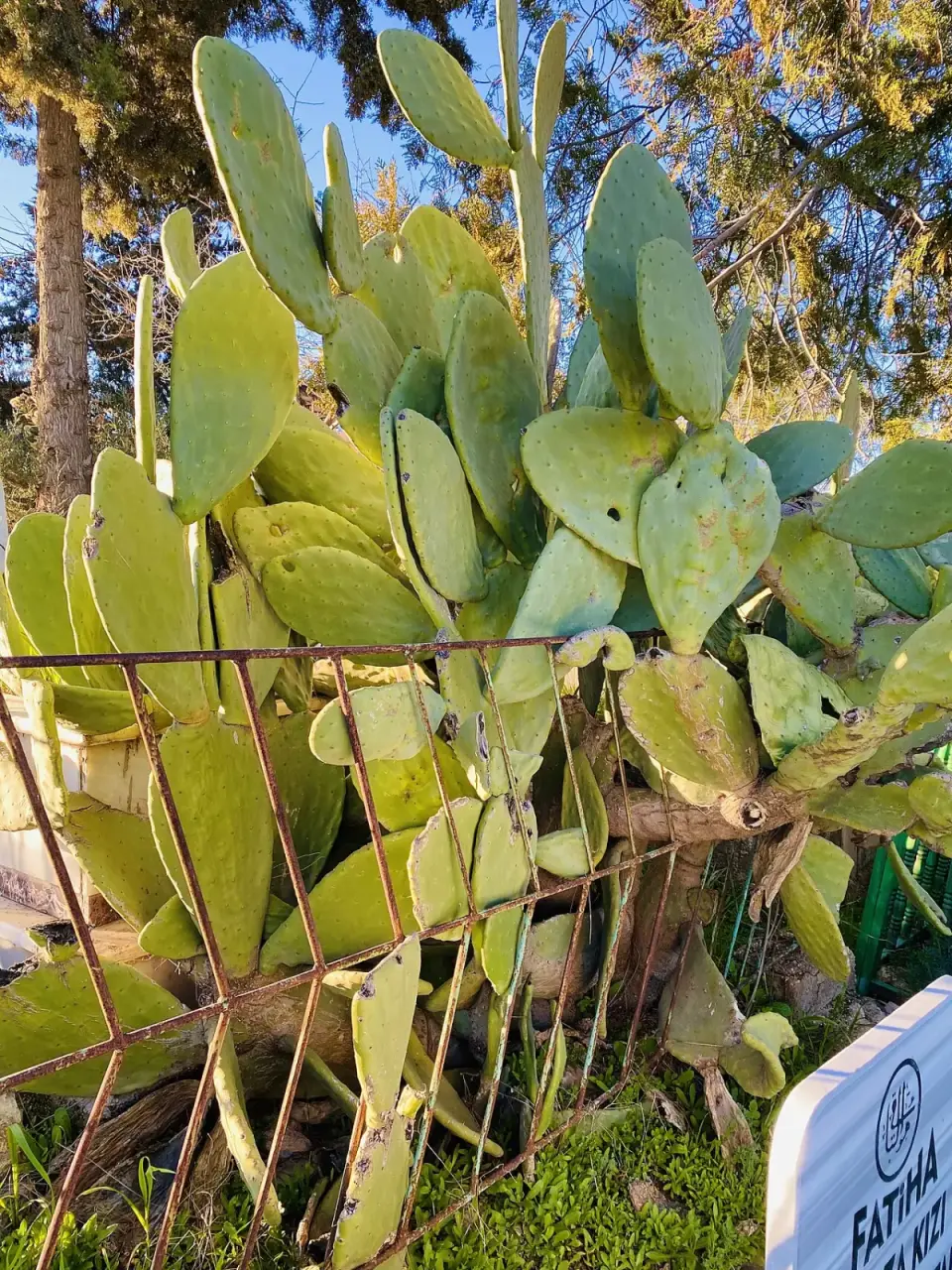
Prickly pear (Opuntia ficus-indica)
Photo: YG01, CC BY 4.0, Wikimedia Commons

On the map in 6 countries cactus symbol: Israel, Mexico, Palestine

Prickly pear

Opuntia ficus-indica

Family: Cactaceae

On our map this plant appears in 6 countries and ranks highest in: Mexico, Eritrea, Israel, Palestine, Algeria, Morocco.

A shrubby or tree-like cactus growing to 3–5 m, made up of flat, oval stem segments (“pads”). In spring it bears yellow or orange flowers, followed by sweet fruits called tunas. The young pads (nopalitos) are eaten as a vegetable – grilled, in salads and in scrambled eggs. Cochineal insects are reared on the plants, and since pre-Columbian times they have been used to make a red dye – cochineal.

Description from: Mexico.

More: Wikipedia (en) Wikipedia (pl) Plants of the World Online (Kew)

Significance in each country

  1. Mexico no. 1 of 15 nativeendemic

    The nopal on the coat of arms and flag of Mexico

    The nopal is part of the national coat of arms and one of the pillars of Mexican cuisine – the average Mexican eats several kilograms of it a year. Plantations in Milpa Alta on the outskirts of the capital supply the whole country.

  2. Eritrea no. 2 of 5 introduced or naturalised

    The prickly pear was introduced to the Eritrean highlands in the 19th century, and today its fruits, beles, are so popular that their season in July and August is almost a holiday; peeled on the street by vendors, they are a cheap source…

  3. Israel no. 4 of 8 cultivated

    Symbol of the “sabra” – a native-born Israeli

    The Hebrew word “tzabar” (sabra) became the nickname for Jews born in Israel – tough and prickly on the outside but gentle within. Clumps of prickly pear also often mark the sites of former villages.

  4. Palestine no. 5 of 5 cultivated

    A symbol of patience and steadfastness (sumud)

    Clumps of prickly pear, once planted along field boundaries, have often survived on the sites of villages abandoned in 1948 and have become a symbol of memory and of sumud – steadfastness on the land.

  5. Algeria no. 8 of 10 introduced or naturalised

    In Kabylia and across rural northern Algeria, the prickly pear has for centuries served as a living fence, as fodder for livestock in dry summers and as a source of fruit eaten raw or dried.

  6. Morocco no. 9 of 10 cultivated

    In Morocco prickly pear is planted as a hedge and as fodder for dry summers, and the seeds of the fruit are pressed for an expensive cosmetic oil.