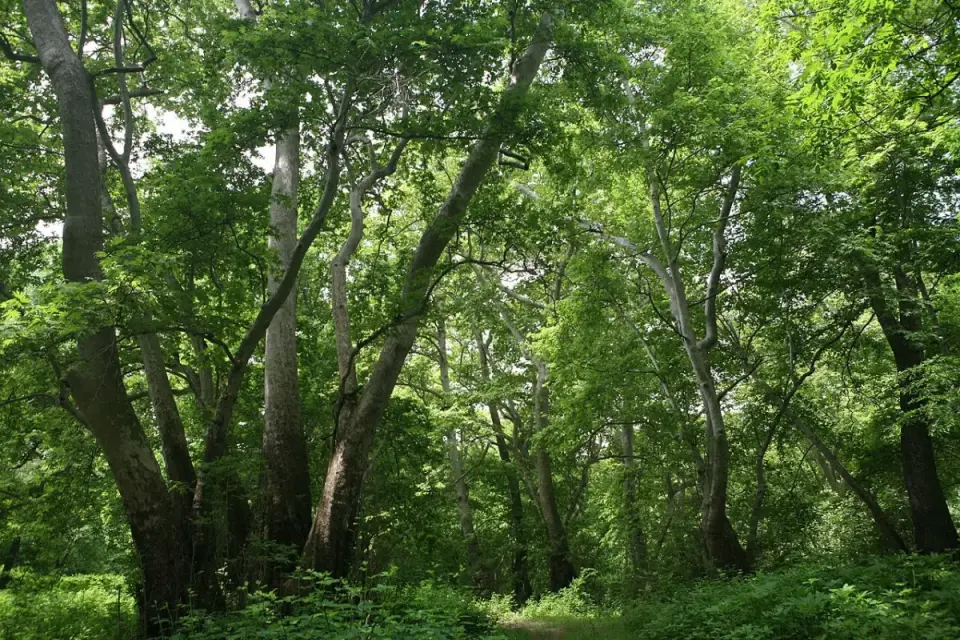
Oriental plane (Platanus orientalis)
Photo: uncredited, CC BY-SA 3.0, Wikimedia Commons

On the map in 5 countries tree

Oriental plane

Platanus orientalis

Family: Platanaceae

On our map this plant appears in 5 countries and ranks highest in: Greece, Uzbekistan, Albania, Türkiye, Iran.

A stately, long-lived broadleaf tree with a wide crown and bark that flakes off in patches, giving the trunk its distinctive mottled look. The leaves are large and deeply palmately lobed, and the fruits are gathered in round, dangling heads. In the wild it grows along streams and rivers, forming riparian forest in the valleys. It casts dense shade, so since antiquity it has been planted on squares and beside springs and temples.

Description from: Greece.

More: Wikipedia (en) Wikipedia (pl) Plants of the World Online (Kew)

Significance in each country

  1. Greece no. 2 of 10 native

    The plane is the tree of the Greek square (plateia): village life unfolds in its shade beside the kafeneio. Tradition links an old plane tree in the town of Kos with Hippocrates, the father of medicine.

  2. Uzbekistan no. 2 of 8 cultivated

    In Uzbekistan the chinar is a symbol of longevity and hospitality – it was planted by mosques, madrasas and squares, where people met in its shade.

  3. Albania no. 4 of 5 native

    In Albania the old plane tree in the middle of the village was where the elders held council, markets took place and people met – the oldest of these trees are now protected as natural monuments.

  4. Türkiye no. 6 of 10 native

    In Ottoman tradition the plane – “çınar” – was a symbol of the endurance and power of the state, and planting one by a mosque, bathhouse or spring was considered a good deed.

  5. Iran no. 10 of 10 native

    In Persian culture the chenar symbolises longevity and dignity – it was planted by mosques, mausoleums and in gardens, and Herodotus described how King Xerxes adorned a plane tree he came across with gold.