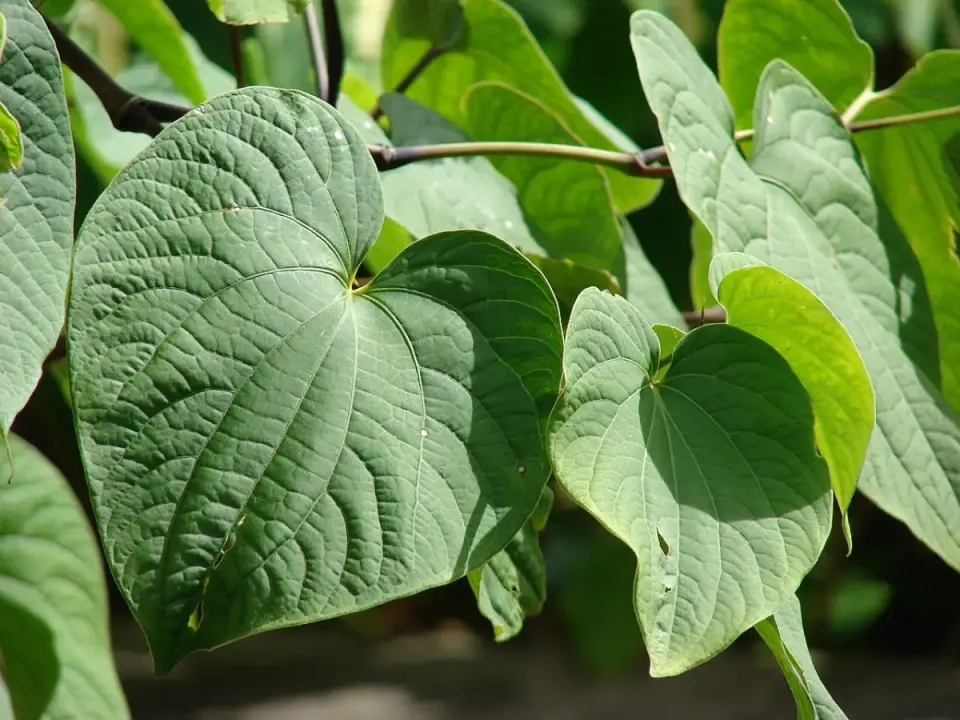
Kava (Piper methysticum)
Photo: Forest & Kim Starr, CC BY 3.0, Wikimedia Commons

On the map in 4 countries shrub symbol: Fiji

Kava

Piper methysticum

Family: Piperaceae

On our map this plant appears in 4 countries and ranks highest in: Micronesia, Fiji, Vanuatu, Tonga.

Kava is a shrub growing 2–3 m tall, with heart-shaped leaves and thick, jointed stems. Cultivated varieties do not produce seeds, so they are propagated from stem cuttings. The drink is made from ground roots steeped in water; the kavalactones they contain numb the mouth and induce relaxation and drowsiness. In Vanuatu kava is traditionally prepared from fresh roots, which makes it exceptionally strong.

Description from: Vanuatu.

More: Wikipedia (en) Wikipedia (pl) Plants of the World Online (Kew)

Significance in each country

  1. Micronesia no. 1 of 5 cultivated

    In Pohnpeian culture sakau is a ceremonial drink: the first coconut-shell cup goes to the person with the highest title, and drinking accompanies celebrations, apologies and feasts.

  2. Fiji no. 2 of 5 cultivated

    National drink of Fiji

    The sevusevu ritual – presenting yaqona roots to the chief – opens every visit to a Fijian village, and the drink, colloquially called “grog”, is served from a wooden tanoa bowl at gatherings, festivals and official ceremonies.

  3. Vanuatu no. 2 of 5 native

    Genetic studies point to northern Vanuatu as the place where kava was domesticated, and the country has the largest number of kava varieties in the world.

  4. Tonga no. 3 of 5 cultivated

    Taumafa kava – the royal kava ceremony – accompanies coronations and the conferring of noble titles, and the order in which the cups are served reflects the social hierarchy.