On the map in 2 countries tree symbol: South Korea
Ginkgo
Ginkgo biloba
Family: Ginkgoaceae
On our map this plant appears in 2 countries and ranks highest in: China, South Korea.
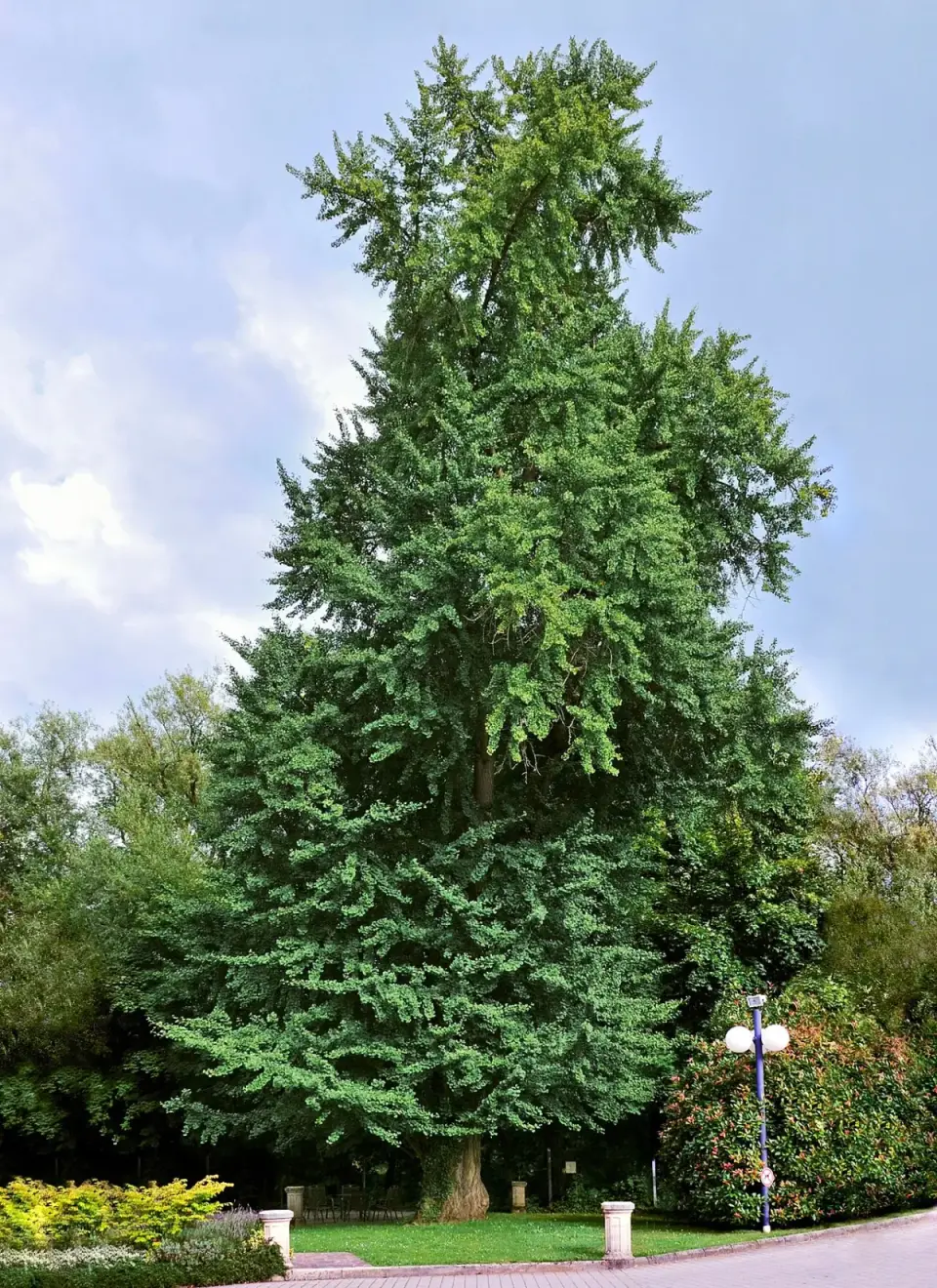
A stately tree growing 30–40 m tall, with distinctive fan-shaped, often two-lobed leaves with forking veins that turn golden yellow in autumn. It is a gymnosperm and dioecious – female trees produce seeds in a fleshy coat that gives off an unpleasant smell when ripe. It is remarkably resistant to pollution, disease and pests, and individual trees live for more than a thousand years. Roasted seeds (baiguo) are a delicacy in Chinese cuisine, and leaf extract is used in medicine.
Description from: China.
More: Wikipedia (en) Wikipedia (pl) Plants of the World Online (Kew)