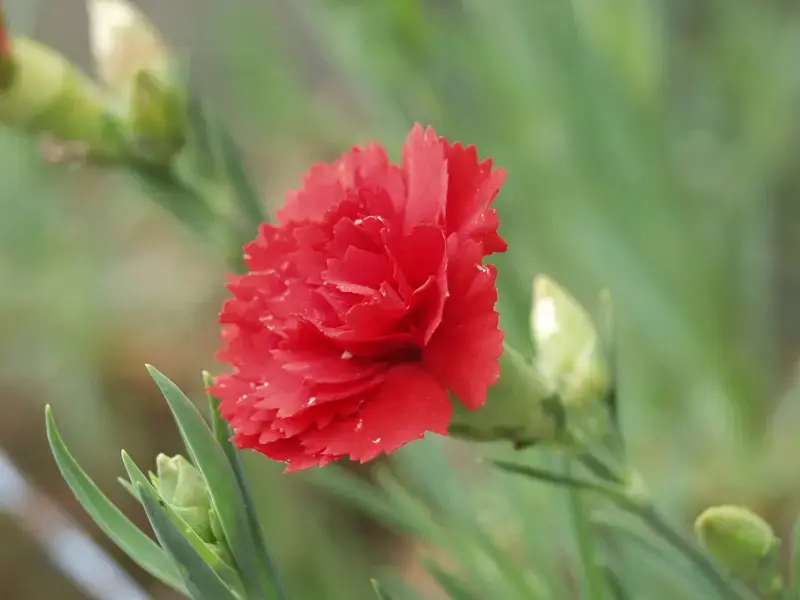
Carnation (Dianthus caryophyllus)
Photo: 草花写真館, CC BY-SA 3.0, Wikimedia Commons

On the map in 3 countries flower symbol: Portugal, Spain

Carnation

Dianthus caryophyllus

Family: Caryophyllaceae

On our map this plant appears in 3 countries and ranks highest in: Spain, Portugal, Colombia.

A perennial with narrow, bluish-green leaves and fragrant flowers with frilled edges, most often red, pink or white. The species comes from the Mediterranean region and has been cultivated since antiquity – the genus name means “divine flower”. Breeders have developed thousands of garden and cut-flower varieties. Carnations last well once cut, so they have long been among the most popular flowers for bouquets and floral arrangements.

Description from: Spain.

More: Wikipedia (en) Wikipedia (pl) Plants of the World Online (Kew)

Significance in each country

  1. Spain no. 2 of 10 cultivated

    Unofficial national flower of Spain

    The carnation (clavel) is regarded as Spain’s national flower: it accompanies flamenco, folk festivals and the ferias of Andalusia, and its red colour is associated with the Spanish temperament.

  2. Portugal no. 3 of 10 cultivated

    Symbol of the Carnation Revolution of 25 April 1974

    On 25 April 1974 the people of Lisbon handed red carnations to soldiers, who put them in the barrels of their rifles.

  3. Colombia no. 8 of 15

    Colombia is the world’s second-largest exporter of cut flowers after the Netherlands, and the leader in carnations.