On the map in 3 countries dwarf shrub
Bog cranberry
Vaccinium oxycoccos
Family: Ericaceae
On our map this plant appears in 3 countries and ranks highest in: Belarus, Estonia, Russia.
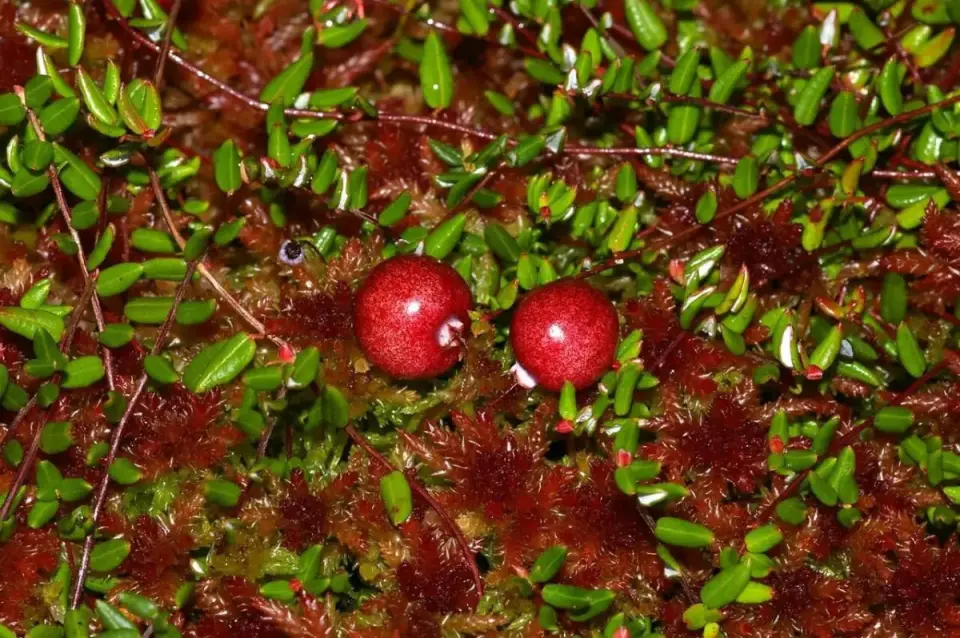
A creeping dwarf shrub with thread-like shoots up to several tens of centimetres long and small evergreen leaves, growing among sphagnum mosses. In summer it produces pink flowers with swept-back petals that resemble a bird’s head and beak – hence the association with the crane in the name “craneberry”. The round, red, sour berries ripen in autumn and are rich in vitamin C and organic acids, so they keep for a long time. They are used for juices, preserves, kissel and fruit liqueurs.
Description from: Belarus.
More: Wikipedia (en) Wikipedia (pl) Plants of the World Online (Kew)