8 plants worth knowing
Yemen
Yemen is the greenest corner of the Arabian Peninsula: monsoon rains water the high mountains in the west, where coffee, khat and cereals have been grown on terraces for centuries. Lower down stretch the hot plains of the Tihama and the dry wadis of Hadramaut with their resin-yielding trees, while the Socotra archipelago is famous for its extraordinary, largely endemic flora.
Hover over a plant to see on the map where it grows.
where it grows
-
 1
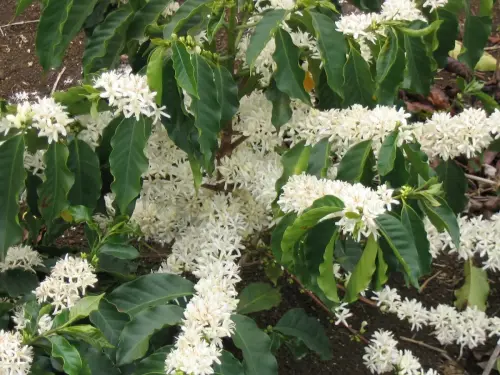
Arabica coffee
Coffea arabica
It was from the Yemeni port of Mocha that coffee set out to conquer the world – the coffee bush still appears on Yemen’s emblem.
-
 2
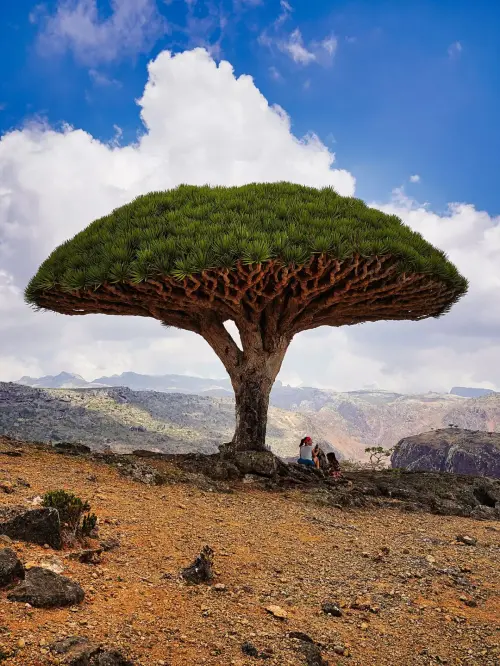
Socotra dragon tree
Dracaena cinnabari
The Socotra dragon tree looks like an upturned umbrella, and blood-red resin oozes from its bark.
-
 3
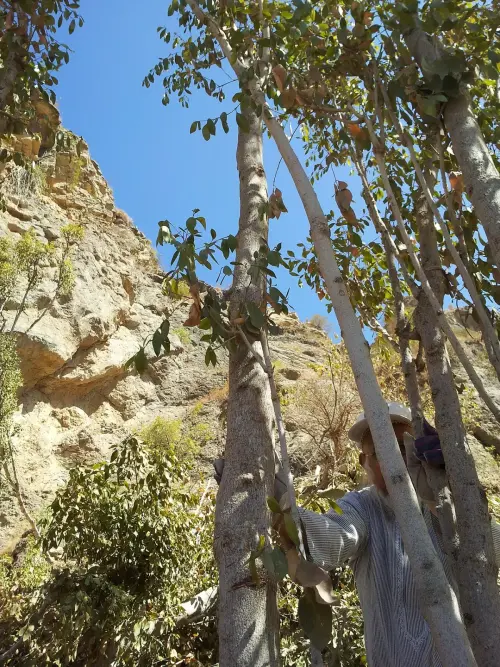
Khat
Catha edulis
Chewing khat leaves in the afternoon is a daily ritual for millions of Yemenis – and the plant has taken over many former coffee fields.
-
 4
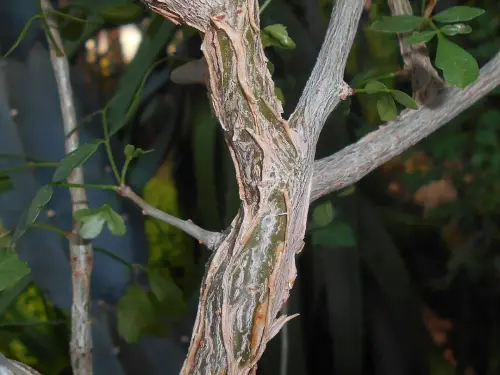
Myrrh
Commiphora myrrha
Myrrh from Yemen – one of the gifts of the Three Kings – enriched the ancient kingdom of Saba and the Incense Route.
-
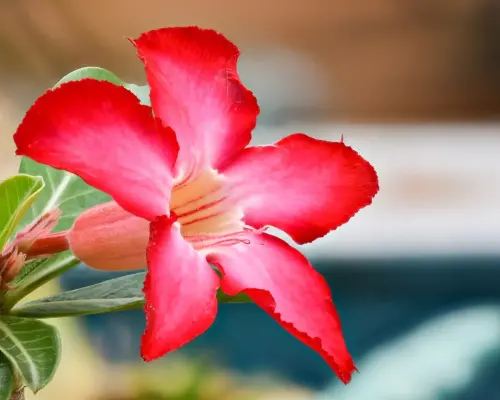 5
Desert rose
Adenium obesum
The “desert rose”, with its fat, bottle-shaped trunk, blooms pink on the bare rocks of Socotra and the Yemeni mountains.
-
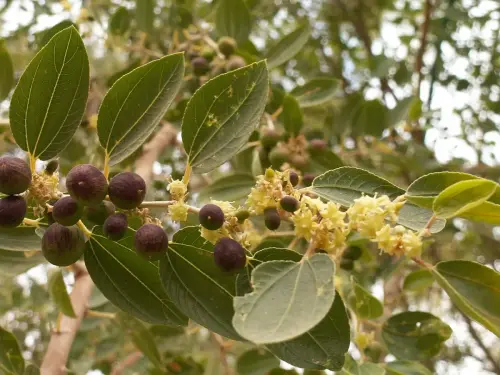 6
Christ’s thorn jujube
Ziziphus spina-christi
Honey from the sidr blossoms of Wadi Do’an in Hadramaut is reputed to be the finest and most expensive honey in the Arabian Peninsula.
-
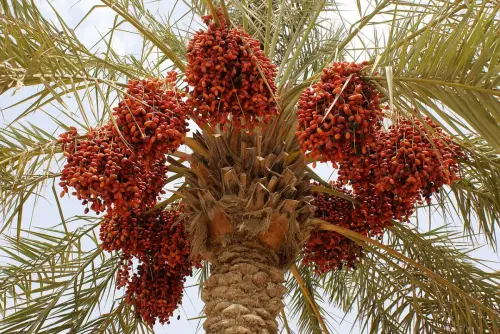 7
Date palm
Phoenix dactylifera
In Wadi Hadramaut date palm groves surround the mud-brick tower houses of Shibam, known as the “Manhattan of the desert”.
-
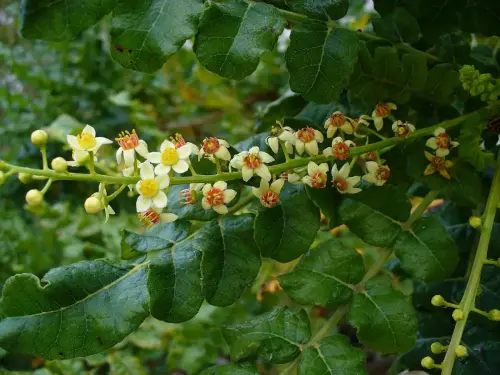 8
Frankincense tree
Boswellia sacra
Frankincense from the mountains of Hadramaut and Mahra was for centuries the source of the wealth of the kingdoms of Saba and Hadramaut on the Incense Route.
Yemen on other Ominuvo maps
- World in NumbersPopulation: 41.8 million (2025)Source: World Bank – WDI: UN World Population Prospects (CC BY 4.0)
- Languages of the worldArabic · official languageSource: Unicode CLDR (Unicode License v3)
- Prices around the worldYemeni rial (YER)Source: ISO 4217
- Time zones mapUTC+3Source: IANA tz database (public domain)
- Plugs and sockets of the worldType A, D, G · 230 V · 50 Hz
- National dishes of the world2 national dishes
- Volcano & earthquake map10 volcanoesSource: Smithsonian GVP (Smithsonian Terms of Use)
- VPN provider mapServers of 2 VPN providersSource: VPN Map (Ominuvo) (CC BY 4.0)