Taiwan · #5 tree
Taiwania
Taiwania cryptomerioides · locally: táiwānshān (臺灣杉)
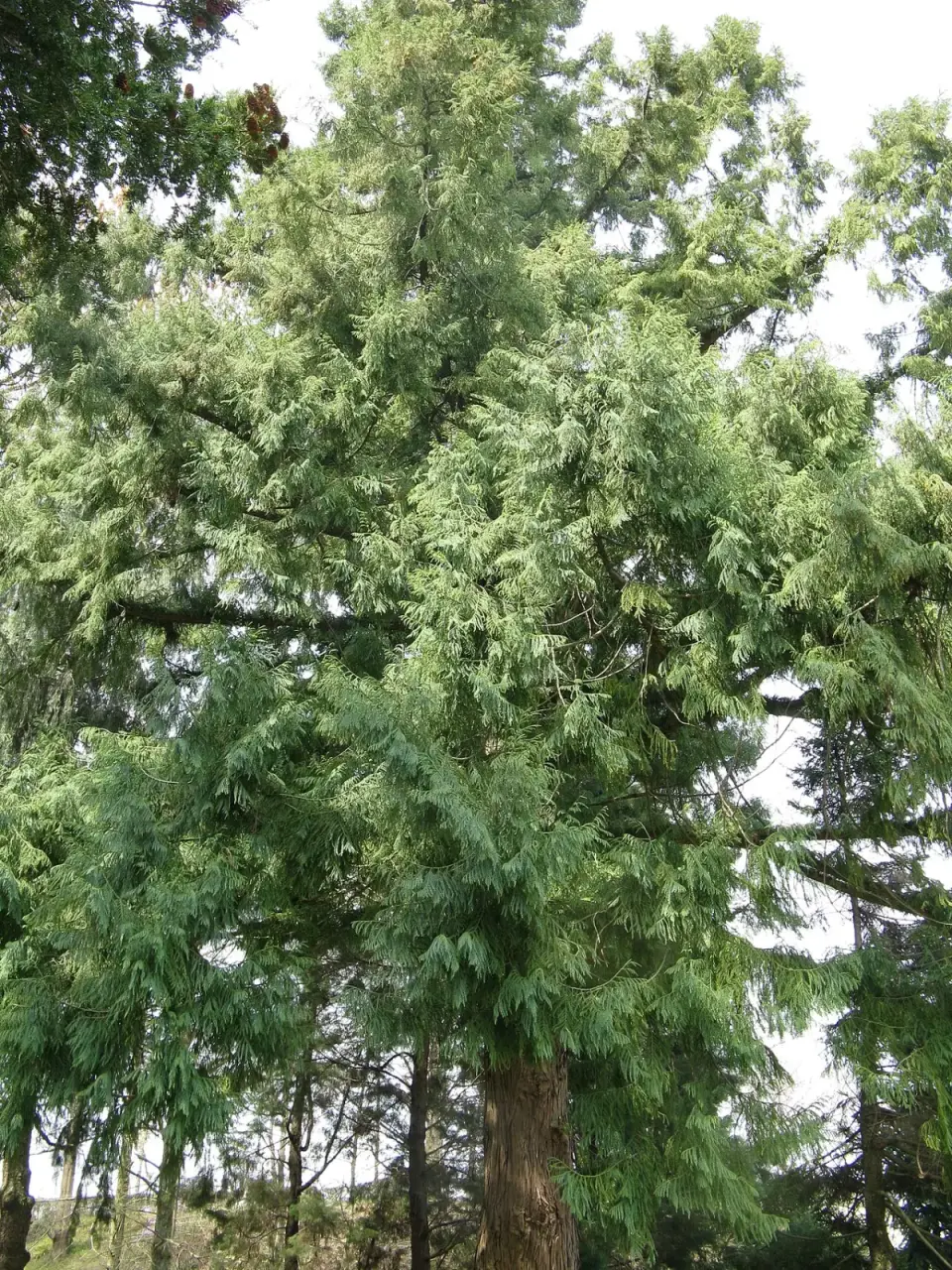
Taiwania is named after the island where it was discovered – one of the tallest trees in Asia, topping 70 m.
A gigantic conifer with a straight, columnar trunk and a narrow crown, growing to more than 70 m tall. Young trees have sharp, sickle-shaped needles, while older ones have small, scale-like leaves pressed close to the twigs. The cones are small, about 1–2 cm long. It grows in mountain forests at about 1,500–2,600 m, rising above the crowns of other trees. The species, described in 1906 by the Japanese botanist Bunzō Hayata, also occurs in a few places in southern China, Myanmar and Vietnam.
Significance in the country
Taiwania is the only tree genus named after Taiwan and the pride of Taiwanese botany; a specimen more than 70 m tall in Taiwan’s mountains is considered one of the tallest trees in East Asia.
Where it grows
Scattered stands in the mountain forests of the Central Range, Alishan and Xueshan at 1,500–2,600 m, including in Nantou, Hualien, Chiayi and Taichung.
More: Wikipedia (en) Wikipedia (pl)