5 plants worth knowing
St. Lucia
Saint Lucia is a mountainous volcanic island whose interior is covered in humid rainforest protected in forest reserves, while the famous cones of the Pitons rise above the west coast. The warm, humid climate favours banana and cocoa plantations in the fertile valleys, and the drier ends of the island – the north and the area around Vieux Fort – are covered in scrub and dry forest. The national symbols are the calabash tree, bamboo, and the rose and the marguerite – the emblems of two traditional flower societies.
Hover over a plant to see on the map where it grows.
where it grows
-
 1
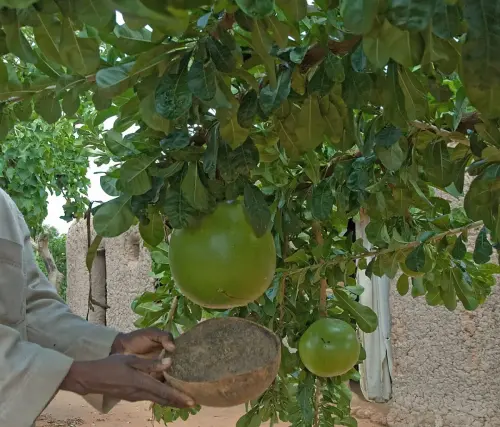
Calabash tree
Crescentia cujete
A tree whose huge, hard fruits, growing straight from the trunk, have served for centuries as bowls, ladles and rattles.
-
 2
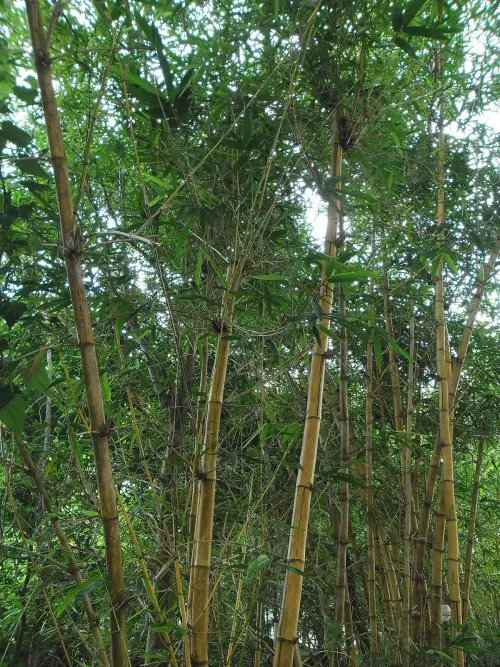
Common bamboo
Bambusa vulgaris
Bamboo, Saint Lucia’s national plant, forms dense clumps along rivers that creak in the wind and stand as tall as a house of several storeys.
-
 3
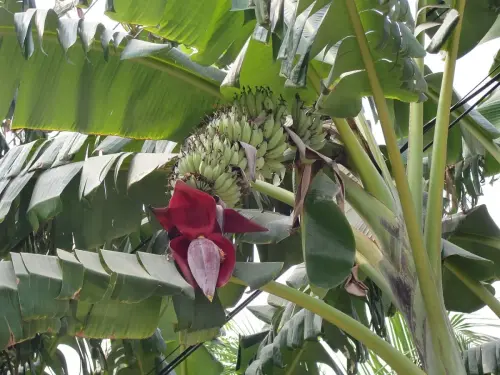
Banana
Musa acuminata
For decades Saint Lucia’s “green gold” – green bananas, known here as “fig”, are the basis of the national dish.
-
 4
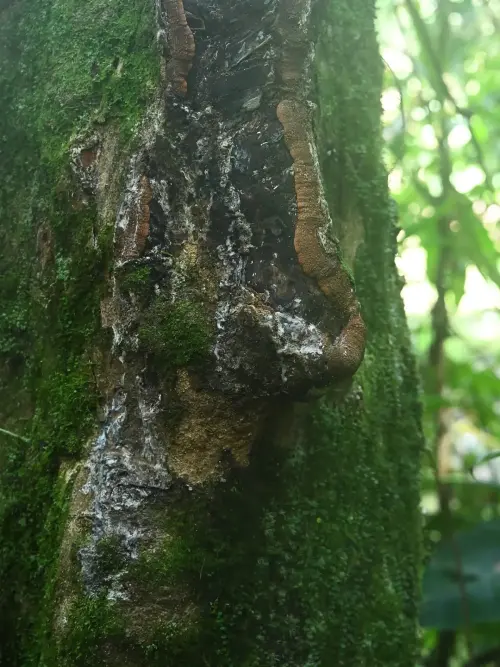
Gommier
Dacryodes excelsa
The giant gommier dominates Saint Lucia’s rainforest, and for centuries fishermen have built boats from its hollowed-out trunks.
-
 5
Cacao
Theobroma cacao
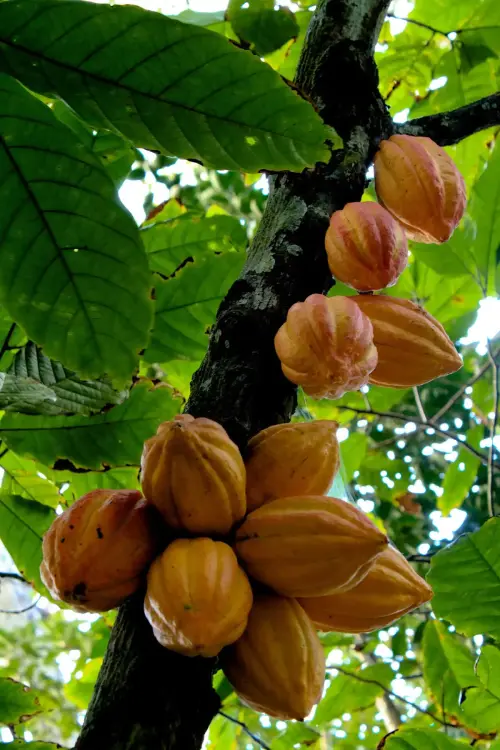
Cacao trees in the shadow of the Pitons – plantations around Soufrière produce beans for prized single-estate chocolates.
St. Lucia on other Ominuvo maps
- World in NumbersPopulation: 180,150 (2025)Source: World Bank – WDI: UN World Population Prospects (CC BY 4.0)
- Languages of the worldEnglish · official languageSource: Unicode CLDR (Unicode License v3)
- Prices around the worldEast Caribbean dollar (XCD)Source: ISO 4217
- Time zones mapUTC−4Source: IANA tz database (public domain)
- Plugs and sockets of the worldType G · 240 V · 50 Hz
- National dishes of the world1 national dish
- Volcano & earthquake map1 volcanoSource: Smithsonian GVP (Smithsonian Terms of Use)
- VPN provider mapServers of 1 VPN providerSource: VPN Map (Ominuvo) (CC BY 4.0)