10 plants worth knowing
South Korea
South Korea is a mountainous country, about 60% covered in forest – much of it restored in a massive reforestation drive after the Korean War, regarded as one of the greatest successes of its kind in the world. Mixed forests of oaks and Japanese red pine dominate, firs and dwarf scrub grow on the highest peaks, and on the volcanic island of Jeju the vegetation shifts from subtropical evergreen forests on the coast to the subalpine slopes of Mount Hallasan.
Hover over a plant to see on the map where it grows.
where it grows
-
 1
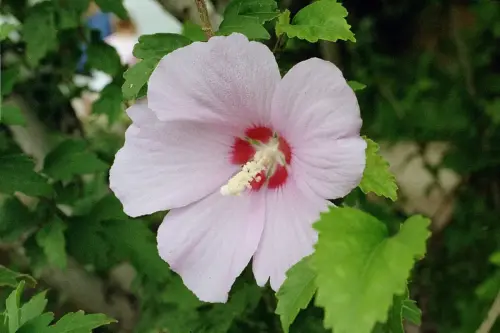
Rose of Sharon
Hibiscus syriacus
Mugunghwa – the “eternally blooming flower” – opens new blooms every day all summer long and is named in Korea’s national anthem.
-
 2
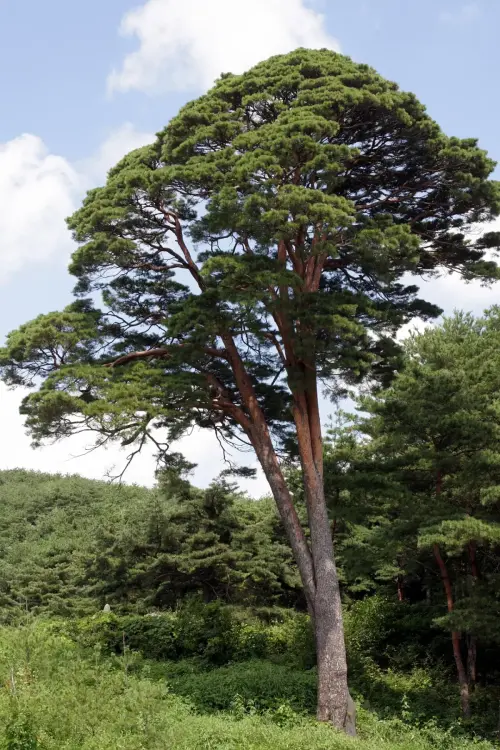
Japanese red pine
Pinus densiflora
Koreans’ favourite tree: the rusty-barked pine accompanies them from a pinewood cradle to a pinewood coffin.
-
 3
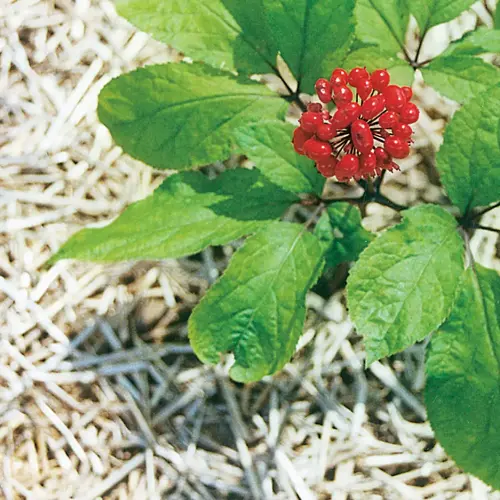
Ginseng
Panax ginseng
Korean red ginseng is the country’s calling card – the roots are grown for up to six years before they are harvested.
-
 4
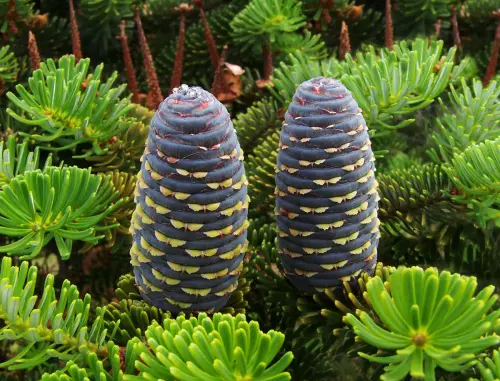
Korean fir
Abies koreana
An endemic fir from the mountains of southern Korea that has won over gardens worldwide with its purple cones.
-
 5
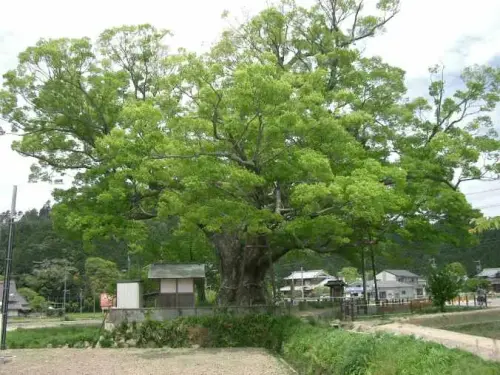
Japanese zelkova
Zelkova serrata
For centuries ancient zelkovas at the entrances to Korean villages have served as guardian trees and meeting places.
-
 6
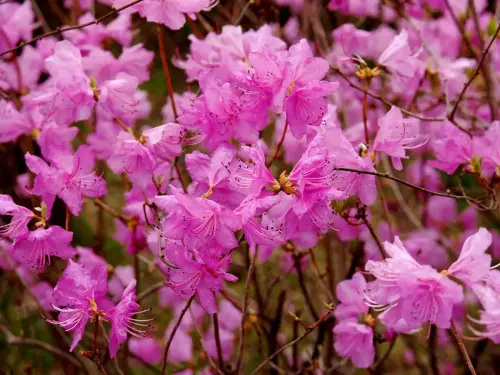
Korean rhododendron
Rhododendron mucronulatum
Pinkish-purple jindallae herald spring in Korea – every Korean schoolchild knows Kim Sowol’s poem “Azaleas”.
-
 7
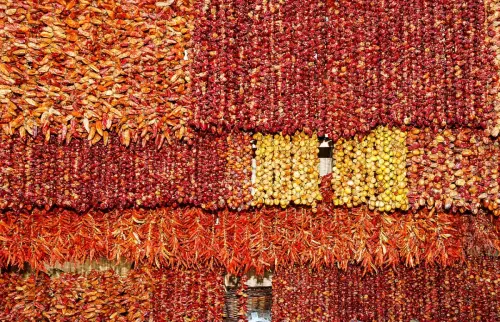
Chili pepper
Capsicum annuum
Without red gochu peppers there would be no fiery kimchi or gochujang paste – in autumn whole villages dry the pods on roofs and in yards.
-
 8
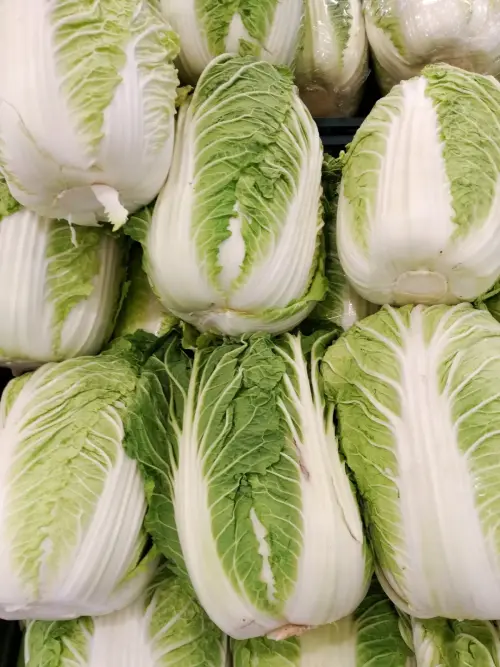
Napa cabbage
Brassica rapa subsp. pekinensis
Every autumn Korean families pickle hundreds of heads of napa cabbage for kimchi – the kimjang custom is on the UNESCO list.
-
 9
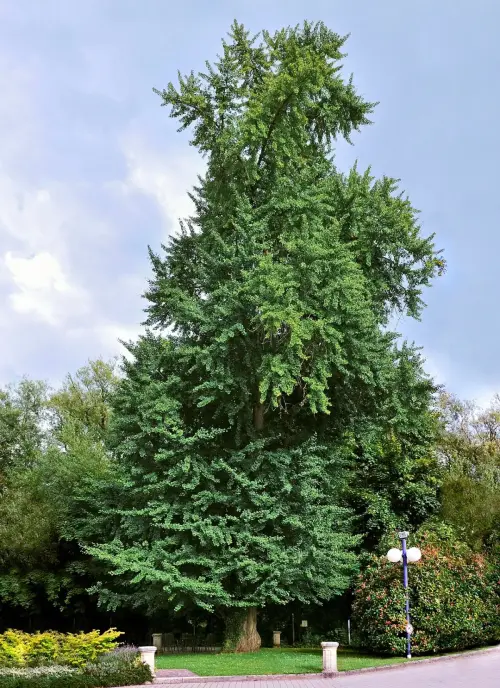
Ginkgo
Ginkgo biloba
In autumn golden ginkgos turn Seoul’s streets into yellow avenues – it is the capital’s most widely planted street tree and its symbol.
-
 10
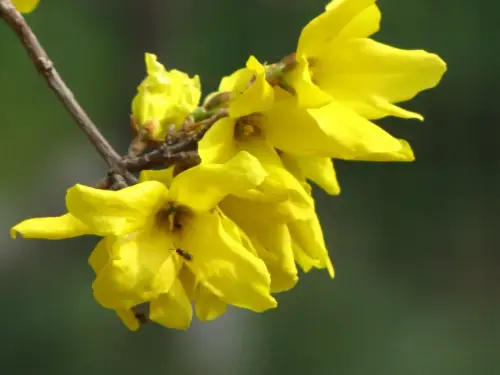
Korean forsythia
Forsythia koreana
Golden gaenari bloom in March on embankments and along roads and rivers – together with azaleas, they are Korea’s most typical sign of spring.
South Korea on other Ominuvo maps
- World in NumbersPopulation: 51.7 million (2025)Source: World Bank – WDI: UN World Population Prospects (CC BY 4.0)
- Languages of the worldKorean · official languageSource: Unicode CLDR (Unicode License v3)
- Prices around the worldSouth Korean won (KRW)Source: ISO 4217
- Time zones mapUTC+9Source: IANA tz database (public domain)
- Plugs and sockets of the worldType C, F · 220 V · 60 Hz
- National dishes of the world6 national dishes
- Castles map7 castles and palacesSource: Wikidata (CC0 1.0)
- Volcano & earthquake map2 volcanoesSource: Smithsonian GVP (Smithsonian Terms of Use)
- Ghost map1 ghost story
- UFO sightings map1 UFO or unexplained case
- VPN provider mapServers of 30 VPN providersSource: VPN Map (Ominuvo) (CC BY 4.0)